 Get Guardian on Google
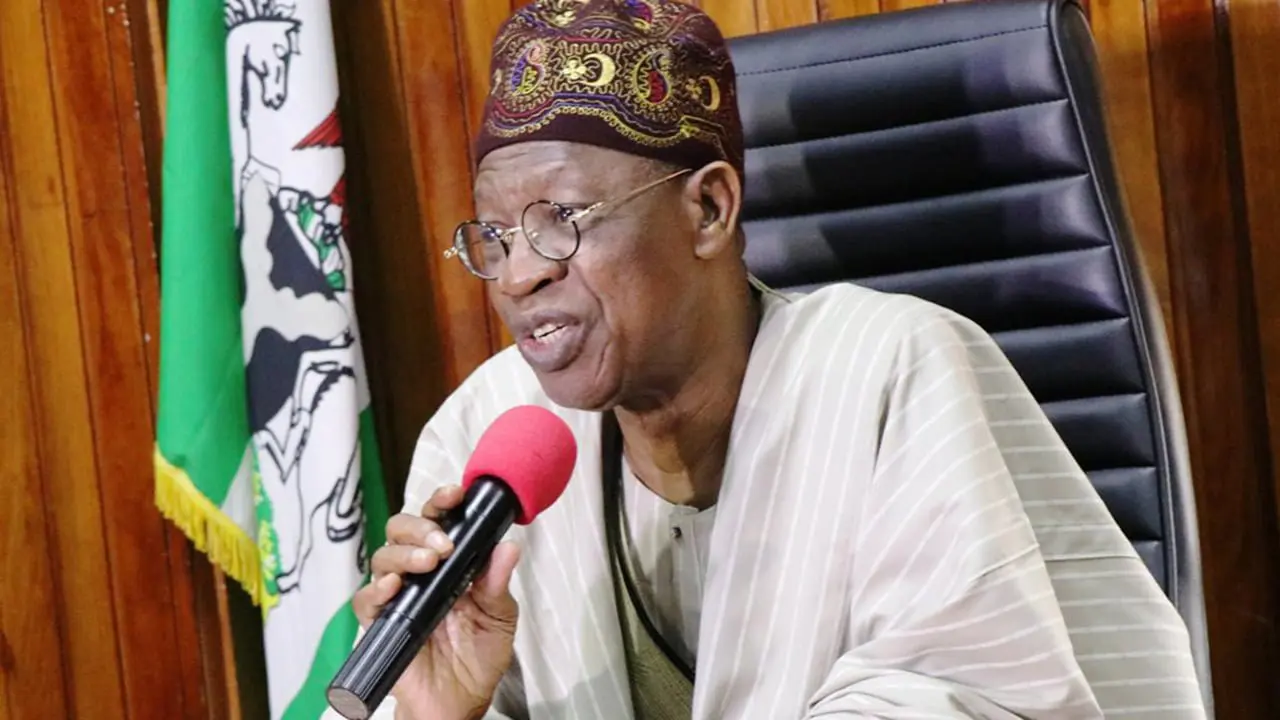
Former Minister of Information and Culture, Lai Mohammed, has warned that artificial intelligence (AI) could make the spread of fake news and political misinformation more sophisticated ahead of the 2027 general elections, compared with the misinformation challenges witnessed during the 2023 polls.
Mohammed said the growing capabilities of AI had introduced new dimensions to information manipulation, making it possible to create fabricated audio recordings, photographs, videos and official-looking documents capable of misleading voters.
Delivering his remarks at the Caleb University Maiden Public Lecture titled ‘Fake News, Disinformation and Artificial Intelligence: Defending Truth and Public Trust in the Digital Age’, the former Minister recalled that ahead of the 2023 elections, his ministry engaged Google, Meta and other social media platforms over concerns about the spread of fake news and misinformation.
He said the challenges at the time included the use of parody accounts, cloned media platforms, manipulated campaign speeches, altered photographs and videos, fabricated opinion polls and exaggerated or false reports of threats and violence.
According to him, such content could influence public perception of political candidates, discourage voter participation and heighten tensions during the electoral process.
He, however, noted that the emergence of AI had made the problem more sophisticated.
“Today, AI makes such manipulation considerably more sophisticated. A fabricated audio recording of a candidate could circulate shortly before an election. A fake photograph could purport to show violence at a polling station. A synthetic video could falsely depict a candidate making an inflammatory statement. A fabricated document could pass as an official government communication,” he said.
He further argued that while AI can be used to create deepfakes and spread disinformation, the same technology can also help detect manipulated content and strengthen fact-checking efforts.
“The question is therefore not, “Should we stop AI?” We cannot. The better question is, “How do we govern, deploy and use AI responsibly?” That requires technology companies, governments, universities, media organisations and citizens to share responsibility.”
Mohammed stressed that addressing the growing threat would require a response built around speed, credibility and verification, arguing that efforts to tackle disinformation must keep pace with technological developments.
He also urged Nigerians to make media and information literacy a priority in the fight against fake news, misinformation and the growing threat of artificial intelligence-generated disinformation, warning that the ability to read and write alone can no longer protect citizens from misleading information.
He stressed that media literacy must become a core citizenship skill, noting that the knowledge and critical thinking skills needed to distinguish credible information from false or misleading content is imperative for all citizens.
“In the past, literacy was understood as the ability to read and write. Today, that is no longer enough. A citizen can be highly educated and still be vulnerable to misinformation. We therefore need media and information literacy,” he said.
“Citizens must learn how algorithms work and understand that many social-media platforms are designed to maximise engagement. Content that provokes anger, fear or outrage can attract enormous attention. Virality is not evidence of truth. A blue tick is not proof of truth. A professional-looking graphic is not proof of authenticity. A video is no longer automatically conclusive proof. Artificial intelligence makes this principle even more important. This is where the International Media and Information Literacy Institute in Abuja becomes important.”
Earlier, in his welcome address, the Vice-Chancellor, Prof. Olalekan Asikhia, said the establishment of the public lecture series was part of the institution’s commitment to contributing to national conversations and addressing issues affecting society.
Asikhia explained that although Caleb University commenced academic activities in January 2008, the maiden lecture represented a deliberate effort to create a formal platform for engaging the public on critical national and global developments.