 Follow Us on Google News


 Follow Us on Google Discover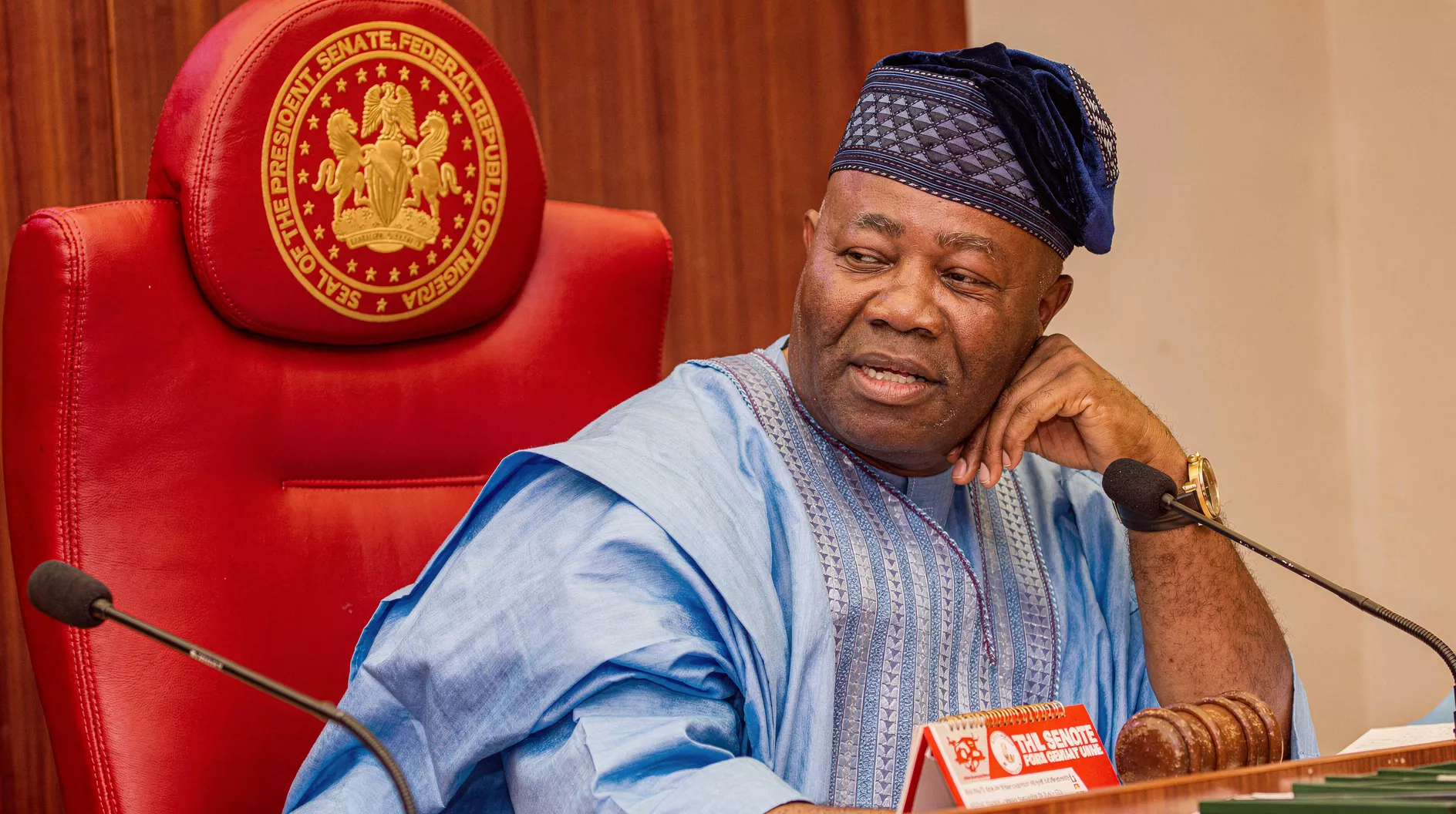
By Taiye Odewale, Abuja
In a move that has raised fresh questions about Nigeria’s political culture, the 10th Senate has declared the leadership seats of the 11th National Assembly effectively reserved for incumbent officeholders, even though the January 16, 2027 National Assembly election has yet to be held.
The dramatic declaration, which followed a motion adopted through a voice vote on Thursday, saw senators throw their weight behind Senate President Godswill Akpabio and Deputy Senate President Barau Jibrin for another term, alongside other principal officers who win re-election.
But the declaration has thrown up an obvious question: how can senators who are yet to secure fresh mandates from voters begin allocating leadership positions in a Senate whose membership has not been determined?
Under Nigeria’s legislative process, the leadership of a new Senate is determined by senators-elect when they assemble at the beginning of a new National Assembly. The current Senate can express preferences, but its resolution cannot automatically guarantee the leadership of the next Assembly.
Yet, in an extraordinary show of confidence, the 10th Senate appeared to have moved beyond campaigning for continuity to treating the leadership positions of the next Assembly as though they were already settled.

The resolution covers Akpabio and Barau, as well as Senate Leader Opeyemi Bamidele, Chief Whip Tahir Monguno, Deputy Whip Peter Nwaebonyi, Minority Leader Abba Moro, Deputy Minority Leader Oyewumi Olalere and Minority Whip Tony Nwoye.
Their return to the leadership positions was made conditional on winning the January 16, 2027 election. However, the declaration that their seats would have no vacancy has raised questions about the extent to which the current Senate leadership can speak for a future Assembly.
The development followed a motion moved by Monguno and seconded by Senator Cyril Fasuyi of Ekiti North.
The motion came shortly after Akpabio complained that political opponents were misrepresenting his comments during Tuesday’s debate on a bill seeking to decriminalise attempted suicide.
Akpabio suggested that the controversy surrounding his remarks was being exploited by those interested in the Senate presidency ahead of the 2027 elections.
“I know the position of president is gone. The position of vice president is gone. The only one that is left now is the position of Senate president that everybody wants to contest and have started mobilising,” he said.
His remarks prompted Monguno to move swiftly in support of his continued leadership.
“Insha Allah, by the grace of God, majority of us are going to make it back to the Senate, and this seat of the President of the Senate is hereby declared no vacancy, including that of the Deputy President of the Senate and, in fact, those of the entire principal officers who secured party tickets for the January 2027 election,” Monguno said.
Fasuyi seconded the motion, and Akpabio put it to a voice vote, which received an affirmative response from senators present.
The episode has exposed the unusual confidence with which the current Senate leadership is approaching a contest that remains dependent on voters and the decisions of the next Assembly.
The January 2027 election has not been conducted. The electorate has not determined which senators will return, and the composition of the 11th Senate remains unknown.
Nevertheless, the current lawmakers have already expressed a preference for retaining their leadership team, raising concerns about whether the declaration was merely a political endorsement or an attempt to pre-empt a decision constitutionally left to the incoming Senate.
The controversy also speaks to a wider concern about Nigeria’s democratic culture, where political officeholders sometimes appear to treat public positions as personal entitlements rather than responsibilities dependent on electoral mandates and institutional procedures.
For critics, the spectacle risks turning an important democratic process into a political joke: lawmakers who are yet to know whether voters will return them to the chamber are already discussing who should occupy its most powerful offices.
Senator Ali Ndume, representing Borno South, distanced himself from the proceedings, saying he was not in the chamber when the resolution was adopted.
“I was not in the chamber when the said resolution was taken,” he said after plenary.
Although the resolution does not legally guarantee anyone a leadership position in the 11th Senate, it has opened an early battle over succession before voters have even delivered their verdict.
Ultimately, the January election will determine who returns to the National Assembly, while the senators-elect will have a say in choosing their leaders.
Until then, declaring leadership seats vacant or occupied in advance may generate political headlines, but it cannot replace the electoral mandate and legislative decisions required to constitute the next Senate.

