
 Get Guardian on Google
***Says only verified polling unit results will be uploaded to IReV
***Bandits behind plot to attack NYSC members, disrupt polls
***INEC to receive outstanding election funds by November ending
***Amupitan asks Nigerians to trust him to deliver credible poll
***says loyalty is to Constitution, not political interests
The Independent National Electoral Commission (INEC) has unveiled fresh measures to prevent a recurrence of the challenges that marred the 2023 general elections.
The commission assured Nigerians that only verified results from polling units will be uploaded to its Results Viewing Portal (IReV) ahead of the 2027 polls.
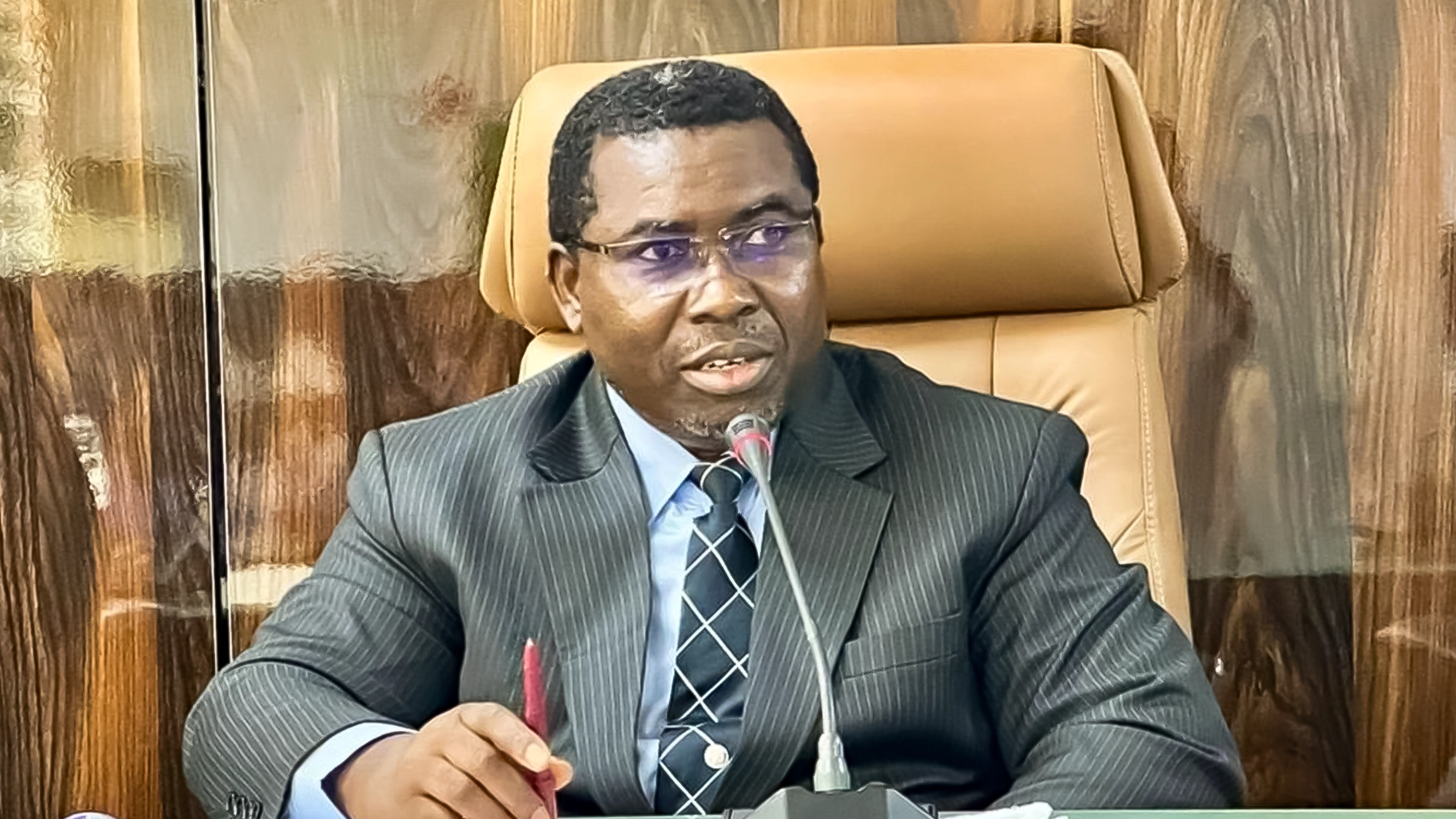
INEC Chairman, Professor Joash Amupitan, revealed this on Thursday at Chatham House, London, while speaking on the commission’s preparations for Nigeria’s 2027 general elections.
The panel discussion held in partnership with Kimpact Development Initiative had the theme “Nigeria’s 2027 elections: Democratic trajectory and regional stability beyond the ballot”.
He said the commission had identified polling centres as the major source of result-management problems during the 2023 elections and was introducing additional checks to ensure that figures were properly verified before transmission.
Amupitan said the commission had learnt important lessons from the previous election and was determined to strengthen public confidence in the electoral process.
He said: “One of the things we discovered from the 2023 election was that the problem was not actually at the collation centers but polling unit level. The problem was at the collation centres.”
According to him, the commission is introducing a new verification process to ensure that polling unit results are checked in the presence of party agents before they are uploaded to IReV.
“We are going to ensure that before any result is uploaded, it is properly checked. If the result is not accurate, it will not be uploaded. Once it is uploaded, Nigerians should be able to trust that what they are seeing is the correct result,” he said.
Responding to a question on why Nigerians should trust him to conduct credible elections, Amupitan cited the outcomes of recent off-cycle elections, particularly those in Anambra and Osun states, as evidence of improvements under his leadership.
“Why must Nigerians trust me? Nigerians must trust me because, number one, I’ve done off-cycle elections. And you agreed that the last election in Osun State was an improvement.
“And I said every election is a lesson. The 2023 election was a great lesson for Nigeria. The one we had in Anambra was another,” he said.
Since taking over, he said INEC had conducted the Anambra governorship election, the Federal Capital Territory (FCT) Area Council elections, the Ekiti and Osun governorship elections, as well as 16 by-elections to fill vacancies in the National Assembly and state Houses of Assembly.
He explained that the commission had treated each election as an opportunity to identify operational weaknesses and improve subsequent exercises.
According to him, Anambra and Osun were particularly challenging states because of their history of inconclusive governorship elections.
He recalled that the Anambra governorship election in 2021 took about five days to conclude, but the recent exercise was completed much faster.
He said the measures introduced by the commission had helped address the problem of inconclusive elections in the two states, with results declared the day after voting.
Amupitan, however, acknowledged that the credibility of the 2027 elections would depend not only on the outcome of off-cycle polls but also on the transparency of the entire electoral process.
He identified insecurity, logistics and result management as three major areas the commission was prioritising, saying INEC was working with security agencies to ensure that election materials and personnel reached polling units on time.
On result management, the chairman said the commission’s review of the 2023 elections showed that some of the major challenges occurred at collation centres, rather than at polling units.
He said INEC had consequently introduced additional safeguards to ensure that results were checked for accuracy at polling units, in the presence of party agents, before they were transmitted to the INEC Result Viewing Portal (IReV).
He said: “We found, for instance, that the problem of election result, declaration and management in Nigeria is not even at the polling unit. It’s at the collation centres. And the issue of transmission of results in 2023 was because the result could not be uploaded on the IReV”.
“We decided that whatever that is going to be uploaded from the polling unit is accurate. Because in 2023, there were all manner of things, results that were not correct, results that were full of over-voting, while you were uploading on the IReV. But now we have devised a safeguard.
“However, if the result is not accurate at the polling unit, it will not even go to the IReV.”
“So the moment it goes to IReV, you can believe what you see on IReV. And then this issue of inconsistency will be removed so that what will now be done at the collation will just be a matter of formality,” he said.
Amupitan said INEC had also considered introducing an entirely new election technology but decided against it because of the limited time before the 2027 general elections.
He said introducing a new system would require sufficient time for testing, adding that the commission instead opted to upgrade its existing technology.
“The first one was not an option. Because if you are introducing a new technology, it means you need time to test it. And then the general election was so close,” he said.
“So what we decided to do was to improve on the system that was existing.”
The chairman also disclosed that security intelligence had uncovered a plot by bandits to attack INEC ad hoc personnel, particularly members of the National Youth Service Corps (NYSC), in a bid to disrupt the 2027 elections.
He said the plot was uncovered through intelligence gathered under the Inter-Agency Consultative Committee on Election Security.
“Very recently, using intelligence under the auspices of the Inter-Agency Consultative Committee on Election Security, we discovered that there was a particular bandit that decided to attack our workforce, which is the ad hoc staff, the National Youth Corps members,” he said.
He added: “Through intelligence, we were able to break into that bandit. They were arrested, and the main confession was that the essence was to target the 2027 election and ensure that the election did not even hold.”
Amupitan said the suspects were being prosecuted at the Federal High Court by the Department of State Services (DSS).
He said INEC was also using its Election Risk Management tool to identify areas vulnerable to violence and guide security deployment ahead of the elections.
The chairman said the commission was working with relevant security agencies to ensure that threats to election personnel and voters did not prevent the conduct of the polls.
He added that the credibility of Nigeria’s 2027 elections was important not only to the country but also to democratic stability in West Africa and the wider African continent.
On the Bimodal Voter Accreditation System (BVAS), Amupitan said INEC had identified problems affecting the devices during the 2023 elections, including malfunctions linked to poor weather conditions.
He said the commission was building storage facilities with appropriate cooling systems in states where the devices were kept, while also increasing the number of BVAS machines available for elections.
He said the commission has also reduced the number of voters assigned to each device from 1,250 to 850, meaning polling units with more than 850 registered voters would have additional BVAS machines.
“We have decided to build a storage facility with the correct weather cooling system in all the states where the BVAS are stored,” he said.
“And secondly, to also increase the number of BVAS and reduce what we call the number of voters per BVAS from 1,250 to 850. So meaning that in any polling unit where you have more than 850 voters, you have more than one BVAS.”
The chairman said the changes were intended to reduce delays during accreditation and ensure that voting could be completed within the stipulated period.
As part of the preparations, Amupitan announced that INEC would conduct a nationwide mock accreditation and voting exercise on November 28 to test its readiness for the 2027 presidential election.
“On the 28th of this month, we are planning a mock accreditation and voting across all the states in Nigeria, so that we’ve simulated presidential election and just be sure that we have gotten it right. That there will be transmission of result,” he said.
The exercise, he explained, would allow the commission to test its equipment and procedures, particularly voter accreditation and electronic transmission of results, before the general elections.
On concerns about his neutrality following allegations linking him to a controversial X account, the INEC chairman insisted that he had never operated the account and said the matter had been reported to security agencies.
“I state here again that I have never operated an X account,” he said.
He added: “The X account was never linked to my mail, but there were issues that were brought up. It was my phone number and so on and so forth.”
Amupitan said an independent report had been obtained and the matter reported to the DSS and the Inspector-General of Police.
He also dismissed allegations that his previous legal work in a political dispute meant he would be biased in the discharge of his duties as INEC chairman, arguing that he had acted professionally as a lawyer before his appointment.
On his constitutional responsibilities, he said: “My loyalty is to the Constitution of Nigeria, to the Electoral Act. Every institution in Nigeria by the Constitution, including the President, the National Assembly, as well as the governors, their loyalty first and foremost goes to the Constitution and then the laws within which they operate.”
The INEC chairman further disclosed that the commission had yet to receive the full funds required for the 2027 elections, although he said assurances had been given that the outstanding balance would be released before the end of November.
“INEC has gotten substantial part of the money that is required for the election, but we have not gotten the full money,” he said.
He explained that part of the outstanding funds was needed to pay ad hoc election personnel, adding that the commission had already commenced recruitment for the exercise.
On allegations of irregularities in the voter register, including claims of an 85 per cent increase in registered voters in a ward in Ebonyi State, Amupitan said INEC would examine the complaint and the correspondence submitted to the commission.
He said the Electoral Act provided for objections and complaints after the continuous voter registration exercise, adding that aggrieved persons could request certified copies of relevant portions of the register.
“I am going to flag what you have said, and look at the letter, the complaint, and what they are actually asking for. And if it has not been treated, I guarantee that when I get back, it will be treated,” he said.
Amupitan urged Nigerians, particularly young people, to remain engaged in the democratic process and verify information before sharing it, warning that misinformation posed a threat to public confidence.
“This country belongs to them. So they cannot relent. Whatever they could take for us to have the Nigeria that we desire, they must do it,” he said.
He added: “Misinformation is the greatest danger. So let them ensure that they’re verified before they take action. And let them also give this democracy a chance.”