 Follow Us on Google News


 Follow Us on Google Discover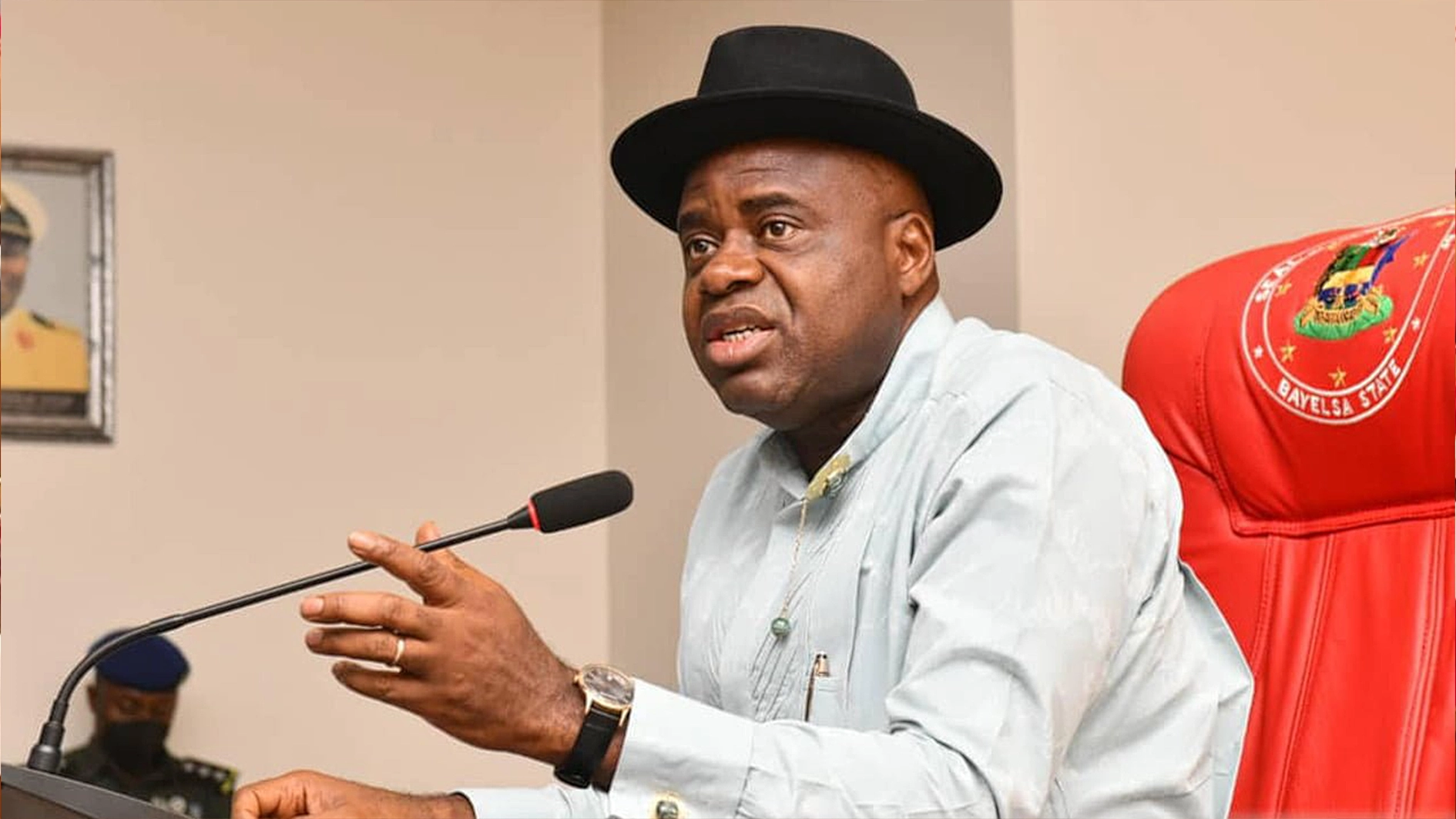
Three key questions will shape Bayelsa’s January 16 presidential and National Assembly elections and February 6 State Assembly polls: can Governor Douye Diri’s defection from the PDP to the APC translate into votes for President Bola Tinubu; how will the results affect his succession plan for the November 2027 governorship poll; and can the opposition regain ground in the oil-rich state? JULIUS OSAHON reports.
Unlike most states, Bayelsa will not elect a governor in the February 2027 governorship cycle. Its next governorship election will come later in the year, making the state one of the more unusual political battlegrounds in the months after the presidential election.
That electoral calendar has placed Governor Douye Diri at the centre of a complicated political calculation. The January 16 presidential and National Assembly elections, followed by the February 6 State House of Assembly poll, will provide the first opportunity to measure whether his defection from the Peoples Democratic Party (PDP) to the All Progressives Congress (APC) has translated into electoral strength.
Diri resigned from the PDP in October 2025 and formally joined the APC in November. Twenty-three of the 24 members of the Bayelsa State House of Assembly subsequently backed the move, while other political actors at the local government level also shifted towards the ruling party.
The governor has since aligned himself with President Bola Ahmed Tinubu’s 2027 re-election bid. But the emergence of the Nyesom Wike-led Rainbow Coalition has complicated the equation. Wike has made it clear that he supports Tinubu’s presidential bid, while the PDP and other coalition members remain free to contest legislative and governorship elections on their respective platforms.
The question for Bayelsa is therefore a practical one: can Diri use the legislative elections to demonstrate that the political structure that followed him into the APC can also deliver votes for Tinubu and APC candidates, while retaining sufficient room to manoeuvre ahead of the November governorship contest?

From PDP stronghold to APC structure
The political environment is markedly different from 2023. At the presidential election that year, PDP candidate Atiku Abubakar won Bayelsa with 68,818 votes, representing 41.63 per cent of the 165,325 valid votes. Peter Obi of the Labour Party (LP) polled 49,975 votes, or 30.23 per cent, while Tinubu of the APC recorded 42,572 votes, representing 25.75 per cent.
The figures showed that although the PDP remained ahead, the electorate was not politically uniform. Obi secured a substantial bloc of votes, while Tinubu’s third-place finish indicated room for the APC to expand its support.
Diri’s defection fundamentally altered the organisational picture. His move was followed by the defection of 23 members of the State House of Assembly. Senator Benson Konbowei, representing Bayelsa Central, also moved from the PDP to the APC, while the governor said local government chairmen would follow his lead.
The consequence was a major transfer of political access. The APC, which contested the 2023 presidential election as an opposition party in Bayelsa, now has access to the state executive and a substantially expanded network of lawmakers, political stakeholders and party structures.
The state APC chairman, Warman Weri Ogoriba, has maintained that the party has structures across the eight local government areas and political wards and possesses the organisation required to support Tinubu and APC candidates.
But the existence of a political structure does not necessarily establish control of the electorate.
That distinction will be at the heart of the 2027 contest. Defections can move office-holders, legislators and political networks from one party to another. Whether voters make the same journey is a different question.
The January and February elections will therefore provide the first significant measurement of how much of Diri’s political capital has actually moved with him to the APC.
For the governor, a strong performance by APC candidates in the Senate, House of Representatives and State Assembly races would offer evidence that the defection produced more than an elite realignment. It would indicate that the new structure can be converted into an electoral organisation.
A weaker showing would provide ammunition to opponents who argue that political office-holders can change parties more easily than voters change political loyalties.
The presidential result will be particularly important. Diri may have moved to the APC and pledged support for Tinubu, but that does not automatically determine how Bayelsans will vote. The 2023 results demonstrated that substantial sections of the electorate were willing to vote outside the established PDP structure.
Wike, Rainbow Coalition and the opposition
The Rainbow Coalition introduces another variable into the calculation.
Wike has repeatedly distinguished between support for Tinubu at the presidential level and contests for other offices. Recently, he promised support for Tinubu’s re-election, but that the PDP remains free to field candidates for governorship, National Assembly and State Assembly elections. He also rejected the suggestion that the coalition is an APC arrangement.
That position has particular implications for Bayelsa, where the APC is attempting to build a unified structure around the President and its own candidates.
If politicians associated with the Rainbow Coalition mobilise support for Tinubu but back candidates outside the APC in legislative contests, the presidential and down-ballot results could tell different stories.
A strong Tinubu performance accompanied by equally strong APC legislative results would indicate that presidential support and party organisation are moving in broadly the same direction. A significant divergence could demonstrate that voters are making more differentiated choices.
The Bayelsa APC has dismissed the coalition as a threat to its organisation. Ogoriba said the party has the numbers, structures and grassroots support required to deliver Tinubu and its candidates across the state.
The PDP disputes that assessment.
George Turnah, the factional state chairman of the PDP, argued through his Senior Special Assistant on Media and Communication, Kelvin Loveday-Egbo, that the election would not be decided by claims of structure alone. He said the real test would be the ability of political parties to build broad-based support across communities, wards, local government areas and the wider electorate.
That argument captures the central uncertainty surrounding the state’s political realignment. The PDP may have lost much of its formal structure, but that does not necessarily mean that all of its voters have moved with its former leaders.
The party’s residual networks, former office-holders and longstanding supporters will be tested at the polling units.
The emergence of the Nigeria Democratic Congress (NDC) adds another dimension. Former Bayelsa governor, Senator Seriake Dickson is a leading figure in the party, while Peter Obi, who secured 49,975 votes in Bayelsa in 2023, is its presidential candidate.
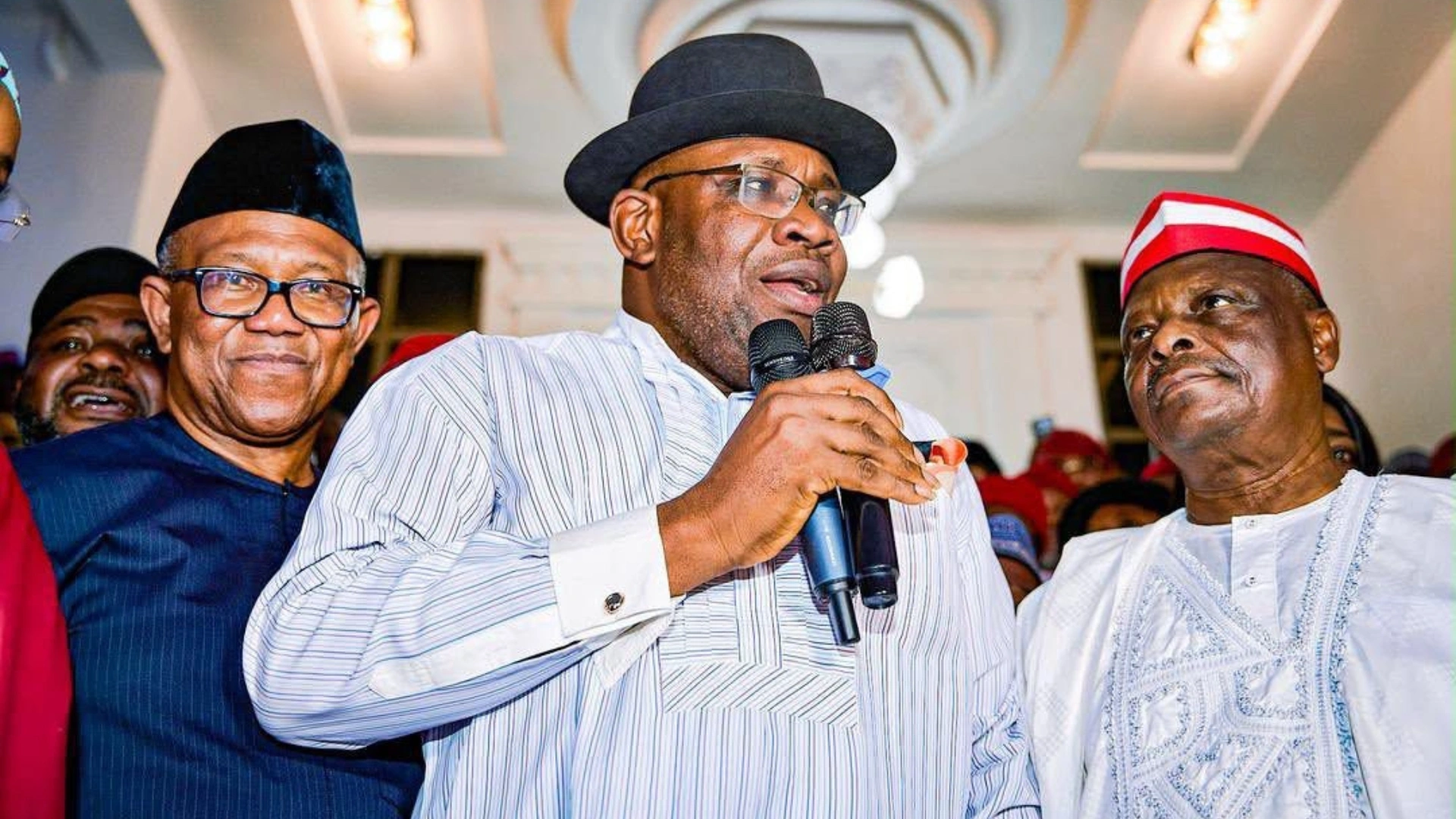
Whether the NDC can reproduce that support will depend partly on its ability to establish a sufficiently broad organisation across the state’s wards and local government areas.
The African Democratic Congress (ADC) faces a similar challenge of building a statewide organisation capable of competing with the established structures of the APC and PDP.
Bayelsa’s recent political history nevertheless cautions against assuming that the movement of political elites automatically determines voter behaviour. The 2023 presidential result itself was evidence of a divided electorate.
A South-South test
THE significance of Bayelsa extends beyond the state. The South-South produced a fragmented presidential result in 2023. Atiku won Bayelsa and Akwa Ibom, Tinubu won Rivers, while Obi won Delta, Edo and Cross River. The results demonstrated that no single presidential candidate dominated the region.
The political landscape has since changed, with several leading politicians and governors moving towards the APC. Tinubu will now contest as an incumbent, while Wike, although not an APC member, is openly working for his re-election.
The APC’s challenge is to convert those political realignments into votes.
Bayelsa provides an especially useful test because the change has been unusually dramatic. A governor who won a second term under the PDP has moved to the APC, taking a large section of the state’s political establishment with him.
The legislative elections will therefore offer an early indication of whether that movement has electoral depth.
For Diri, the stakes go beyond the number of seats won. Strong APC results would strengthen his negotiating position within the ruling party and demonstrate that the structure accompanying his defection can produce electoral results. A disappointing performance could encourage rival interests to argue that the movement involved political elites more than the electorate.
The results could also shape the political environment ahead of the gubernatorial election.
Because Bayelsa’s governorship poll comes months after the presidential and legislative contests, Diri will have an opportunity to assess the performance of the APC structure before the succession battle fully takes shape.
That makes the January and February elections an important political baseline.
The relationship between Tinubu’s presidential vote and the performance of APC candidates down the ballot may be more revealing than any single result. If the President performs strongly while APC candidates also secure substantial victories, the outcome would provide evidence of a broad alignment between presidential support and party organisation.
If the results diverge sharply, it could point to a more complicated electorate in which voters distinguish between support for Tinubu and support for individual APC candidates.
Neither outcome would by itself determine the November governorship election. But both would influence the political calculations leading into it.
For Tinubu, Bayelsa will provide an early test of whether the recent realignment of political elites in the South-South can be converted into electoral support.
For Diri, it will be the first opportunity to demonstrate the electoral value of the political structure he helped move into the APC.
For the opposition, the elections will test whether the loss of political office has also translated into a loss of voter support.
The central issue, therefore, is not simply whether Diri has changed parties. It is whether the electorate has moved with him.
The January presidential and National Assembly elections, followed by the February State Assembly poll, will provide the first hard evidence.
They may not settle the larger 2027 governorship contest, but they could establish the political terms on which that contest is fought — and offer one of the clearest early indications of whether Bayelsa’s dramatic political realignment is deeper among voters than it appears among its political elites.

