• Experts warn of knock-on effects for regional supply chains
• Porous borders, dense trade heighten Nigeria’s exposure
• Analysts link Nigeria’s move to shift toward non-indifference
• ADC questions FG’s priorities, seeks stronger response to insecurity
• HURIWA faults govt’s Benin coup boast, questions failure on terrorism
• Ex-NIIA DG commends Nigeria for deploying troops to foil coup attempt
The failed coup in Benin on Sunday, repelled with Nigerian intelligence support, has renewed concerns over the fragility of West Africa’s trade routes, with analysts warning that any instability next door could disrupt cargo flows, raise costs and deal fresh shocks to Nigeria’s already strained economy.
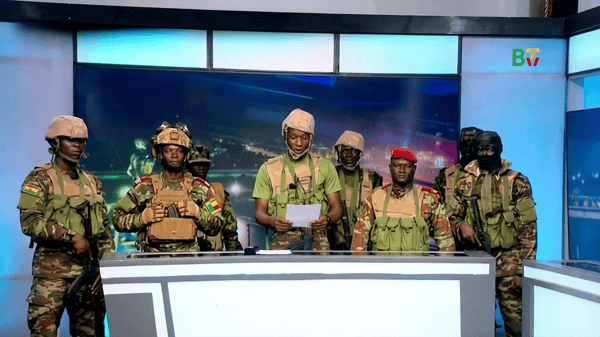
Tension eased across Cotonou on Sunday after security forces in the Republic of Benin, backed by the Nigerian Air Force (NAF), repelled an attempted coup by disgruntled military officers. The early-morning operation briefly unsettled residents before authorities restored order and confirmed that the plotters had been subdued. West African leaders have since praised the swift response, describing it as vital to preserving stability in a region already contending with multiple political crises.
Experts and security sources said Nigeria’s involvement was driven largely by strategic proximity and the porous stretch of border shared with Benin. With thousands of Nigerians living and doing business in Seme, Idi-Iroko and other frontier communities, Nigeria activated cross-border intelligence channels to track movements and prevent any spillover of instability.
The attempted coup also heightened concerns within Nigeria’s trade and customs ecosystem, given the scale of commercial activity between both countries. Benin is a key transit hub for goods entering Nigeria, with Cotonou Port handling major shipments of vehicles, consumer products and agricultural commodities. Any disruption in Benin’s political environment threatens to slow imports and exports, potentially affecting markets in Lagos, Ogun and the wider southwest corridor.
Stability in Benin is crucial to revenue generation along Nigeria’s western trade route. Daily cross-border exchanges—ranging from formal container traffic to informal small-scale trading—support thousands of jobs on both sides. A prolonged crisis could have caused delays at border posts, increased operational risks for haulage operators and driven up the cost of goods during an already fragile economic period.
Speaking on Nigeria’s economic interests and the factors that informed its assistance, CEO of the Centre for the Promotion of Private Enterprise (CPPE), Muda Yusuf, said a significant volume of trade occurs between Lagos and the Benin Republic, particularly transit trade or transit cargo.
He said Benin remains highly strategic to Nigeria’s trade relations within and beyond the sub-region. According to him, political or economic instability in Benin would have a knock-on effect on Nigeria, significantly affecting sub-regional trade, especially as most of Nigeria’s trade within the corridor flows through Benin, Ghana and Togo.
He added that large volumes of transit cargo also enter Nigeria through Benin’s port, noting that any disruption there would inevitably affect the Nigerian economy, particularly trade flows and supply chains.
Senior Research Fellow at the Nigerian Institute of International Affairs (NIIA), Dr Nicholas Erameh, said Nigeria plays a quasi-hegemonic role in Africa, particularly in West Africa. He noted that the sub-region has been grappling with a series of coups, which have raised widespread concern both within the continent and globally.
He said that because the Benin Republic is one of Nigeria’s closest neighbours, Nigeria had to show concern about developments there. He said that in the past, sovereignty often served as a barrier to intervening in conflicts. However, as the spillover effects and consequences of unaddressed conflicts have become clearer across the region, African leaders agreed that there was a need to move from non-intervention to non-indifference.
“What it therefore means is that what happens to country A must be a problem for country B. Otherwise, if country B keeps quiet when there is a crisis in country A, the spillover will definitely affect country B and the entire region,” he said.
Erameh explained that although Nigeria acted before ECOWAS formally sanctioned the Nigerian Air Force’s involvement, the move amounted to preventive diplomacy aimed at de-escalating the situation ahead of any sub-regional decision.
“The fact that the regime also called on the Nigerian government for help itself makes this much more legitimate. Even before the regime had called on Nigeria, the first country that would have made that move was Nigeria.
“If there is a spillover of conflict today in the Republic, Nigeria will feel the burden of that conflict. Nigeria is already battling a whole lot of internal security challenges, so it cannot afford to add another one to it. Based on that, Nigeria needed to be proactive,” Dr Erameh said.
Professor of International Relations, Femi Otubanjo, said the Nigerian president has consistently opposed coups, citing his reaction to the coup in Niger at the start of his tenure.
He noted that if the coup in Benin at the weekend had succeeded, it would have been disastrous for the sub-region, with a likely domino effect encouraging military interventions elsewhere. He described the attempted takeover as a present and serious danger to stability in West Africa.
“Don’t forget that even in our own country, only last month or so, there were rumours, stories of a coup attempt. So that kind of coup movement needed to be stopped and nipped in the bud. So, it was a major fundamental action for the sake of the stability of the West African sub-region.”
According to him, instability anywhere in the sub-region comes with economic consequences and population displacement. He said many people might attempt to flee Benin either due to opposition to a new regime or to escape oppression, and Nigeria would naturally be their destination.
He added that there is a thriving trade, including a significant underground economy, between Nigeria and the Benin Republic. Smuggling, he said, remains robust in the region.
Prof Otubanjo, however, noted that smugglers would continue operating regardless of political developments. He stressed that the most important aspect of the attempted coup was political, not economic, because “there is nothing significant about the Benin economy to Nigeria”.
“What they do is that the Benin Republic ports are used to bring cars to Nigeria, which takes away from the income of Nigerian ports. But that’s all,” he added.
ADC questions FG’s priorities, seeks stronger domestic response to insecurity
Meanwhile, the African Democratic Congress (ADC) has urged the Federal Government to deploy the same energy it used in frustrating the military coup in the Benin Republic to tackle insurgency and criminal gangs in Nigeria.
The party reiterated that safeguarding democracy through people-oriented policies and the protection of lives and property is essential to good governance.
In a statement by its National Publicity Secretary, Mallam Bolaji Abdullahi, the ADC welcomed Nigeria’s swift intervention in the Benin Republic after the coup attempt but insisted that the Federal Government must apply similar decisiveness in combating insurgency and banditry at home.
The party said the government’s ability to act quickly in Benin highlights its slow and inconsistent response to banditry and violent crime, devastating communities across Nigeria.
It also expressed concern about the growing democratic reversal in the region, stressing that the best safeguard for democracy is good governance anchored on improved livelihoods and tolerance for opposition.
The statement said: “The African Democratic Congress welcomes Nigeria’s swift intervention in the Benin Republic following the announcement of a coup attempt. We commend the Federal Government for acting promptly to defend constitutional order in our neighbourhood.
“However, in doing so, the government must now take the necessary steps to align this intervention with the legal provisions of our Constitution. While the unilateral action taken by the President might have been expedient, it still has to be subjected to the ratification of the National Assembly as required by the relevant sections of our Constitution for military or security deployment outside Nigeria’s borders.
“Even in commending the government, ADC cannot ignore the question that many Nigerians are already asking: why were we not as swift in responding to the crisis in Guinea-Bissau, even when a former Nigerian President was trapped there during a period of instability? That hesitation stands in sharp contrast to yesterday’s urgency.
What changed? What determines when Nigeria acts firmly and when it delays?
“Consistency in our mode of operations, especially when it comes to our foreign interventions, is essential for any country that seeks to lead the sub-region on issues of democracy and stability. This selective reaction indeed gives credence to the allegation that what played out in Benin was at the behest of another, more powerful country.
“More importantly, the government’s demonstrated ability to move quickly in Benin raises an even deeper concern. If Nigeria could respond decisively to threats across our borders, why has our government demonstrated such outrageous incompetence in dealing with domestic insecurity? Why has the government failed to respond with similar urgency and decisiveness even as banditry, terrorism and violent crime still hold many of our communities hostage, displace families, abduct children and parade themselves openly.”
The party said a government that can act swiftly abroad must also act decisively at home.
“The defence of democracy does not begin in neighbouring countries; it starts in the protection of Nigerian lives, the restoration of security and the rebuilding of trust between citizens and the state.
“Without prejudice to our fundamental opposition to any form of extra-constitutional takeover of government, we reiterate that the best possible safeguard against military adventurism is for elected governments to make democracy meaningful to the people by improving their lives and allowing opposition to thrive and alternative voices to be heard.”
HURIWA faults FG’s Benin coup boast, questions failure on terrorism
Also, the Human Rights Writers Association of Nigeria (HURIWA) criticised the Federal Government for celebrating its role in frustrating a military coup in the Benin Republic while failing to decisively combat terrorism and violent criminality within Nigeria.
In a statement, the group said that although it welcomed the restoration of democratic order in Benin, it was “a big shame” that the Nigerian military had not been able to defeat terrorists responsible for widespread violence, including repeated attacks on schoolchildren, yet acted swiftly to help suppress armed coup plotters in a neighbouring country.
HURIWA argued that the development exposed what it described as the government’s lack of political will and capacity to overwhelm the terrorists threatening Nigeria’s sovereignty.
The organisation also challenged President Tinubu to explain how the government secured the release of 100 of the 265 abducted schoolchildren in Niger State without arresting the kidnappers, saying the unanswered questions had left Nigerians speculating that the government was doing business with terrorists.
HURIWA maintained that the government’s “porous and transactional” approach to dealing with terrorists was unsustainable, stressing that appeasement would not stop recurring mass abductions.
National Coordinator, Comrade Emmanuel Onwubiko, said: “The citizens are worried that the government is surrendering her powers to the terrorists, which makes the entire spectrum of governance appear weak and vulnerable.”
Ex-NIIA DG commends Nigeria for deploying troops to help foil coup attempt
A former Director-General of the Nigerian Institute of International Affairs (NIIA), Prof Bola Akinterinwa, has praised the Federal Government for deploying troops to the Benin Republic to help quell the attempted coup in the West African country.
Akinterinwa said Nigeria’s response was appropriate and timely, noting that the intervention followed a direct request from President Patrice Talon.
“Nigeria did well by sending troops to the Benin Republic, because Talon made the request. That was why ground troops were deployed to Cotonou. That was why they were able to foil the attempted coup,” he said.