 Follow Us on Google News
 Follow Us on Google Discover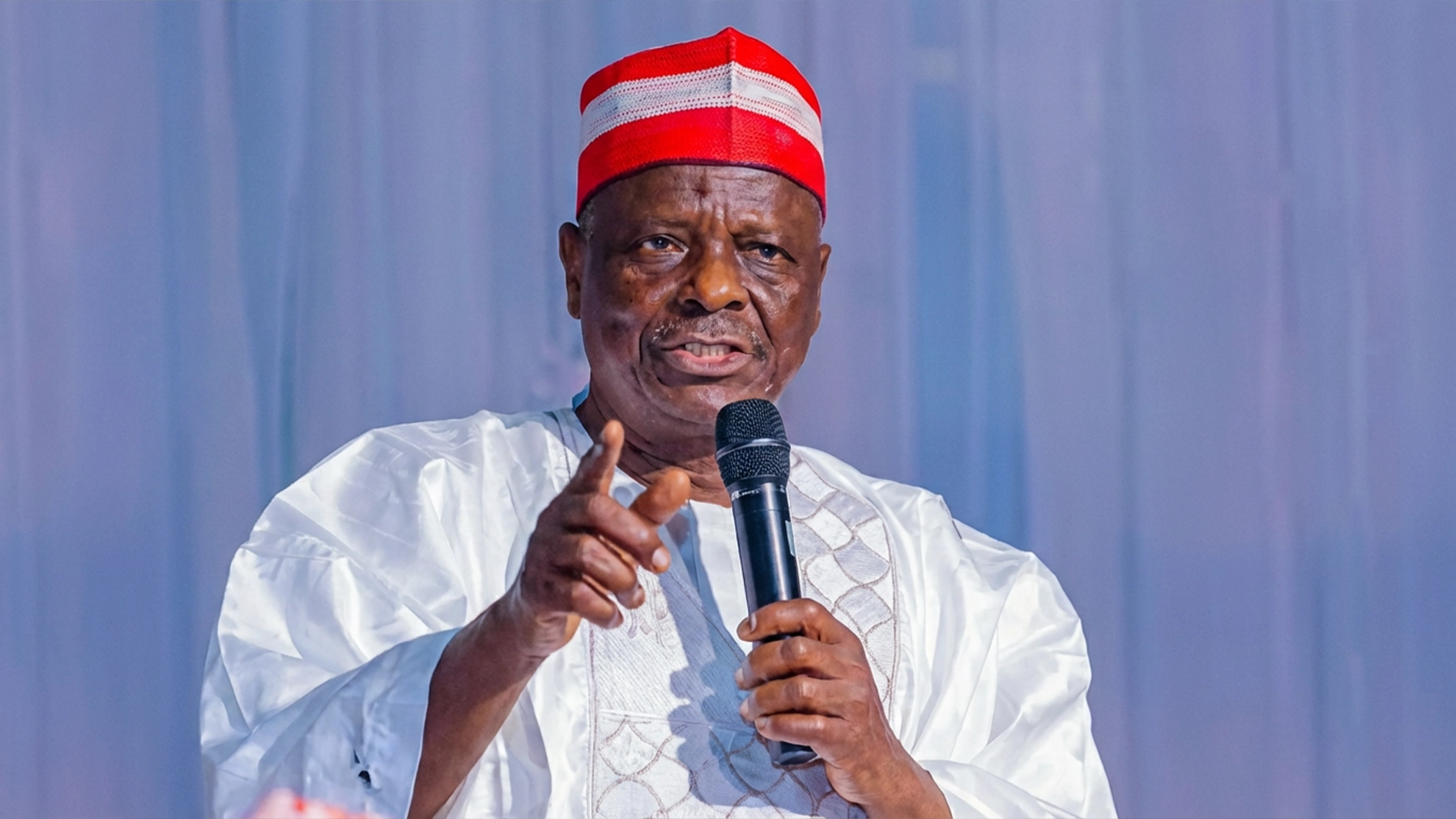
• Says Muslim-Muslim ticket will remain an issue for Tinubu
• Atiku: Nigeria’s hardship consequence of Tinubu’s policies
• Obi building movement of political extremists, says Presidency
The vice-presidential candidate of the Nigeria Democratic Congress (NDC), Senator Rabiu Kwankwaso, has confirmed that he and the party’s presidential candidate, Peter Obi, signed a written agreement committing Obi to serve only a four-year term, if elected president in 2027.
Speaking during an interview on Channels Television yesterday, Kwankwaso said he was confident Obi would honour the agreement, which provides for power to return to the North after a four-year southern presidency.
Asked whether Obi’s single-term pledge was binding, Kwankwaso said he had no reason to doubt the former Anambra State governor. “I personally believe him. Based on what I know about him, I don’t think he will change his mind when the time comes. We are all gentlemen, and we have agreed to put it on paper,” he said.
Kwankwaso disclosed that two separate agreements were signed – one by the party and another personally between him and Obi.
According to him, the agreement commits both leaders to work together to ensure a successful administration from 2027 to 2031 before the presidency returns to the North.

“The agreement is that after four years, we will continue to work together as a party, as friends and brothers, so that after our four-year term, from 2027 to 2031, power returns to the North,” he explained.
Explaining why he accepted the vice-presidential nomination despite previously seeking the presidency, Kwankwaso said the arrangement reflects the need for fairness and national balance.
He said both leaders agreed that the South should produce the president for one more term before power shifts back to the North, describing the arrangement as a consensus capable of promoting national unity.
On whether he intends to contest the presidency in 2031, Kwankwaso said the party remains focused on winning the 2027 election while keeping its long-term political plans in view.
Kwankwaso further dismissed concerns that ongoing legal issues surrounding the NDC’s registration status could affect the party’s participation in the 2027 general election.
Asked whether an unfavourable court judgment could jeopardise the party’s chances of appearing on the ballot, he expressed confidence that the party would overcome the challenge. “I don’t think any prospective judge would be in a hurry to say NDC should not participate in the 2027 election,” he said.
The former Minister of Defence maintained that the party remains optimistic about its prospects, citing what he described as encouraging feedback from opinion polls conducted across the country.
He said the NDC ticket enjoys support among young Nigerians and the wider electorate, expressing confidence that the party would perform strongly in the next general election.
The former Kano State governor also defended the principle of religious balancing in Nigeria’s politics, saying fairness and inclusivity remain important considerations in the selection of candidates for elective offices.
Kwankwaso said political parties still have room to make adjustments to their tickets before the substitution deadline, stressing that a balanced ticket helps foster a sense of belonging among Nigerians.
According to him, while there is nothing inherently wrong with either a Muslim-Muslim or Christian-Christian ticket, political leaders should remain mindful of the country’s diversity. “You see, fairness is always good,” he said, recalling that during the 2023 general election, he selected a Christian cleric as his running mate to ensure inclusiveness and give all groups a sense of belonging. He expressed surprise that President Bola Tinubu opted to retain a Muslim-Muslim ticket for the next presidential election despite the controversy that trailed the arrangement in 2023. Asked whether the same-faith ticket would still be an issue in 2027, the former Kano State governor replied, “It has to be.”
“I am even surprised that the President again is presenting the same type of ticket, and I know him; he is always somebody who likes to balance things. If you look at Lagos, he has always balanced it; even in his home, the ticket is balanced. I don’t know why the ticket in Nigeria is not balanced. But he still has time from now till the time of substitution to have a balanced ticket.”
Ahead of the 2023 presidential election, Tinubu, a Muslim, selected former Borno State governor Kashim Shettima, also a Muslim, as his running mate on the platform of the All Progressives Congress (APC). The decision sparked widespread debate, with many Nigerians arguing that it undermined the religious balance needed in a country with almost equal numbers of Muslims and Christians.
Although Tinubu went on to win the election, the controversy surrounding the same-faith ticket has persisted, particularly after the President recently announced that he would retain Shettima as his running mate for the 2027 election.
MEANWHILE, former Vice President of Nigeria and presidential candidate of the African Democratic Congress (ADC), Atiku Abubakar, has said the hardship confronting Nigerians is not merely the result of global headwinds but the inevitable consequence of policies that rewarded consumption over production, importation over industrialisation and dependency over self-reliance.
Speaking on Monday through his Senior Special Assistant on Public Communication, Phrank Shaibu, the Waziri Adamawa said Nigeria cannot borrow, import and tax its way to prosperity. He insisted that the country’s economic salvation lies in producing what it eats, manufacturing what it uses and exporting what it makes.
“For too long, we have celebrated importation while neglecting production. We import food that should be grown in our fields, goods that should be manufactured in our factories and even raw materials that ought to be processed by Nigerian hands. No nation has ever become prosperous by exporting jobs and importing poverty.”
He noted that the consequences of this failed economic model are evident across every sector. “Food inflation remains at 17.52 per cent nationally and has climbed to 53.02 per cent in Kogi and 43.83 per cent in Niger State, pushing millions of families beyond the reach of basic nutrition. Nigerian manufacturers also spent N3.53 trillion on raw material imports in just six months, while industry experts have warned that declining manufacturing tax contributions reflect weakening industrial activity and shrinking factory output. A nation cannot build prosperity when its factories are falling silent. We are exporting jobs, importing inflation, weakening the naira and mortgaging our future.”
Atiku said Nigeria must urgently rebuild an economy anchored on agriculture, manufacturing, solid minerals, technology and value addition. “Every bag of cocoa processed from Idanre and the rich cocoa belt of Ondo State, every bag of rice harvested in Kebbi, every yam cultivated in Benue, every tomato processed in Kano, every pharmaceutical produced in Aba, every leather product made in Kano and every machine assembled in Nnewi creates jobs, strengthens the naira and reduces our dependence on imports.”
The former vice president recalled that the Obasanjo-Atiku administration implemented market-oriented reforms that restored investor confidence, liberalised key sectors and attracted unprecedented private investment, laying the foundation for one of Nigeria’s strongest periods of economic growth. He said an ADC government would restore security to farming communities and industrial corridors, noting that “food security begins with farm security.”
Atiku said his administration would reduce import duties on industrial machinery not produced locally, provide affordable long-term credit for farmers and manufacturers, guarantee competitive electricity and fuel pricing, restore stability to the naira, invest in power, roads, rail, irrigation and storage infrastructure, promote agro-processing and industrial clusters, reform the tax system to reward production, and ensure decent wages that strengthen Nigerians’ purchasing power.
“Factories cannot thrive where borrowing is prohibitive, energy is unaffordable, the currency is unstable, and consumers are too poor to buy locally made goods. Our mission is simple: Produce in Nigeria. Employ Nigerians. Consume Nigerian products. Export Nigerian excellence. The wealth of nations is measured not by what they import but by what they produce, process and export. That is the Nigeria we helped build before, and by the grace of God, that is the Nigeria we shall build again.”
HOWEVER, the Presidency has accused the NDC presidential candidate, Peter Obi, of building what it described as a ‘political extremist’ movement. The Special Adviser to President Bola Tinubu on Policy Communication, Daniel Bwala, who made the accusation, alleged that Obi has failed to take responsibility for the actions of some of his supporters.
He rejected claims that he was fixated on Obi, stressing that he only responds after Obi’s supporters make comments that prompt media organisations to seek his reaction. “Every time, his people are the first to talk, the media houses will ask us to react. But the narrative peddled by the media is as if we wake up from sleep and we are looking for Peter Obi,” he said.
According to him, Obi posed no political threat to President Bola Tinubu. “Obi is inconsequential. Peter Obi is not a match to Asiwaju. All the governors who have governed in Lagos have all done better than Peter Obi. So, Peter Obi is not a match,” Bwala said.
The presidential aide, however, argued that the former governor of Anambra State had introduced a dangerous dimension to Nigerian politics.

