
 Get Guardian on Google
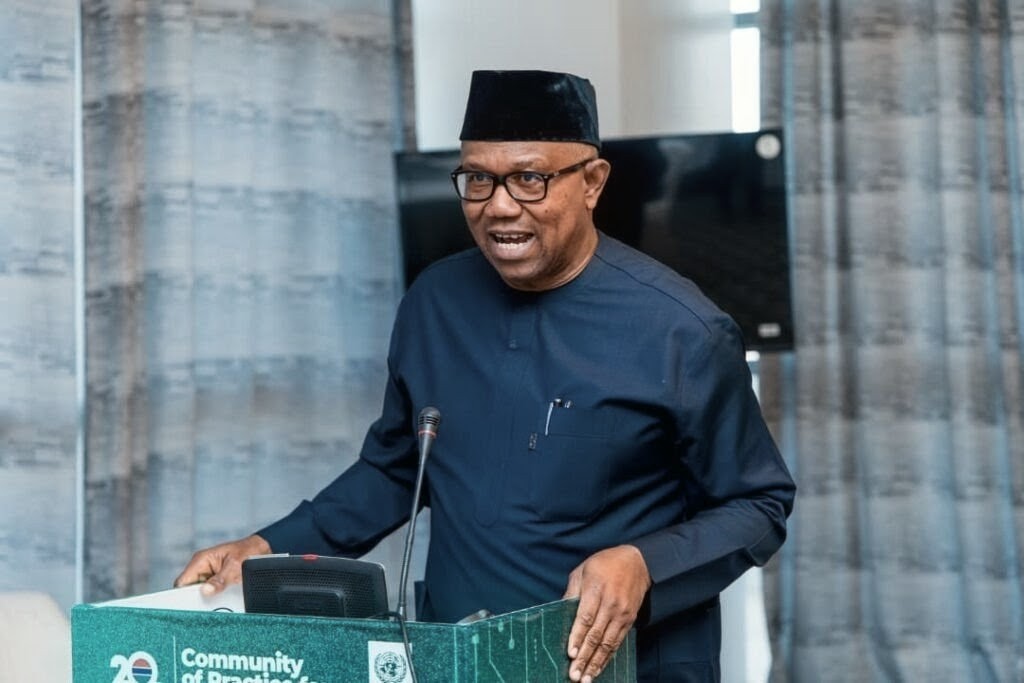
The presidential candidate of the Nigeria Democratic Congress (NDC), Peter Obi, has highlighted his administration’s achievements in the healthcare sector during his tenure as governor of Anambra State, pledging to replicate the experience at the national level if elected president.
Obi made this known in a post on his official X handle on Thursday, as part of his Go and Verify series, in which he has been presenting records of his administration’s performance in Anambra State.
He said healthcare was one of the sectors that received considerable attention under his administration, stressing that his government adopted a comprehensive approach to improving access to quality medical services.
“Another sector that received considerable attention under our administration was healthcare. We understood that education gives people the tools to build their future, while good healthcare enables them to live healthy and productive lives,” he said.
According to him, when his administration assumed office in 2006, Anambra’s healthcare system faced challenges, including dilapidated health facilities, inadequate medical equipment, limited access to primary healthcare and a lack of accreditation for several medical training institutions.
He said his administration subsequently adopted the Anambra Integrated Development Strategy (ANIDS) to invest in primary, secondary and tertiary healthcare, medical training, maternal and child health, medical equipment and partnerships with religious and private institutions.
Obi said one of the major achievements was the establishment of the Chukwuemeka Odumegwu Ojukwu University Teaching Hospital in Awka, which he said was initiated, constructed, equipped and accredited during his tenure.
He added that more than 25 buildings were constructed to accommodate the College of Medicine, laboratories, pathology, accident and emergency services, paediatrics, wards, consultant clinics and other essential departments.
“The objective was not merely to build another hospital but to establish an institution capable of providing specialist healthcare while training the next generation of Nigerian medical doctors,” he said.
The former governor also said his administration rehabilitated 15 general hospitals across the three senatorial zones of the state to strengthen secondary healthcare delivery.
He disclosed that in 2013, his government provided N400 million for the renovation of 11 selected general hospitals, alongside other healthcare interventions.
On primary healthcare, Obi said his administration built more than 120 primary healthcare centres across communities in the state’s 177 autonomous communities and rehabilitated existing facilities.
He said the centres were equipped to provide basic medical services, maternal care, immunisation, treatment of common illnesses and health education, adding that medical equipment, essential drugs, solar-powered boreholes and sanitation facilities were also provided.
Explaining the rationale behind the investment, he said, “We believed that the best healthcare system is one that prevents illnesses and treats people early, rather than one that waits until minor health problems become emergencies.”
On maternal and child healthcare, Obi said Anambra won a $1 million award from the Bill and Melinda Gates Foundation as the best-performing state in immunisation in the South-East.
He said the prize money, alongside government resources, was used to construct 10 maternal and child healthcare centres, particularly in remote communities, in partnership with religious institutions.
He added that his administration provided another N330 million in September 2013 for the construction of 11 additional rural maternity and child healthcare centres.
The NDC presidential candidate further said his administration collaborated with development partners, including UNICEF, the World Bank and the Department for International Development (DFID), on immunisation, malaria prevention, maternal health and other disease-control programmes.
Obi also disclosed that his government purchased and distributed close to 100 ambulances to selected hospitals and medical institutions across the state to improve emergency response and patient transportation.
He said medical equipment worth N135 million, sourced through the Millennium Development Goals programme, was distributed to more than 105 government and mission health institutions.
On specialised healthcare, he highlighted the establishment of the Joseph Nwilo Heart Centre at St Joseph’s Hospital, Adazi-Nnukwu, through a partnership with the Church.
He said the facility was established to provide affordable cardiac treatment and heart surgeries, while his administration also procured diagnostic equipment, including CT scan machines, mammography machines, digital X-ray equipment and ultrasound machines.
He added that four ventilators were provided for the intensive care unit of the teaching hospital to strengthen critical care services.
On mental healthcare, Obi said his administration invested in the development and modernisation of the Neuropsychiatric Hospital, Nawfia, in Njikoka Local Government Area, as well as supported the development of its School of Psychiatric Nursing.
He said the improved infrastructure at the hospital was commissioned by former First Lady, Dame Patience Jonathan, in September 2010.
The former governor also attributed some of the improvements in healthcare delivery to partnerships with mission hospitals, including Our Lady of Lourdes Hospital, Ihiala; Iyi-Enu Hospital, Ogidi; Holy Rosary Hospital, Onitsha; St Joseph’s Hospital, Adazi-Nnukwu; St Charles Borromeo Hospital, Onitsha; Immaculate Heart Hospital, Nkpor; and Diocesan Hospital, Amichi.
According to him, his administration restored government grants to mission hospitals and provided funding for infrastructure, equipment, wards, theatres and other facilities to improve service delivery and secure accreditation.
He said N3 billion was released in 2013 to selected mission and government-owned health institutions, with some hospitals receiving funds for facility upgrades and equipment.
Obi further stated that more than 12 health institutions, including two hospitals, secured accreditation for their courses and programmes before he left office in 2014.
He said the interventions were aimed at strengthening healthcare infrastructure and developing the human resources required to deliver quality medical services.
Reflecting on the achievements, Obi said the interventions formed part of a deliberate policy to establish a healthcare system where primary healthcare centres, general hospitals, teaching hospitals and mission institutions complemented one another.
He, however, acknowledged that his administration did not achieve everything required in the sector but maintained that its experience demonstrated what could be accomplished through planning, partnerships, accountability and prudent management of public resources.
“We did not achieve everything that needed to be done, but we demonstrated what could be accomplished through planning, partnerships, accountability, and the purposeful deployment of public resources,” he said.
Looking ahead, Obi pledged to apply the lessons from his administration in Anambra to Nigeria’s healthcare system if elected president.
He said his administration would prioritise functional primary healthcare centres, properly equipped general and teaching hospitals, adequate medical personnel, preventive medicine, emergency services and medical research.
He also called for greater accountability in the management of public funds allocated to healthcare, insisting that government agencies must perform their statutory responsibilities effectively.
Obi stressed the need to support mission and private hospitals, noting that government could not provide all healthcare services alone.
“Our approach will therefore be based on accessible primary healthcare, functional hospitals, adequate medical personnel, preventive medicine, effective emergency services, medical research, and strong partnerships with institutions already serving our communities,” he said.
He said the experience gained in Anambra could be adapted to address Nigeria’s healthcare challenges, adding that the principles of planning, prudent resource management, accountability and measurable results remained relevant despite the difference in scale.
The former governor said the next instalment of his Go and Verify series would focus on his administration’s achievements in the road sector.