 Follow Us on Google News


 Follow Us on Google Discover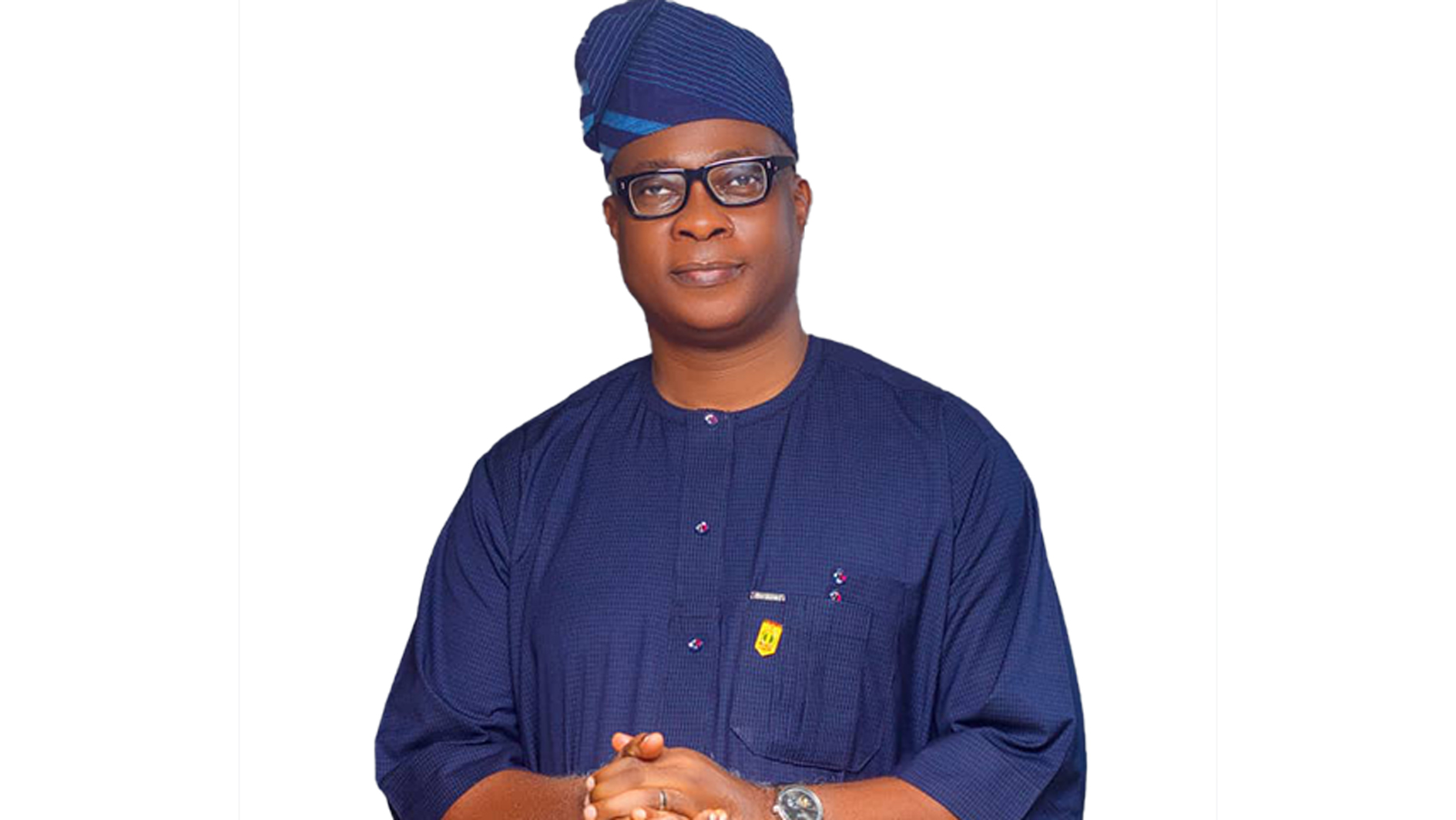
Gubernatorial candidate of the Nigeria Democratic Congress (NDC) in Oyo State, Akim Adebola Yusuf, in this interview with ROTIMI AGBOLUAJE, speaks on unemployment, security, economic development and his plans to transform the Pace Setter State, if elected governor in 2027.
What is your assessment of Oyo State’s political, social and economic condition, and what are the major challenges you would address if elected governor?
OYO State has considerable human and natural resources, but much remains to be done to realise its potential. Youth unemployment is a major concern because prolonged joblessness can expose young people to substance abuse and other social problems, while placing additional pressure on healthcare and security services.
We need an integrated economic master plan linking education, skills development, investment and employment creation. Our agricultural land, mineral resources, industrial facilities and opportunities for power generation provide a foundation for economic growth.
My priorities would be education, industrial revival and agricultural development. I would begin by rehabilitating dilapidated public schools and improving learning environments. I would also explore partnerships with investors to revive moribund factories and production facilities, creating jobs and stimulating economic activity.
In agriculture, we would support smallholder farmers through improved access to mechanisation, irrigation, storage, transportation and markets. Agriculture must be treated as a complete value chain covering production, processing, storage and marketing.
We would also encourage graduates of agricultural science, engineering, horticulture and related disciplines to establish productive enterprises, supported by access to finance, equipment and markets.

Larger agricultural investments and processing facilities near production areas would increase output, reduce post-harvest losses and create rural employment.
Reliable electricity and security are equally important. We would explore viable power solutions for agricultural and industrial clusters while strengthening security in vulnerable farming communities.
With your banking background, how would you apply your experience in financial management, investment and distressed assets to governing the state?
The government must deploy available resources efficiently to achieve the greatest public benefit. This requires financial discipline, careful planning and sound investment decisions.
My banking experience has exposed me to financial management, investment appraisal, project financing and the assessment of business opportunities. These skills would help me evaluate projects and determine how public resources can be used effectively.
Where appropriate, we would work with financial institutions, development finance organisations and private investors to support viable projects. Such arrangements must be carefully assessed to ensure that their costs and repayment obligations are sustainable.
Public investments should be judged by the value they deliver, including employment, improved public services and sustainable economic activity.
Government is different from banking. How would you ensure that a technocratic approach does not overlook Oyo State’s social and political realities?
My background extends beyond banking. My first degree is in Political Science, and I have received training in policy formulation and management. I have also served as an adviser on due process and policy implementation.
Banking involves engaging people from different social and economic backgrounds, but governing requires more than technical knowledge. It demands empathy, consultation and an understanding of local realities.
I would prioritise agriculture and its value chain, agro-allied processing, manufacturing and viable mineral development to generate employment. We would engage domestic and foreign investors, development finance institutions, chambers of commerce and other stakeholders to identify viable projects.
Funding would combine prudent public expenditure with private-sector investment and appropriate development finance. The government should concentrate its resources on essential infrastructure and projects that generate substantial public benefits. We would also support small and medium-sized enterprises by improving access to markets, infrastructure, skills and appropriate financing.
Insecurity continues to affect farming, businesses and communities. What would be your strategy, particularly in rural areas?
Our strategy would combine stronger community-based security, improved coordination among security agencies and responsible use of modern technology.
We would review Amotekun’s deployment to improve its presence in vulnerable rural, suburban and agricultural communities, working with the police and other relevant agencies.
Technology, including drone-assisted surveillance where appropriate, could help monitor vulnerable areas and support timely responses to threats. Such operations must have proper safeguards and trained personnel.
Community engagement is also essential. Residents can provide valuable information to help security agencies identify risks and prevent attacks. Safer communities would encourage farming, trading and transportation, making security an important foundation for economic development.
Would you support the establishment of state police, as being pursued by the administration of President Bola Tinubu, to address Nigeria’s security challenges?
I am totally in support of state police because the Nigeria Police Force, as presently constituted, faces enormous challenges in effectively policing the entire country. Given Nigeria’s population, geographical size and increasingly complex security challenges, a centralised police structure struggles to respond adequately to the needs of every community.
Effective policing requires an understanding of the local environment, its people, culture, language and peculiar security challenges. Officers familiar with the communities they serve are often better positioned to gather intelligence, identify threats and respond promptly.
However, adequate safeguards must be established to prevent abuse of power. There is a legitimate concern that state police could be used to intimidate political opponents, suppress dissent or victimise individuals who disagree with those in government.
The establishment of state police must therefore go hand in hand with effective oversight, accountability and clear constitutional provisions. State police commands must operate professionally rather than become instruments of political control. Citizens must also have access to appropriate legal remedies when their rights are violated.
There should be effective coordination between state police commands and the Nigeria Police Force to prevent jurisdictional conflicts and facilitate intelligence sharing. Adequate funding, proper training, modern equipment and respect for human rights are equally important.
Ultimately, state police should bring policing closer to the people, improve crime prevention and make law enforcement more responsive to local needs. With the right safeguards, it could provide an important additional layer of security.
Which policies of the present administration would you retain, and which would you change if elected?
I would assess existing policies according to their objectives, implementation and results. Programmes that serve the public interest should be continued and improved, while ineffective ones should be reviewed.
One priority would be to institutionalise local government autonomy in accordance with the applicable constitutional and legal framework.
I would also extend the rehabilitation of inner-city and township roads while prioritising economically important routes connecting major towns, agricultural areas, processing facilities and markets.
Education and healthcare would receive attention through improved infrastructure, essential equipment and support for professionals. My objective would be to build on what works, correct weaknesses and ensure that government policies produce measurable benefits.
Southwest governors have continued to advocate regional integration as a pathway to economic growth, improved security and sustainable development. If elected governor, what role would you play in advancing this agenda?
I strongly support regional integration because the Southwest shares common historical, cultural and economic interests that can be harnessed for collective development.
I would work closely with other governors to strengthen cooperation in agriculture, security, education, healthcare, transportation, tourism and industrial development.
Regional integration must go beyond political discussions to deliver practical benefits. We must develop joint infrastructure, promote trade, create employment and address security challenges collectively. My administration would support initiatives that advance regional prosperity while respecting the autonomy and interests of individual states.
As an Ibadan indigene, how would you convince voters in Oke-Ogun, Ogbomoso, Oyo and Ibarapa that your government would give their interests equal attention?
I believe in balanced and integrated development. Oyo State’s economic opportunities extend beyond Ibadan, particularly in agriculture, solid minerals and other areas where communities possess comparative advantages.
My approach would be to identify the strengths and needs of each zone and direct investments towards developing them. Agricultural production, processing facilities, infrastructure and essential public services should reflect local priorities.
Development must not be concentrated in the state capital. By investing across the state, we can expand economic opportunities, create jobs and promote a stronger sense of inclusion among our people.
You contested the 2023 governorship election under the Action Democratic Party (ADP). What did that experience teach you about Oyo politics and the electorate?
The experience gave me a deeper understanding of electoral politics in Oyo State and the factors influencing voters’ decisions. I realised that some people enter politics primarily for financial benefits rather than public service. I also learnt that poverty significantly influences how people respond to political messages and make electoral choices.
Beyond this, I gained a better understanding of leadership selection, political alliances and the influence of respected elder statesmen on electoral outcomes. The experience reinforced my belief that success requires a credible vision, sustained engagement with the people and an understanding of their needs.
You are returning in 2027 under the NDC. What specifically will you do differently this time?
With the benefit of experience, I intend to be more strategic in building relationships and partnerships that can strengthen our political platform. We will engage stakeholders across different sectors and communities while communicating our development agenda more effectively.
Our approach will combine political engagement with practical proposals on governance, economic development and public welfare. We must demonstrate that we understand the people’s problems and have credible ideas for addressing them.
What gives you the confidence that the factors that prevented you from winning in 2023 will not also work against you in 2027?
We are building strategic partnerships and engaging people with influence in their communities and various professional and social spheres. These relationships can help broaden our acceptance and communicate our message more effectively.
Ultimately, electoral support must be earned through trust, persuasion and a convincing development programme. Our responsibility is to demonstrate that we understand the challenges facing Oyo State and can offer practical solutions.
The ruling APM under Governor Seyi Makinde, the All Progressives Congress (APC) and other established parties have strong political structures across the state. How do you intend to build a structure capable of competing across all 33 local government areas?
The people of Oyo State are the foundation of our political structure. We are taking our message directly to communities, listening to their concerns and explaining our proposed development agenda.
We are also engaging citizens outside established political networks who are interested in contributing to the state’s development.
Effective political organisation requires sustained grassroots engagement, reliable communication and the ability to organise supporters across the state. Our task is to build an inclusive network that reflects Oyo’s diversity and communicates our proposals consistently.
Political alliances are important, but appointments must serve the public interest and be based on competence and integrity. I would encourage stakeholders to submit credible nominations for consideration, allowing us to assess candidates’ experience, suitability and capacity to deliver results.
Political inclusion must not replace competence. The objective is to build a team capable of governing effectively and responding to the needs of the people.
Having served in the administration of former Governor Rashidi Ladoja, what did you learn about governing Oyo State and implementing public policies?
Government policies must serve the best interests of the greatest number of people. Policy formulation should consider the circumstances of those affected and the practical implications of implementation.
I also learnt the importance of open and honest communication. Citizens need to understand why a policy is introduced, what it seeks to achieve and how it will affect them. Its immediate, short-term and long-term benefits must be clearly explained.
Effective governance therefore requires sound policies, transparency and public understanding. When people appreciate the objectives and potential benefits of government programmes, securing their cooperation becomes easier.

