 Follow Us on Google News


 Follow Us on Google Discover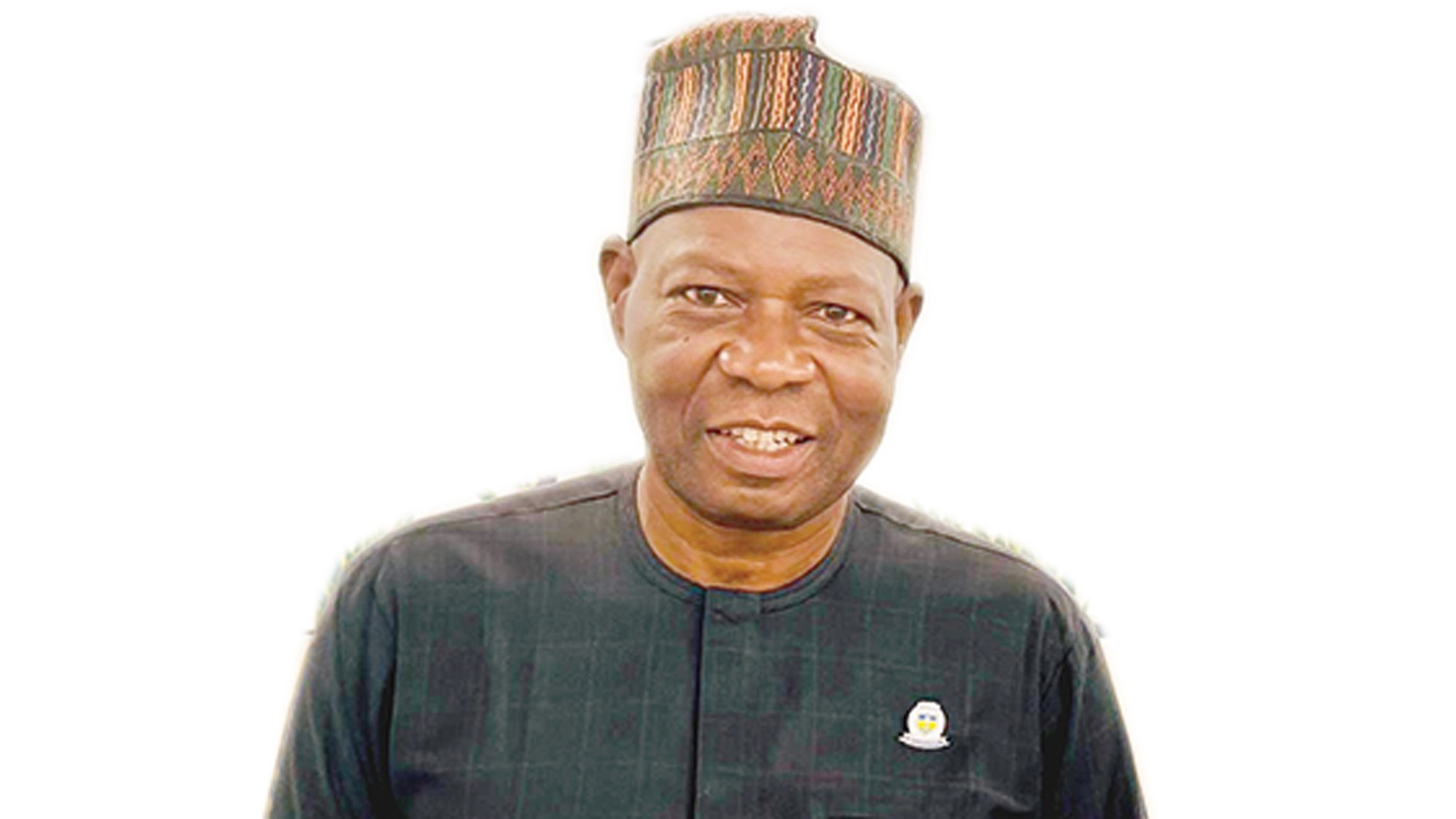
The Director-General of the National Institute of Police Studies (NIPS), Professor Olu Ogunsakin, who previously served as Technical Adviser to successive Inspectors-General of Police and currently head the Nigeria Police Reform Secretariat, speaks with SEYE OLUMIDE on the imperative of state police and sundry issues.
Why has Nigeria reached the point where State Police have become necessary?
The issue is not simply that Nigeria operates a federal police system; it is that we have an excessively centralised policing structure serving one of the world’s largest and most diverse federations.
The security realities of Sokoto differ from those of Lagos, Bayelsa, Enugu, Ekiti, or Borno. A single command architecture can find it difficult to respond with equal effectiveness to such varied environments.
The proposed reform is therefore about making policing more locally responsive while retaining national standards. It does not seek to abolish the Nigeria Police Force (NPF). Rather, it envisages a dual policing architecture comprising a Federal Police Service and State Police Services operating under common national standards.
A state would only commence operations after meeting prescribed legislative, institutional and professional requirements and obtaining the necessary certification. The objective is to bring policing closer to communities, improve intelligence gathering and response, and strengthen public confidence without weakening national cohesion.
How do we prevent governors from turning State Police into political weapons?
The answer lies in institutional design and strong safeguards. The proposed framework separates political leadership from operational policing. It provides for nationally prescribed minimum standards, independent inspection and certification, statutory complaints and accountability mechanisms, independent investigation of serious incidents and judicial review of major regulatory decisions.

Inspection should be about standards assurance, not operational command. Neither governors nor a national regulator should direct individual investigations, arrests or routine patrol deployments.
Governors can play an important role in public safety policy, but operational policing must remain professional, impartial and subject to the law.
Who should appoint and remove the State Police Commissioner?
The police commissioner should owe allegiance to the Constitution and the law rather than to the governor of the day.
One option is for appointments to be made through an independent State Police Authority, with confirmation by the State House of Assembly and formal appointment by the governor as the state’s chief security officer. Removal should occur only on specified statutory grounds, following an independent investigation and due process.
At the national level, there should also be an effective standards, certification and inspection framework. However, national oversight should not translate into routine operational or personnel control over State Police Services. The objective is to achieve a balance between state autonomy, professional independence and accountability.
Won’t wealthy states have better police than poorer states?
Financial inequality is a legitimate concern, but it should be addressed through an equalisation mechanism rather than used as a reason to reject reform.
The framework should provide for federal readiness and equalisation grants, common national standards and standards-linked funding support so that poorer states are not excluded from effective policing.
Funding could combine state operational resources, statutory federal equalisation grants, technology and training support, and mandatory national benchmarks for salaries and welfare.
Policing may be administered at different levels, but the minimum quality of policing should remain a national responsibility. A citizen should be entitled to effective and professional policing irrespective of the state in which he or she lives.
What becomes of the Nigeria Police Force?
The proposal is not to abolish the Nigeria Police Force but to transform it into a Federal Police Service, with responsibilities redistributed between federal and state institutions.
The Federal Police Service would have responsibility for areas such as terrorism, organised crime, border security, inter-state criminal networks and protection of federal institutions.
State Police would focus more directly on community policing, local crime investigation, neighbourhood safety, state criminal law enforcement, local intelligence and crime prevention.
However, the division cannot be absolute. Kidnapping, cybercrime, organised robbery and other serious offences can cross state boundaries. In such cases, joint operational protocols, intelligence sharing and coordinated investigations would be necessary.
The important point is that the two levels should complement each other rather than compete.
What happens to serving police officers?
The reform should protect police officers’ careers and welfare. The transition framework should allow voluntary mobility between the Federal Police Service and State Police Services while preserving rank equivalence, pensions, years of service and legitimate career progression.
An officer should not lose accrued benefits simply because he or she moves from one state or service to another.
Professional policing requires continuity of careers and standards. The reform should therefore provide clear rules for transfer, recruitment, promotion, training, retirement and welfare.
The transition should be managed carefully so that institutional knowledge is not lost and serving officers are not unnecessarily disadvantaged.
When should the Federal Government intervene?
Federal intervention should be constitutional, exceptional and based on clearly defined circumstances.
Possible triggers could include a serious collapse of public order, systemic failure to meet national policing standards, grave human-rights violations or persistent non-compliance with prescribed requirements after due process.
However, inspection findings and operational intervention are not the same thing. A regulator can identify deficiencies and require corrective action without automatically taking over operational policing.
That distinction is important because the system must preserve both federal responsibilities and the autonomy of state policing institutions.
How should citizens hold State Police accountable?
Citizens must be at the centre of police accountability. The system should provide independent police complaints bodies, accessible complaint procedures, independent investigation of serious incidents, public reporting and mechanisms for referring criminal or disciplinary matters to the appropriate authorities.
There should also be regular inspection of how complaints are handled. I support strong state-level civilian oversight institutions with clearly defined statutory powers. Citizens should know where to complain, how their complaints will be investigated and what happens after an investigation.
Public confidence is built when people see that police officers are accountable for their actions and that complaints are treated seriously.
How will State Police coexist with the DSS, NSCDC and other security agencies?
Nigeria already operates a multi-agency security system. The issue is therefore not simply the number of agencies but how effectively they coordinate.
State Police would need to operate within a system of interoperable criminal information, appropriate intelligence sharing and clearly defined institutional responsibilities.
The relationship between the Federal Police Service, State Police, the Department of State Services, the Nigeria Security and Civil Defence Corps and other agencies should be guided by established protocols.
Information should move quickly between agencies where the law permits it, particularly in cases involving organised crime and threats that cross state boundaries.
The military should continue to have an important role in extraordinary internal security situations within the constitutional framework, while routine policing should remain the responsibility of professional civilian police institutions.
How do we prevent recruitment from becoming patronage?
Recruitment is where professionalism either begins or fails. There should be independent recruitment boards, computer-based examinations, psychological and integrity screening, public advertisement of vacancies and digital application systems. Civil society and professional bodies could also participate in appropriate oversight.
State representation is desirable because police officers need to understand the communities they serve. But representation must never replace merit.
ecruitment should be transparent, competitive and based on clearly defined professional standards.
The legitimacy of State Police will ultimately depend on the quality, competence and integrity of its personnel. Creating new police structures without investing in officer quality would not achieve the intended objective.
What new policing philosophy should State Police introduce?
State Police should provide an opportunity to move policing towards prevention rather than simply reacting to crime after it has occurred. Its philosophy should be based on intelligence-led policing, community partnerships, data-driven deployment, crime prevention, forensic investigation and problem-oriented policing.
The police should know the communities they serve, understand recurring security problems, and work with residents and relevant institutions to address them.
At the same time, fundamental rights must remain nationally protected. The legal threshold for the use of force should be uniform across the country. An individual’s right to life, dignity and liberty should not depend on the state in which a police officer is serving.
This is one of the most important safeguards required in a decentralised policing system.
What danger are Nigerians underestimating, and what opportunity could transform security?
The major challenge is governance during implementation.
Establishing State Police is not simply a matter of creating new commands, recruiting personnel or providing vehicles and equipment. It requires institutions capable of applying standards consistently, managing resources transparently and holding officers accountable.
If those governance structures are properly established, the opportunity is considerable.
Local policing can improve community intelligence because officers are closer to the people and more familiar with local circumstances. It can also strengthen crime prevention and improve response to problems that may not receive sufficient attention in a highly centralised system.
The real opportunity is therefore to build trusted, professional and community-oriented police services.
Should governors have greater control, or should citizens have greater control?
Citizens should take precedence. In a democratic society, police legitimacy derives from the people through constitutional institutions and the rule of law. Governors have an important role in public safety policy and emergency coordination, but operational policing should remain professionally independent and legally accountable.
The central principle should be that the police serve the public rather than political office holders.
Strong policing comes from strong institutions. National standards, independent inspection, transparent complaints mechanisms and judicial oversight are necessary safeguards.
If State Police is to succeed, Nigerians must be able to trust that officers will enforce the law fairly, regardless of who occupies political office.
The ultimate test should therefore not be which level of government controls the police, but whether the system provides professional, accountable and effective policing to citizens.

