 Follow Us on Google News



 Follow Us on Google Discover
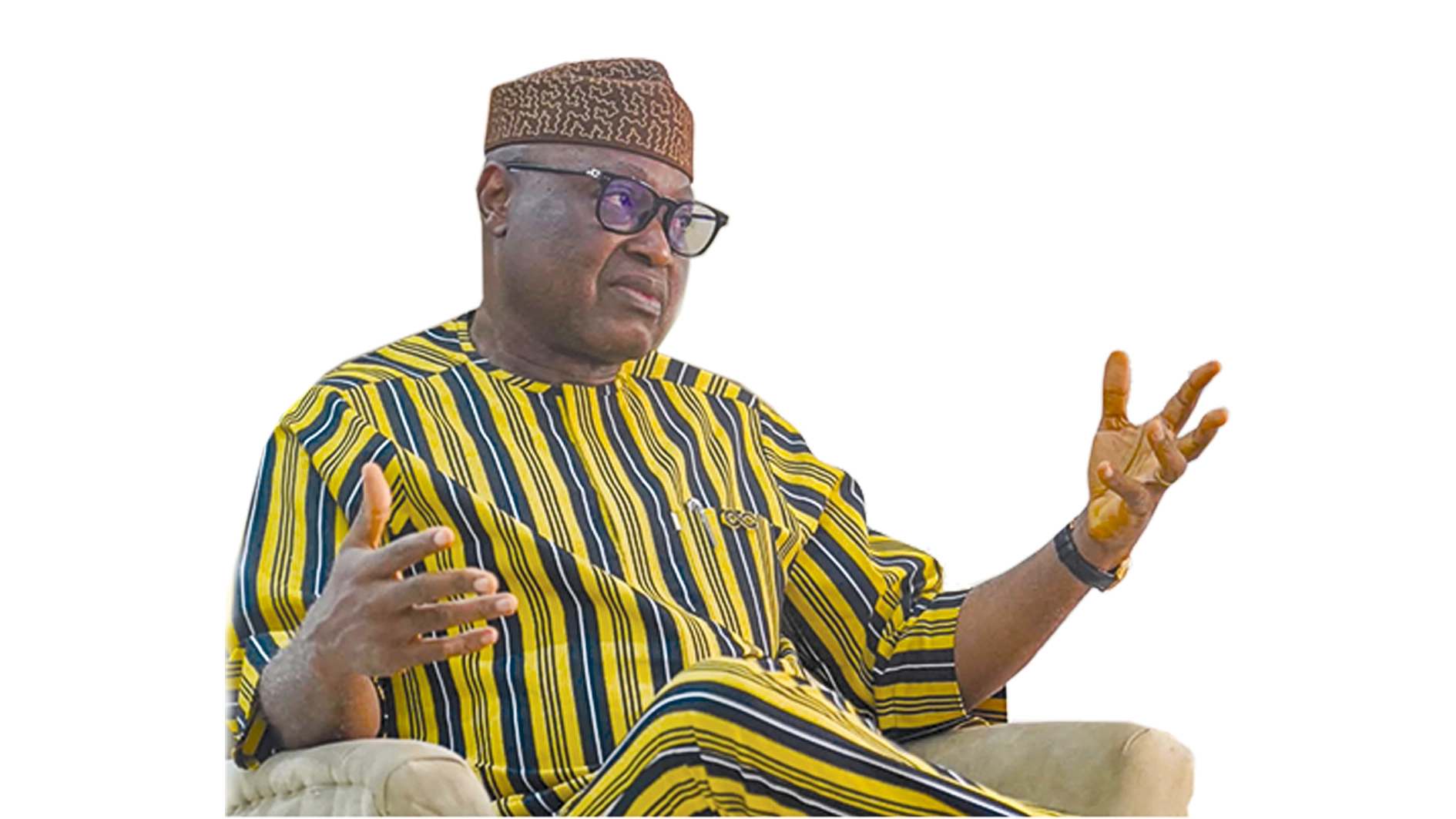
Following his second-term inauguration, Ekiti State Governor Biodun Oyebanji speaks with journalists on his administration’s priorities, including security, infrastructure, industrialisation, job creation and women’s development, outlining plans to attract investment, process agricultural produce locally and strengthen the state’s economy, AYODELE AFOLABI was there.
Security remains a major concern across the country. What should the people of Ekiti State expect from your administration in your second term?
Security is not something I like to discuss openly in detail. I would rather assure the people that we will continue to do everything possible to protect them and secure the state.
I do not want to go into operational details, but I can assure you that the safety and security of our people will remain a priority. We understand the importance of creating an environment in which residents can go about their lawful activities without fear. Security is also essential to economic development because businesses and investors need a stable environment to operate.
Residents continue to face challenges with water supply, while recent flooding in Ado-Ekiti has raised concerns about urban planning and drainage. What is your administration doing to address these problems?
Ekiti State is blessed with substantial water resources. We have four major functioning dams, and the World Bank has supported the rehabilitation of these dams and other interventions in the water sector.
We have replaced pumps, procured generators and undertaken several repairs, but the challenges go beyond the dams and pumping equipment. Some of the distribution pipes were installed many years ago. These include asbestos pipes that are no longer suitable, and we have started replacing them.

When we began some of these interventions, water supply improved in certain areas. However, the major challenges remain the cost of electricity and pumping, the condition of the distribution network and the cost of getting water to consumers.
In some instances, we have to pump water continuously for 24 to 26 hours to fill the reservoirs. Running generators on diesel for that length of time is expensive, particularly when some consumers are unwilling to pay for the water they use.
We have also discovered cases of consumers bypassing their meters. Some have made underground connections to the water supply system without following the proper metering process. These practices undermine the system and make it difficult to recover the cost of providing the service.
The dams are in good condition, and the pumps are functioning. The major challenge is the distribution network. Once water reaches the reservoirs, it must be conveyed through pipes, many of which are old, damaged or no longer fit for purpose.
In this second term, we have a comprehensive programme to address these challenges, with particular emphasis on replacing old pipes. We have also established water consumers’ committees in communities to help ensure that the system works effectively.
On flooding, Ado-Ekiti continues to expand, with development spreading into new areas. Unfortunately, some buildings have been approved on waterways, while others have been erected without proper authorisation.
Apart from the 2022 flooding incident, we had not experienced flooding of comparable magnitude in the first year of this administration or in subsequent years. We have been proactive in dredging waterways and taking other preventive measures. However, indiscriminate refuse disposal and construction on waterways remain serious problems.
The recent flooding was largely man-made because some buildings obstructed natural waterways. I have directed the Ministry of Environment to conduct a comprehensive inventory of houses built on waterways. Structures obstructing waterways will be removed. We cannot allow the situation to continue because we may experience a worse disaster in the future.
I have also informed members of the State House of Assembly that, after the inventory, we will distinguish between buildings that obtained formal approval and those erected illegally. Where applicable, compensation may be considered for affected properties that were formally approved, while illegally constructed buildings must be removed.
Transportation costs remain a burden on households, particularly in Ado-Ekiti and other towns. What specific measures are you introducing to reduce fares, attract private investment and improve interstate transportation?
The government must be mindful of existing operators. Members of transport unions and other associations have invested in their businesses, and we should not introduce policies that unnecessarily drive them out of the market.
Our approach is to encourage fair competition and provide alternatives that benefit residents. We are currently testing a pilot mass transit scheme to assess its effectiveness and determine its potential impact before deciding on the scale of any further investment.
If the pilot scheme succeeds, the government will invest in more vehicles that can compete with existing operators. I do not want to drive transport operators out of business. That is important because many commercial drivers acquired their vehicles through instalment payments and other credit arrangements. They have financial obligations to meet.
I understand their challenges, and I will not introduce policies that create hardship for one group simply to win applause from another. We must balance the need for affordable transportation with the need to protect legitimate businesses.
However, we must also recognise that reducing transportation costs significantly requires a gradual transition to Compressed Natural Gas (CNG)-powered and electric vehicles. As long as commercial vehicles depend entirely on petrol, operating costs will remain a challenge.
For CNG vehicles, we must develop the necessary infrastructure, including conversion centres and adequate gas-refuelling stations across the state. Without these facilities, it will be difficult to achieve a wider transition.
Electric vehicles also offer opportunities. With appropriate charging points, users can charge their vehicles at designated locations and, where facilities permit, at home. This would reduce their dependence on petrol.
We are already discussing the rollout of such an initiative with a company. It will not be limited to cars; we are also considering tricycles and motorcycles as part of our broader transportation strategy.
Our objective is to provide more affordable transport options, encourage private investment and create employment without undermining existing businesses. We will continue to examine how best to improve transportation within Ekiti and connectivity with other states.
Your administration has been emphasising industrialisation in the second term. Which industries do you intend to attract, what products will they manufacture, and how many jobs do you expect them to create?
The best thing the government can do is establish the structures needed to attract investors. Capital will flow to places where it is treated well. That is why we have invested in infrastructure and introduced executive orders and other measures to improve the ease of doing business.
Ekiti has performed well in recent assessments relating to the ease of doing business. We have simplified processes for obtaining approvals and conducting business, and we are reforming our land administration system to make transactions more efficient and investor-friendly. We are also streamlining taxation to prevent excessive burdens on businesses and residents.
We are establishing a one-stop shop where prospective investors can obtain information, approvals and other services without unnecessary bureaucratic delays.
Beyond these reforms, we are working to secure the environment and build an ecosystem in which businesses can thrive. Our agricultural interventions have already attracted investment into Ekiti State.
At the Special Agro-Industrial Processing Zone, several players in the agricultural sector have committed billions of naira to investments. A number of organisations and businesses are operating there, although many people may not be aware of the scale of the activity.
Arog Agro-Allied and other agricultural businesses are part of this emerging investment landscape. Agbeyewa Farms, for instance, operates a large cassava farm in Ekiti State. Yet, many people are unaware of the scale of the operation.
To improve access to these investments, we have awarded a contract for the Ayetoro-Iyemero Ekiti road. The project will open up the area and facilitate the movement of people and agricultural produce.
The African Development Bank has also selected Ekiti as a Tier-2 state under the Special Agro-Industrial Processing Zone programme. Studies are being conducted on Itapaji Dam to determine the possibility of providing irrigation facilities.
Our responsibility is to create an enabling environment for investors to establish businesses and create jobs. The government does not necessarily have to establish industries itself; rather, it must create conditions that encourage the private sector to invest. We are reforming our investment promotion agency to make it more effective in attracting businesses.
Our next major focus is to ensure that more of the agricultural products grown in Ekiti are processed locally and converted into finished goods. This will allow us to derive greater economic value from our agricultural production rather than relying solely on the sale of raw produce.
Farmers must also be able to produce on a larger scale and have reliable off-takers who will purchase their produce and supply it to companies for processing. This relationship between farmers, processors and investors is essential to building a productive agricultural economy.
We are therefore concentrating on industrialisation and support for small businesses. The objective is to create an environment in which investment can expand production, generate employment and improve household incomes.
How will you ensure that these investments translate into tangible benefits for ordinary residents and small-scale entrepreneurs?
During the first three years of our administration, we concentrated on laying the foundation for increased productivity. We constructed roads, connected previously unserved communities to electricity, improved township roads and developed farm roads. By the end of this year, we expect to have constructed close to 400 kilometres of roads.
We have also invested in agriculture, while our internally generated revenue has grown significantly over the past three to four years. These interventions were necessary to create the foundation for economic growth.
The next phase is to translate these investments into greater productivity and economic prosperity. We will not abandon infrastructure development, but we will give greater attention to industrialisation and supporting small businesses.
Welders, tailors, hairdressers, barbers and other small-scale entrepreneurs need access to affordable financing to expand their businesses. They are important to the local economy because their businesses provide livelihoods and employment within communities.
We want farmers to increase production, small businesses to grow and investors to establish processing facilities. These activities must reinforce one another. Better roads should make it easier to transport agricultural produce; processing facilities should create demand for farm products; and access to finance should enable small businesses to expand.
We are reviewing our development plan to reflect changing circumstances, and our budgets are derived from that plan. The central objective of our second term is to increase productivity. This mandate is reflected in the 2027 budget we have presented to the State House of Assembly.
What role will the Ekiti airport play in your industrialisation and investment plans?
Our airport must play a critical role in the state’s economic development. We want it to operate round the clock rather than close at 6 p.m. or be unable to accommodate aircraft during adverse weather conditions.
We have installed an Instrument Landing System (ILS), and a certification team is assessing it. Once the system meets the necessary requirements, we will proceed to the next stage, which involves installing the lighting infrastructure needed to support night operations. The contract has been awarded, and work is progressing.
We are also working to improve the airport’s fuelling facilities. A private-sector initiative has provided for a fuel depot, which will enable aircraft to refuel in Ekiti. Some airlines cannot operate certain routes without reliable fuel arrangements at their destinations. Making fuel available here will therefore make operations more convenient.
These interventions are intended to improve the airport’s capacity to support economic activities and make Ekiti more accessible to investors and businesses.
Your administration has been described as gender-friendly, particularly in women’s empowerment and child development. What new initiatives should women and children expect in your second term?
Ekiti State has a gender policy, and we will continue to implement it and ensure that it remains a living document rather than something that exists only on paper.
We are also working to eliminate all forms of discrimination against women. I am particularly concerned about female genital mutilation and domestic violence. We must address these practices and protect women and girls from abuse.
I am equally concerned about the difficulties women traders face in accessing markets and conducting their businesses. We are examining these challenges to determine what more we can do to address them.
This is an ongoing process that requires engagement with stakeholders. We must ensure that women are not disadvantaged and that government policies translate into practical benefits for women across the state.
Our responsibility is not simply to formulate policies but to ensure that they produce meaningful results. We will continue to review our interventions and engage relevant stakeholders to make them more effective for women and children.

