 Follow Us on Google News


 Follow Us on Google Discover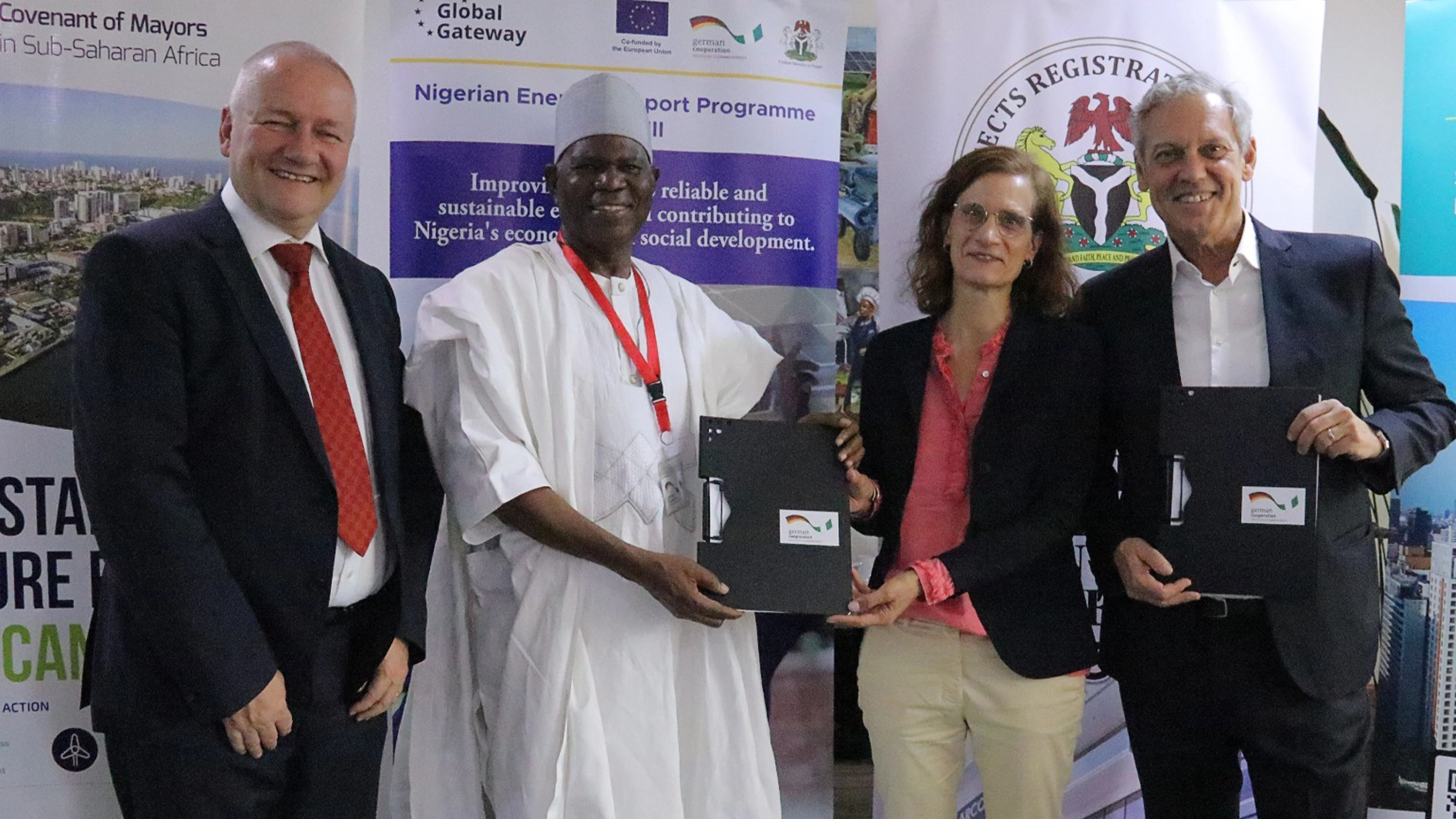
The Architects Registration Council of Nigeria (ARCON) and the Deutsche Gesellschaft für Internationale Zusammenarbeit (GIZ) have agreed to update Nigeria’s Energy-Efficient Building Design (EEBD) competency standards and training materials for architects and other built-environment professionals.
The agreement, signed under GIZ’s Just Transition and Inclusion Cluster at the GIZ Nigeria and ECOWAS office in Abuja, is expected to strengthen professional capacity, establish a national training network and develop an EEBD certification framework for the built environment.
The partnership brings together three German-supported programmes, the Nigerian Energy Support Programme (NESP), Partnership for Energy Efficiency in Buildings (PEEB) and Covenant of Mayors in Sub-Saharan Africa (CoM SSA), under GIZ’s Just Transition and Inclusion Cluster.
Speaking at the ceremony, ARCON President, Oladipupo Ajayi, said the partnership would move energy efficiency, sustainable design and climate-responsive approaches from the margins of professional development into the mainstream of architectural training and practice.
He described the agreement as a platform for knowledge sharing, capacity development, innovation and practical action, stressing that the benefits of sustainability should reach all segments of society.
Ajayi said the building sector had a significant impact on energy consumption, environmental sustainability, urban resilience and quality of life, making it necessary for architects to promote energy-efficient buildings, climate-responsive design and sustainable construction.

“ARCON is committed to working with all partners to achieve the agreement’s objectives through professional development, appropriate standards, and the integration of energy efficiency and sustainability into education, practice and building delivery,” he said.
The Registrar of ARCON, Mohammed Sule, said the agreement marked an important step towards advancing energy efficiency, sustainable buildings, climate-responsive design and a just transition in Nigeria’s built environment.
He commended GIZ Nigeria, ECOWAS, NESP, CoM SSA, and PEEB for their support, saying the partnership would strengthen professional capacity and contribute to Nigeria’s energy transition.
Country Director, GIZ Nigeria and ECOWAS, Dr Markus Wagner, opened the ceremony, while the Head of Development Cooperation at the German Embassy in Abuja, Dr Karin Jansen, delivered opening remarks.
Head of Component, Capacity Development at NESP, Sharon Kaburuk, presented an overview of the agreement, while Cluster Coordinator for the Just Transition and Inclusion Cluster, Jochen Rudolph, also attended.
Under ARCON’s statutory mandate to regulate architectural education and practice, the EEBD competency requirements developed through the partnership could be incorporated into curriculum expectations, professional examinations and continuing professional development.
NESP supports Nigeria’s sustainable energy transition through skills and institutional development in renewable energy and energy efficiency, while PEEB Cool focuses on energy efficiency and climate resilience in the building sector. CoM SSA supports cities and municipalities in sustainable energy and climate planning and project development.

