 Follow Us on Google News
 Follow Us on Google Discover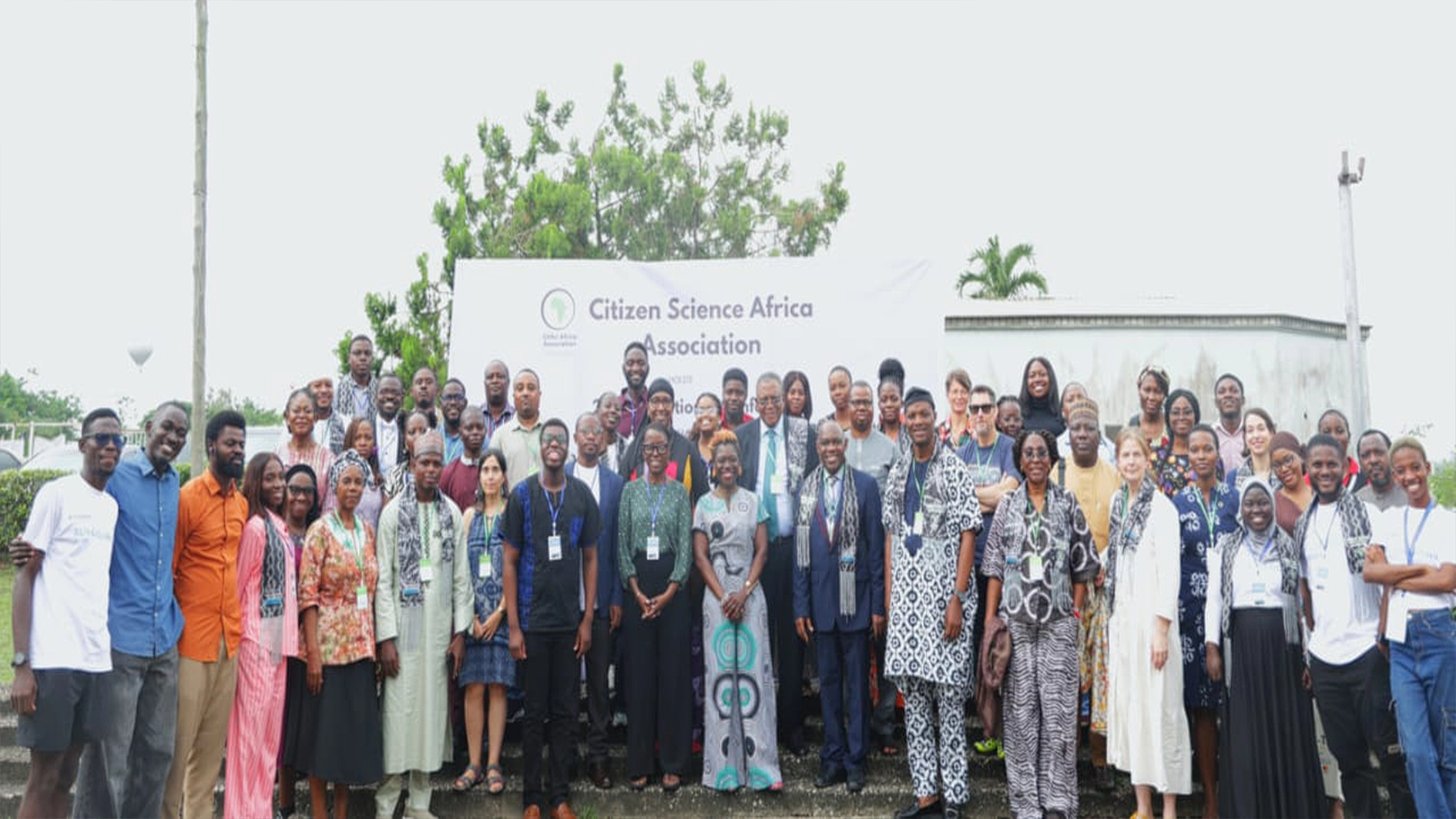
Experts have stressed the need to place citizens at the centre of research, innovation and policymaking, arguing that citizen science, supported by emerging technologies and artificial intelligence (AI), can help Africa address its growing environmental, urban and public health challenges.
The call was made at the second International Conference of the Citizen Science Africa Association held at the University of Lagos (UNILAG), themed “Citizen Science, Technologies and Artificial Intelligence for Africa’s Transformation,” where participants from Africa, Europe and the United States gathered to explore the role of citizen participation in sustainable development.
Chairman of the conference and former Deputy Vice Chancellor (Academics and Research) of UNILAG, Prof. Babajide Alo, said Africa is grappling with climate change, environmental degradation, rapid urbanisation, public health pressures and inadequate data for effective planning and policymaking.
Alo said the continent’s challenges require approaches that go beyond conventional research by directly involving communities in generating knowledge and developing solutions. According to him, citizen science enables ordinary people to collect data, monitor environmental changes, identify local challenges and co-create practical interventions alongside scientists and policymakers.
“These challenges require more than traditional approaches. They call for collaboration across disciplines, sectors and communities. They demand that citizens are not treated merely as beneficiaries of research and development, but as active contributors to knowledge, innovation and transformation,” he said.
Alo noted that integrating citizen science with digital technologies and AI presents significant opportunities to improve data collection, analysis and decision-making across Africa. He, however, cautioned that emerging technologies must be deployed ethically, inclusively and in ways that respond to the realities of African communities.

“When this is combined with emerging technologies and artificial intelligence, the possibilities become even greater. However, we must ensure that these tools are used responsibly, ethically and inclusively, with African realities and community needs at the centre,” he added.
Also speaking, the Vice Chancellor of UNILAG, Prof. Folasade Ogunsola, described the gathering as “a continental call to action” for inclusive science, responsible innovation and stronger partnerships capable of driving sustainable development across Africa.
She said the continent is at a defining moment that requires bold ideas and collective action to address climate change, environmental degradation, rapid urbanisation, public health threats, food insecurity, unemployment and weak data systems.
Ogunsola stressed that citizen science extends beyond universities and research laboratories, noting that communities play a critical role in generating knowledge through everyday observations and participation in research.
“Science also lives in communities. It lives in the farmer observing changes in rainfall, the health worker collecting vital community data, the teacher inspiring curiosity and the citizen who asks questions and contributes knowledge for the common good.
“Artificial intelligence helps us identify patterns, predict risks and design smarter responses. But for these tools to truly transform Africa, they must be grounded in the realities of African communities,” she said.
Delivering the keynote address titled “Designing Hopeful Cities and the Potential of Citizen Science,” Clinical Professor at the University of Cambridge and Founder/Chief Executive Officer of UrbanBetter, Prof. Tolullah Oni, said Africa’s rapidly expanding cities must be designed around health, climate resilience and active citizen participation if the continent is to fully harness the benefits of urbanisation.
She argued that African cities should be viewed not merely as centres of economic activity but as systems that shape health, social equity, prosperity and environmental sustainability.
According to Oni, Africa’s urban population is projected to grow significantly by 2050, making today’s planning decisions critical to the wellbeing of future generations.
“If cities are poorly designed, they can deepen inequality, pollution, poor health and climate vulnerability. But if they are planned wisely, they can become engines of shared wellbeing, resilience and inclusive prosperity,” she said.
Oni urged policymakers to make health and climate resilience the foundation of urban planning, stressing that city infrastructure directly influences public health outcomes. She explained that health is determined not only by hospitals and healthcare services but also by housing, transportation, clean energy, food systems, education, green spaces, air quality and opportunities for physical activity.
“Urban infrastructure is health infrastructure,” she said, noting that cities with safe streets, clean air, efficient public transport and accessible green spaces naturally support healthier populations.
She warned that poorly planned cities characterised by pollution, unsafe mobility, extreme heat and inadequate public services contribute to ill health, inequality and declining economic productivity.
Describing cities as complex systems where climate and health risks are closely intertwined, Oni said governments should adopt integrated policies that simultaneously improve environmental and health outcomes through cleaner energy, active transport, sustainable food systems and climate-sensitive urban planning.
She identified citizen science as a critical tool for bridging the gap between communities’ lived experiences and the evidence used by policymakers.
According to her, residents can use mobile phones, digital applications, wearable sensors, photographs, audio recordings and geotagged information to document issues such as air pollution, extreme heat, mobility challenges and environmental quality. The evidence generated, she said, can strengthen research, inform planning, improve accountability and support advocacy for healthier communities.
Oni added that digital infrastructure democratises access to information, while social and intellectual infrastructure strengthen collaboration and provide the evidence needed to shape better urban policies.
She identified three major barriers to building future-ready cities such as exclusion of young people and underserved communities from decision-making; inadequate data reflecting residents’ lived experiences; and weak systems linking community knowledge with research, policy and governance.
She maintained that citizen science offers a practical way to overcome these challenges by making communities active contributors to urban development rather than passive recipients of government policies.
Oni urged African governments, researchers and development partners to embrace inclusive planning that places people at the heart of urban transformation, arguing that the continent has a rare opportunity to build cities that advance health, climate resilience, social justice and shared prosperity.

