 Follow Us on Google News


 Follow Us on Google Discover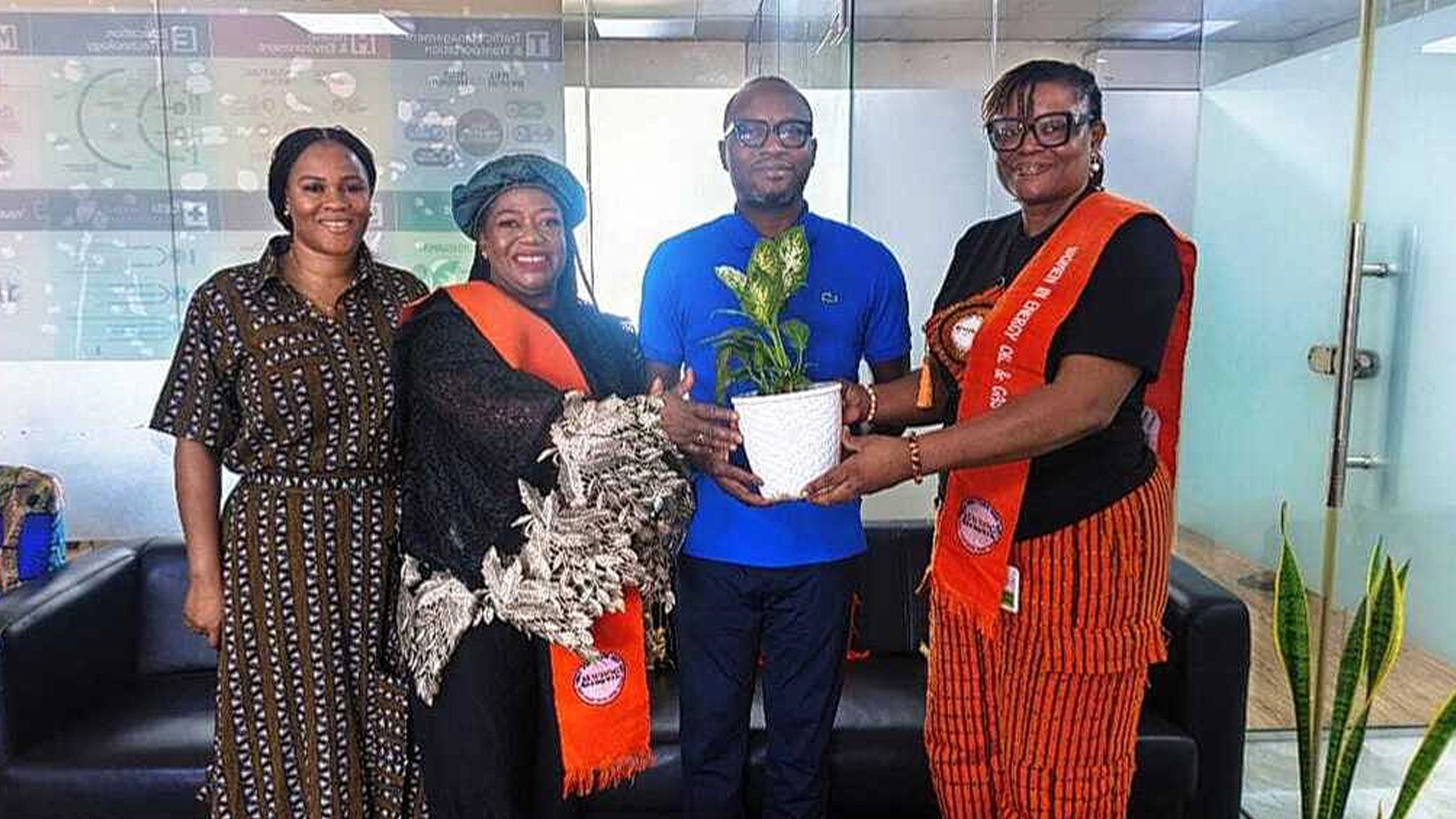
As World Decarbonization Day 2026 brings waste-to-value, circular economy, clean energy and green enterprise into sharper focus
Nigeria’s decarbonization agenda is increasingly demanding a broader conversation—one that moves beyond energy production to examine how the country produces, consumes, recycles, recovers and manages its resources.
That wider conversation was at the centre of a strategic engagement between the Women in Energy, Oil & Gas (WEOG) and the Lagos Waste Management Authority (LAWMA) on 31 August 2026, ahead of World Decarbonization Day (WDD) 2026.
The WEOG delegation, led by National Vice President (Services), Mrs. Toyin Yusuff, and National Vice President (Sectors), Dr. Chizoba Anyika, paid a courtesy visit to the Managing Director and Chief Executive Officer of LAWMA, Dr. Muyiwa Gbadegesin.
The engagement was aimed at strengthening institutional relations, discussing the objectives of WDD 2026 and inviting LAWMA to participate in the landmark event. More importantly, it opened the door to discussions around a strategic, year-round partnership between WEOG and LAWMA.
The engagement reflects the broader leadership vision of WEOG National President, Engr. Tolu Longe, and the collaborative direction of the WDD 2026 leadership under Chairperson, Mrs. Toyin Alozie, as stakeholders are brought together around the theme:
“Accelerating Decarbonization Through Collaboration, Innovation and Sustainable Climate Action.”
LAWMA is exhibiting at WDD 2026, while Dr. Gbadegesin is scheduled to speak at the Summit, creating an important opportunity to place the realities of waste management, recycling, resource recovery and the circular economy firmly within Nigeria’s decarbonization conversation.
For years, decarbonization has largely been associated with renewable energy, cleaner fuels, energy efficiency and reducing emissions from industrial activity.
These remain essential.
But they are not enough.

The way materials are produced, consumed, reused, recycled and disposed of also affects emissions, resource consumption and environmental sustainability.
This makes waste management an important component of climate action.
The WEOG-LAWMA engagement recognizes that a low-carbon future requires an integrated approach in which energy, waste management, circular economy development, clean technology and sustainable urban development reinforce one another.
During the engagement, Mrs. Toyin Yusuff, National Vice President (Services), WEOG, introduced the vision of WEOG and discussed the objectives of World Decarbonization Day 2026.
Her presentation highlighted the importance of bringing institutions with complementary mandates into the decarbonization conversation.
For WEOG, LAWMA represents precisely the kind of institution whose operational experience can enrich the national sustainability dialogue.
The invitation to LAWMA was therefore not simply about participation at WDD 2026. It was also an opportunity to explore a continuing relationship based on knowledge sharing, collaboration, capacity development, advocacy and practical projects.
Dr. Chizoba Anyika, National Vice President (Sectors), WEOG, brought the sectoral perspective to the engagement, highlighting the important connection between waste management and decarbonization.
LAWMA’s evolving activities beyond conventional waste collection—including recycling, resource recovery, circular economy initiatives and waste-to-energy opportunities—position the Authority as an important player in Nigeria’s emerging green economy.
The discussions therefore explored potential areas of collaboration around waste-to-energy, biogas and biomethane, recycling, biodigesters, Material Recovery Facilities, biomass, sawdust and suitable refuse-derived fuel.
Other areas include clean energy, sustainable transportation, green and circular-economy enterprises, investment, technology partnerships and knowledge exchange, including opportunities involving Swedish expertise.
The strategic opportunity is to connect WEOG’s energy-sector network and decarbonization platform with LAWMA’s operational experience in environmental management.
Receiving the WEOG delegation, Dr. Muyiwa Gbadegesin, Managing Director and Chief Executive Officer of LAWMA, emphasized the importance of changing society’s perception of waste.
Rather than regarding discarded materials simply as waste, he encouraged greater attention to recycling, recovery, reuse and the conversion of materials into valuable resources.
This approach is central to the circular economy.
It challenges the conventional linear model of take, make, use and dispose, and encourages systems that keep materials and resources in productive use for as long as possible.
Dr. Gbadegesin also encouraged individuals, businesses and institutions to embrace green practices.
For Lagos, where the volume of waste generated presents both an environmental challenge and a potential economic resource, this shift in thinking is particularly important.
The objective should increasingly be to recover value from waste rather than simply move it from one location to another.
One of the practical dimensions of the discussion is the potential for waste-to-energy initiatives to demonstrate how environmental challenges can become economic opportunities.
The Ikosi Fruit Market Biodigester provides an important example of the potential to convert organic waste into useful energy and other resources.
Initiatives around Agbowa further illustrate the possibilities associated with resource recovery and sustainable waste management.
Such projects point towards a model in which organic waste can contribute to the production of energy and fertiliser, while creating opportunities for employment, entrepreneurship and investment.
The broader opportunity is to scale successful models and explore technologies that can convert appropriate waste streams into useful energy and other productive outputs.
This is where waste management intersects directly with the energy transition.
The future of waste management should not be limited to collection and disposal.
It should increasingly be about recovery, reuse, recycling and value creation.
Material Recovery Facilities can strengthen recycling systems. Biodigesters can support the recovery of value from organic waste. Biomass and appropriate waste-derived fuels can provide additional pathways for resource utilisation.
Together, these approaches can contribute to a circular economy that reduces resource pressure while creating new markets and businesses.
The economic implications are significant.
Nigeria’s environmental challenges can become opportunities for clean energy development, green entrepreneurship, investment, job creation and technological innovation.
The green transition should therefore be viewed not only as an environmental responsibility but also as an opportunity for economic diversification.
Another significant dimension of LAWMA’s work is its investment in capacity building and youth engagement.
Through internship and training opportunities for pupils, school students and undergraduates, LAWMA is giving young people practical exposure to waste management, environmental responsibility and sustainability.
This deserves greater recognition within the national decarbonization conversation.
The green transition will require more than policies and technologies. It will require a generation of Nigerians with the knowledge and skills to design, operate and scale sustainable solutions.
Young people exposed early to recycling, environmental management and circular-economy principles can become future environmental professionals, entrepreneurs, engineers, innovators, policymakers and sustainability leaders.
Capacity building must therefore remain an essential pillar of Nigeria’s decarbonization strategy.
The participation of Mrs. Idowu Mohammed, Head of Legal and Advisory, LAWMA, adds another important dimension to the engagement.
As opportunities emerge around investment, technology, waste-to-energy, recycling and circular-economy projects, sound institutional and legal frameworks will be necessary to move initiatives from concept to implementation.
Strategic partnerships require not only technical expertise and investment but also appropriate structures that support accountability, sustainability and long-term impact.
The institutional dimension is therefore critical to ensuring that promising sustainability initiatives can develop into viable and scalable programmes.
The real opportunity arising from the WEOG-LAWMA engagement lies beyond the WDD 2026 Summit.
A year-round strategic partnership could provide a platform for continuous knowledge sharing, advocacy, capacity building, project development, investment matchmaking, technology partnerships and stakeholder engagement.
It could also facilitate collaboration around green enterprises and connect promising projects with investors, technology providers, development partners and other stakeholders.
For WEOG, the partnership would strengthen its role in connecting the energy sector with wider environmental and sustainability initiatives.
For LAWMA, it would create another avenue for showcasing its practical work and engaging a broader network of energy, sustainability, investment and technology stakeholders.
The WEOG-LAWMA engagement demonstrates an important truth: Nigeria’s decarbonization journey cannot be driven by one sector alone.
Energy, waste management, transportation, industry, agriculture, finance, technology and education all have roles to play.
The transition also requires collaboration between institutions and generations.
From the Ikosi Fruit Market Biodigester to recycling and resource recovery; from capacity building to green enterprise; from clean energy to sustainable transportation, the possibilities are interconnected.
The task now is to turn those possibilities into scalable initiatives.
World Decarbonization Day 2026 provides a platform for stakeholders to come together, exchange ideas and showcase solutions.
As WDD 2026 approaches, the national conversation must move decisively:
From waste to resource.
From disposal to recovery.
From waste management to waste-to-value.
From isolated initiatives to strategic partnerships.
From climate ambition to practical action.
The opportunity before Nigeria is enormous.
A cleaner environment can coexist with economic opportunity. Recycling can support enterprise. Waste can generate energy. Young people can acquire green skills. Technology can create new value chains. And strategic partnerships can accelerate the transition.
The WEOG-LAWMA engagement has demonstrated what collaboration can achieve when sectors begin to see their roles not as separate pieces of the sustainability puzzle, but as interconnected parts of one national agenda.
Nigeria’s low-carbon future will require every sector and every generation to play its part.
And the journey to that future may begin with something as fundamental as changing the way we see what we throw away.

