 Follow Us on Google News


 Follow Us on Google Discover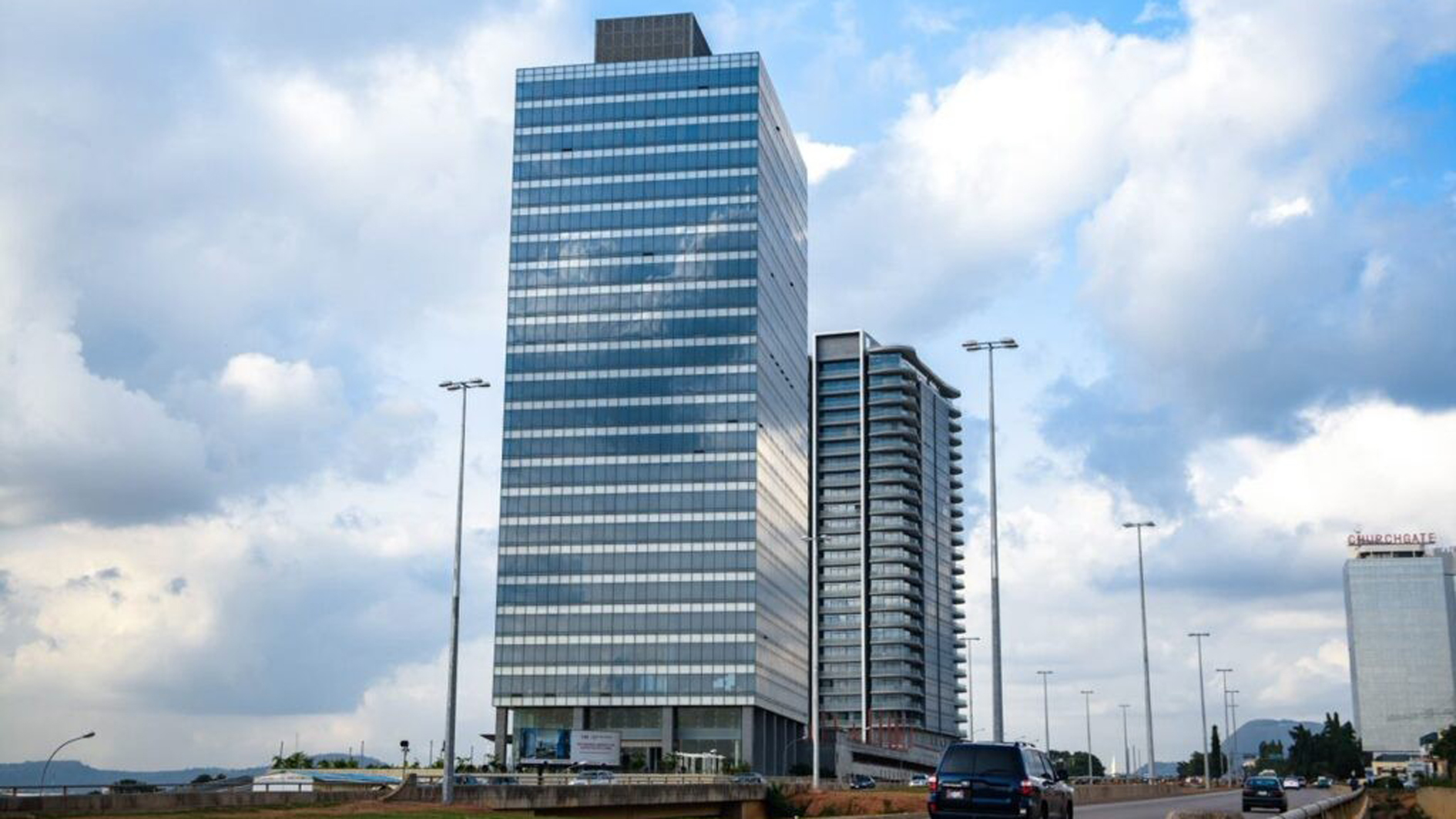
Nigerian cities may be moving towards a more differentiated office market, with companies choosing office space based on the nature, size and sensitivity of their operations. Experts said the shift means future developments will need to incorporate flexibility, resilient infrastructure, technology, and business support services from the outset, CHINEDUM UWAEGBULAM reports.
A new workplace trend is reshaping Nigeria’s office property market as multinational corporations and large indigenous companies reassess the long-term suitability of co-working and other shared office arrangements.
While flexible workspaces remain attractive to start-ups, entrepreneurs, consultants and companies with short-term accommodation needs, larger corporate occupiers are increasingly opting for dedicated, business-ready offices that offer greater operational control, security, privacy and flexibility.
The shift represents an evolution in a market that experienced rapid growth in co-working spaces and flexible working, particularly following the COVID-19 pandemic. Shared workspaces initially appealed to companies seeking to reduce upfront costs, avoid long leases and scale quickly.
However, the challenges associated with conventional offices, including high rents, long lease commitments, unreliable infrastructure, costly fit-outs, traffic congestion and rising operating expenses, remain. Large companies are now seeking to combine the agility of flexible workspaces with the control and exclusivity of dedicated corporate offices.
This is driving demand for dedicated or demised workplaces—offices occupied exclusively by one company but designed, managed, and equipped around its specific operational needs.

For multinational corporations and major indigenous firms, security and confidentiality are increasingly important. Companies in banking, technology, telecommunications, professional services, energy and other regulated sectors often require greater control over access, data protection, internal meetings and sensitive operations than shared workspaces can provide.
Brand identity is another consideration as a dedicated office enables companies to create a distinct corporate environment, control the customer experience and design specialised work areas around their operations.
The trend is most visible in Lagos, where companies are reassessing their office footprints across Victoria Island, Ikoyi, Lekki, Ikeja and emerging business districts. Abuja is also seeing growing demand for secure, professionally managed corporate environments, while cities such as Port Harcourt, Ibadan, Kano and Enugu could experience similar shifts as businesses seek greater control over security, infrastructure and occupancy costs.
Globally, flexible workspace continues to expand, but large corporate occupiers are increasingly demanding private offices, enterprise suites and dedicated managed spaces. The emerging model is therefore less about choosing between a conventional lease and a co-working desk, and more about combining flexible lease terms with exclusive occupation, tailored design, specialised technology and professional property management.
This presents new opportunities for landlords and developers. Large office buildings may need to provide flexible but dedicated floors, enterprise offices and managed corporate suites, while co-working operators may have to expand beyond shared desks and small private offices to serve larger organisations.
For Nigeria, however, the success of this model will depend on how effectively the market addresses persistent challenges, particularly rental costs, power supply, facility-management expenses, transport constraints and the concentration of prime offices in congested locations.
In Abuja, World Trade Centre (WTC) reflects this changing demand, with publicly announced occupiers including Microsoft, Citibank, General Electric, S&P Global Commodity Insights, Agip and Seplat Energy. Their presence illustrates the growing preference for professionally managed environments capable of supporting complex corporate operations.
Rather than simply providing office floors, WTC Abuja has increasingly supported occupiers through bespoke workplace delivery, including workplace planning, fit-out coordination, engineering integration, facilities management and operational support. This enables organisations to move more efficiently from lease execution to full business operations.
The development combines Grade A office accommodation with resilient engineering systems, 100 per cent backup power, fibre-ready infrastructure, access control, professional facilities management, executive residences and an integrated mixed-use environment. Its affiliation with the World Trade Centres Association also connects occupiers to a global business network spanning more than 100 countries.
The direction of the market is increasingly clear: flexibility is not disappearing; it is being incorporated into dedicated corporate environments. For developers and landlords, the opportunity lies in delivering offices that provide both the agility businesses want and the control, resilience and identity they increasingly require.
According to Vice President of WTC Abuja, Ahmed Karim, conversations with occupiers have changed considerably in recent years.
“Five years ago, discussions were largely about rental rates, parking and floorplates. Today, the first questions are about operational readiness, business continuity, technology, engineering resilience and how quickly a company can become fully operational. That reflects a broader change in what businesses now value.”
Karim said flexibility itself was also being redefined. “We are not seeing organisations move away from flexibility; we are seeing them redefine it. They still want agility, but increasingly within dedicated workplaces that reflect their own brand, protect their operations and provide room to grow.”
Speaking to The Guardian, the Group Chief Executive Officer of GPFI Holding, Dr Muhammad Balogun, described the shift as the “maturing of a cycle” rather than an entirely new trend. He recalled that since 2011, major multinationals had used satellite offices in Lagos as a low-risk entry strategy before deciding whether to expand.
“That entry strategy gave birth to the growth of operators and developments such as Landmark, and fuelled office-suite development across Lagos, Nairobi, Johannesburg and Accra,” Balogun said.
He explained that flexible offices initially allowed companies entering new markets to avoid long leases, heavy fit-out costs and large fixed assets. “As businesses expanded, however, many began seeking dedicated workplaces.
“Data security, confidentiality and operational control are among the major drivers. Banks, energy companies and technology firms, in particular, often require greater control over access, information and workplace infrastructure than shared environments can provide,” he said.
Companies are also paying closer attention to brand identity, corporate culture, connectivity, access control and health and safety. At a certain scale, Balogun said, serviced space could also become more expensive than a dedicated, professionally managed office.
The economic pressures that fuelled the growth of flexible offices, meanwhile, remain significant. Dollar-indexed rents, currency volatility, rising fit-out costs, energy expenses and traffic congestion continue to shape corporate real estate decisions.
“Power remains the single largest occupancy-cost differentiator in Nigeria,” Balogun said. “A building with reliable, efficiently priced power effectively offers a discount that shows up nowhere in the headline rent.”
Traffic congestion is also encouraging some Lagos-based companies to consider smaller offices closer to where employees live rather than maintaining one large central workplace.
“For landlords and developers, these changing requirements are driving investment in resilient infrastructure, security and technology,” he said. “Buildings are increasingly incorporating alternative power systems, integrated access control, CCTV analytics, visitor-management systems, fibre connectivity and smart-building technologies. Green certifications such as Excellence in Design for Greater Efficiencies (EDGE) and Leadership in Energy and Environmental Design (LEED) are also becoming more important to multinational occupiers with Environmental, Social, and Governance (ESG) requirements.”
The market is consequently moving towards what Balogun described as a “core and flex” model, in which companies maintain dedicated offices for their permanent operations while using flexible or managed space for projects, expansion teams and satellite locations.
“We see movement in both directions in our market,” he said. “Some multinationals have significantly reduced exclusive space, others are graduating from serviced shared space into exclusive space, and others are doing the reverse.”
Similarly, the Chief Investment Officer of Panterra, Mr Ayo Ibaru told The Guardian that the trend was particularly evident among large enterprises, but stressed that it was not a rejection of flexibility.
“This is not a wholesale rejection of flexibility but rather a redefinition of what flexibility means for large operations,” Ibaru said.
He said companies handling sensitive information or high-level client relationships often found generic shared environments unsuitable for long-term occupancy. Multinationals are increasingly prioritising near-zero downtime, employee experience, technology integration and sustainability, with greater emphasis on how quickly a workplace can become operational.
Recent leases by Sidel and Beiersdorf at The Phoenix, a Grade A office development in Ikeja, Lagos, illustrate this demand, Ibaru said. He also pointed to the 33,180-square-metre WTC
in Abuja, which has attracted occupiers including Citibank and General Electric.
Ibaru said the original migration towards co-working and serviced offices was largely driven by high rents, long lease commitments and the cost of maintaining power and data infrastructure. These pressures remain particularly challenging for SMEs, while larger companies have greater capacity to absorb them when appropriate lease terms are available.
“For the large firms, the calculus has shifted,” he said, adding that delivery risk had become a more significant concern.
Large occupiers are willing to take longer leases, he said, but increasingly expect landlords to handle resilient power, specialised IT infrastructure and fit-outs that meet their operational standards.
The result is a growing emphasis on offices as fully integrated business environments rather than simply physical workplaces. Developments are incorporating resilient engineering, dedicated data infrastructure, advanced security and sustainability systems, while mixed-use schemes combine offices with retail, leisure and short-stay accommodation.
Both experts point to a hybrid model emerging across the market: the flexibility of serviced offices combined with the privacy, branding and operational control of dedicated corporate space.
For Nigeria’s office market, this could accelerate a flight to quality. Grade A properties with reliable infrastructure and professional management are likely to command premium rents, while older Grade B and C buildings face rising vacancies and pressure to reposition or convert to alternative uses.
Ibaru said prime locations such as Ikoyi and Victoria Island already recorded annual rents of up to $750 per square metre on average, while vacancy in Lagos’ Grade B and C office stock was estimated at 36 per cent.
The implication for developers is that future projects will need to incorporate flexibility, resilient infrastructure, technology and business-support services from the outset. “The future of Nigerian office real estate lies in delivering comprehensive, resilient and business-enabling environments,” Ibaru said.

