 Follow Us on Google News


 Follow Us on Google Discover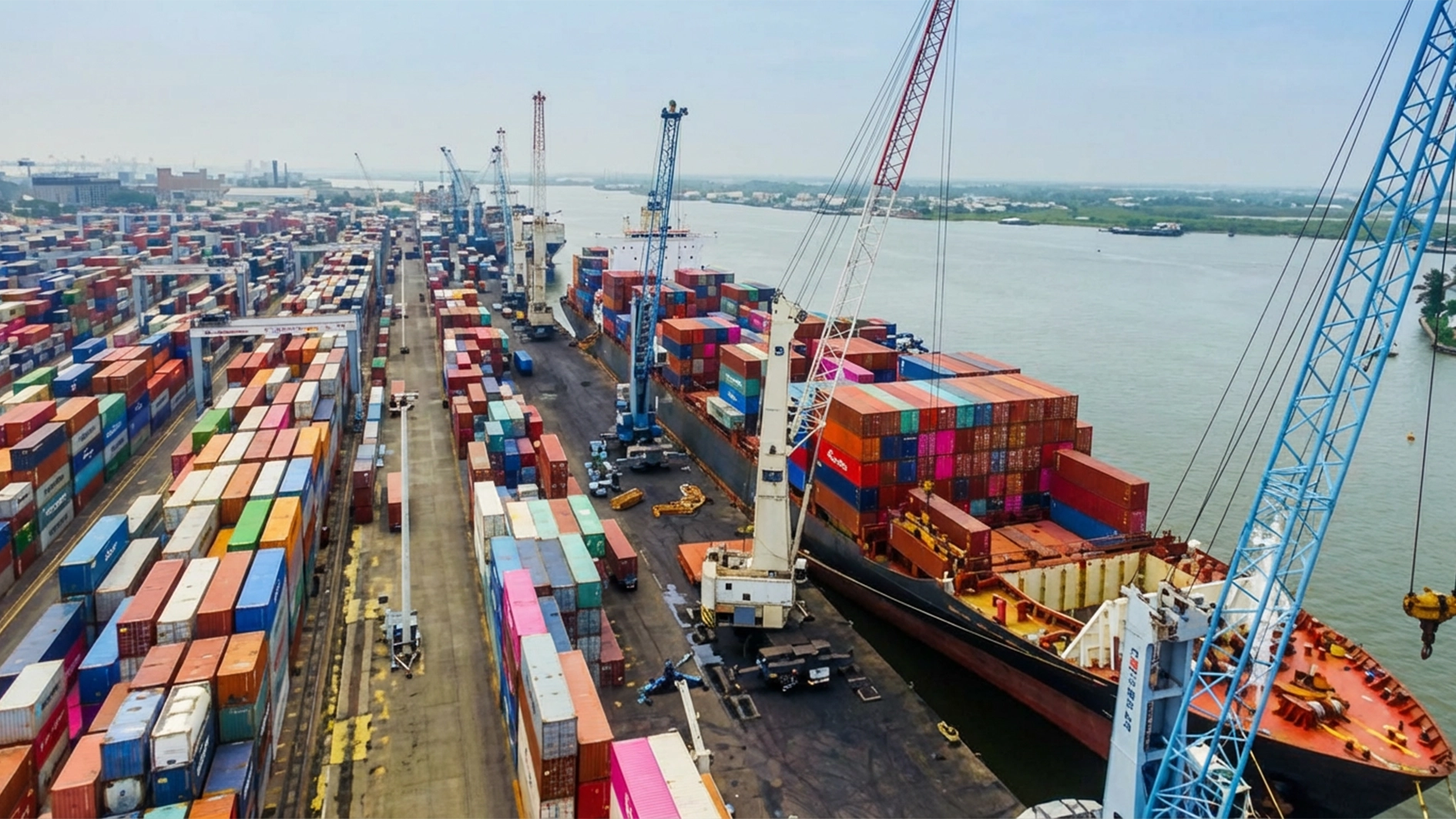
• Sector faces growing regional port competition from Ghana, Togo, others
Nigeria’s maritime sector remains hamstrung by persistent deficits in port efficiency, financing, indigenous shipping capacity, multimodal logistics, shipbuilding and repair, and blue economy development, critical gaps that continue to block the nation from converting its vast maritime resources into real economic productivity.
Also identified as areas that required urgent and sustained reforms are maritime governance, inland-waterway utilisation, human capital, maritime technology, fisheries and marine environmental management
This is contained in the Sea Empowerment and Research Centre (SEREC) 2026 maritime sector scorecard and policy presentation.
The independent policy assessment, prepared by the Head of Research, Eugene Nweke, assessed the industry across strategic reform areas and constraints covering maritime governance and coordination, port infrastructure, trade facilitation and digitalisation, shipping and indigenous participation, logistics and multimodality, maritime security, human capital, technology, maritime industrialisation, the blue economy, maritime finance and investment.
SEREC categorised port infrastructure as improving but still facing significant deficits, while digital trade reforms were considered transformative but vulnerable to implementation risks.

The research body identified maritime security as an area of significant progress that requires sustained attention, while human capital and technology remain underdeveloped.
SEREC assessment revealed that the blue economy has high potential but low economic conversion.
The research centre acknowledged improvements in port infrastructure, especially in cargo activity and government-backed modernisation initiatives, which have led to a persistent rise in cargo throughput and container traffic.
SEREC, however, identified ageing infrastructure, inadequate specialised equipment, weak intermodal connectivity, congestion around port corridors, capacity constraints, uneven development of eastern ports and maintenance challenges as continuing impediments.
The Centre also identified cargo dwell time, vessel turnaround, multiple inspections, duplicated documentation, cargo examination delays, poor port access roads, demurrage, storage charges and underdeveloped inland-waterway evacuation as persistent logistics challenges.
It stressed that maritime performance should not be measured merely by the number of projects announced, but by reductions in logistics costs and cargo-processing times, increased indigenous participation, higher investment, more employment, stronger export capacity and improved national productivity.
On maritime governance, SEREC said the sector remained characterised by fragmented responsibilities among the Federal Ministry of Marine and Blue Economy, the Nigerian Maritime Administration and Safety Agency (NIMASA), Nigerian Ports Authority (NPA), Nigerian Ports Economic Regulatory Agency (NPERA), the National Inland Waterways Authority (NIWA), Nigeria Customs Service, the Navy, Marine Police, environmental agencies, fisheries authorities, state governments, terminal operators and other regulatory institutions.
SEREC warned that the agencies’ overlapping mandates and weak coordination could undermine the effectiveness of reforms.
The centre recommended a National Integrated Maritime Governance Framework with clear institutional mandates, shared data, coordinated enforcement, common key performance indicators and a unified national maritime strategy.
On indigenous shipping, SEREC said Nigeria generated substantial cargo volumes without proportionately controlling the ships, financing, insurance, technology and international freight value chains associated with the trade.
SEREC noted that maritime operators faced high borrowing costs, short loan tenors, foreign-exchange exposure, limited specialised lending, difficulties acquiring vessels, weak maritime leasing and inadequate institutional-investor participation.
The research centre recommended a National Indigenous Shipping Development Programme covering vessel acquisition, long-term ship financing, maritime leasing, support for indigenous operators, crew development, marine insurance, ship management, coastal and regional shipping.
SEREC further called for a Nigerian Maritime Finance and Investment Architecture that involves development banks, pension funds, insurance funds, private equity, sovereign and institutional capital, public-private partnership structures, vessel financing, and maritime infrastructure bonds.
SEREC also expressed concern about the performance of the Cabotage regime, noting that the policy has yet to produce an indigenous maritime industrial ecosystem commensurate with the country’s coastal economy.
The research centre argued that Cabotage performance should be measured by the number of Nigerian-owned vessels, Nigerian-controlled tonnage, Nigerian seafarers, domestic shipyards and indigenous maritime capital created under the policy.
On maritime industrialisation, the research centre proposed a National Maritime Industrialisation Programme that links shipyards, dry docks, marine engineering, fabrication, universities, financing institutions, shipping companies, and the offshore industry.
The research centre also highlighted the absence of integrated maritime data and intelligence, which it said remained a strategic gap, arguing that a modern maritime nation should track cargo entering and leaving its ports, cargo ownership, cargo dwell time, movement patterns, vessel calls, maritime assets and the economic value generated by the sector.
SEREC proposed a National Maritime Data and Intelligence Platform that integrates ports, customs, shipping, logistics, security, inland waterways, fisheries, blue-economy activities, and trade statistics.
The centre warned that Nigeria is facing growing competition from Ghana, Togo, Côte d’Ivoire, Benin Republic and other emerging West African logistics gateways.

