
 Get Guardian on Google
Committed to providing care, education and opportunities for vulnerable children, the Sisters In Deen Foundation (SIDF), a group of women who initially came together to support children through donations to orphanages is driving a new level of care narrative with the establishment of their flagship initiative, ‘Baytu Sakeenah Orphanage’.
The SDIF women began with a series of Ramadan visits to orphanage homes in Lagos and on the realisation that their contributions could go beyond occasional visits and food supplies, they created the Baytu Sakeenah Orphanage which provides residential care for orphans and vulnerable children.
Prior to the establishment of Baytu Sakeenah Orphanage, their visits to orphanage homes exposed them to some of the needs of children in institutional care. During one of the visits, they asked the management about the items the children needed most. While food donations were common, they learnt that protein-rich meals were often lacking.
The women subsequently made it a commitment to provide protein every month, donating beans, eggs, chicken and other food items. But as their involvement continued, they began to consider a more permanent way of supporting children without parental care. “This is what birthed Baytu Sakeenah Orphanage, instead of going to other homes to donate we decided to create a home where we could directly oversee the welfare and development of children,” Hajia Fatima Mongonu, the secretary of SIDF, said.
Beyond providing shelter
The foundation’s activities are built around the belief that children should not be defined by the circumstances of their birth or the challenges they face.

Its vision is to create an environment where every child, regardless of background, can thrive in a safe, supportive and faith-driven setting. Its mission includes providing shelter, education, healthcare and moral guidance while developing children into confident, compassionate and capable individuals.
Through Baytu Sakeenah, the foundation provides residential care, nutrition and protection, alongside educational and learning support. It also undertakes health-related activities, including medical outreaches, screenings, referrals and healthcare support.
Its other areas of intervention include psychosocial support, mentorship, life-skills development, youth empowerment and advocacy for the rights and inclusion of vulnerable children.
The foundation also provides monthly food relief to vulnerable families, with additional distributions during festive periods, including Eid celebrations.
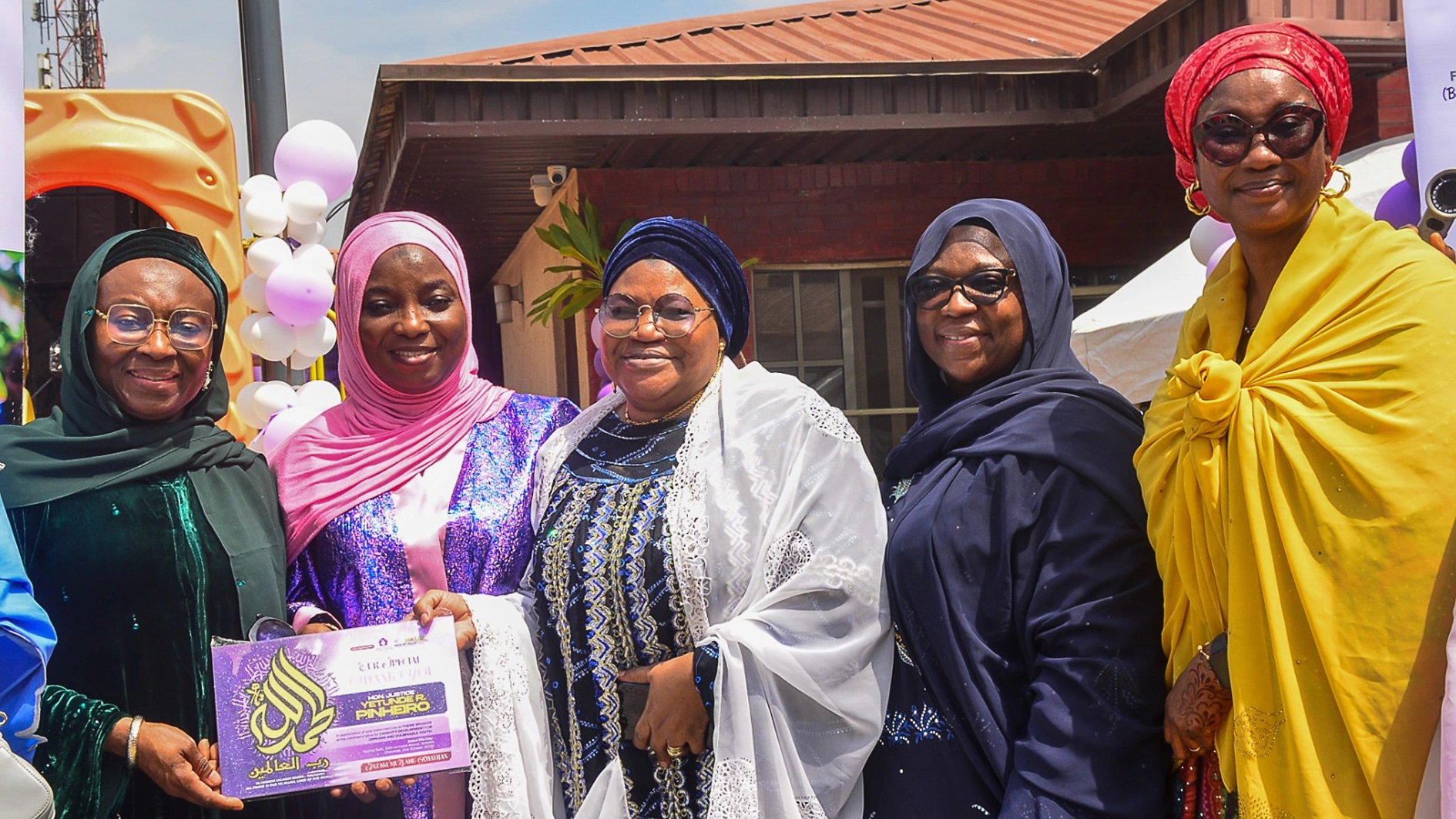
Remarking, President, SIDF, Dr Nura Akinlabi-Babalola, at the fourth edition of the foundation’s Capacity Building Development Programme and official unveiling of the new Baytu Sakeenah home in Ogba, Lagos, said the foundation’s responsibility to vulnerable children must extend beyond meeting their immediate needs.
Addressing participants under the theme ‘Vulnerability: A Stepping Stone to Success’, Akinlabi-Babalola said children need education, character development, emotional support, spiritual nourishment, life skills, mentorship and opportunities for economic independence.
She said the objective was to raise children who were not merely surviving but thriving, with the ability to think critically, make informed decisions, discover their abilities and contribute meaningfully to society.
“This is the philosophy behind our work at Sisters in Deen Foundation, offering a warm, strong transformation centre for orphans and vulnerable youths,” she said.
Akinlabi-Babalola said capacity development remained central to the foundation’s mission because children needed to develop the confidence and abilities to participate meaningfully in the society. She also encouraged the young participants not to allow their backgrounds to limit their aspirations. “Do not allow what you lack today to make you doubt what you can become tomorrow,” she emphasised.
She urged them to embrace learning, discipline and good character, while making the most of opportunities available to them.
The president also acknowledged the contributions of the foundation’s patrons, trustees, advisory board, executive members, staff, caregivers and volunteers. She said the organisation depended on the collective efforts of people who contributed their time, knowledge, resources and professional experience to sustain its work.
She particularly recognised the importance of caregivers, whose daily responsibilities include attending to the children’s needs, providing guidance and maintaining a safe environment.
Akinlabi-Babalola also called on corporate organisations, development agencies, professionals and individuals to support the foundation through scholarships, mentorship, skills training, internships, employment opportunities and financial contributions.
She noted that support did not always have to come in the form of large financial donations, as professional connections, encouragement and access to opportunities could also change a child’s life.
The president acknowledged Muslim Hands International for its scholarship support and assistance with the children’s tutorial programmes, music and schooling.
Guest speaker, Hon. Justice Yetunde Rukayat Pinheiro, Judge of the High Court of Lagos State said, helping children overcome vulnerability also requires ensuring that they understand their rights and responsibilities.
Directly addressing the children, Pinheiro asked whether they had ever felt afraid, nervous, intimidated or overwhelmed by their circumstances. She used her personal experience to demonstrate how fear and uncertainty could sometimes prevent people from pursuing opportunities.
She recalled when she was preparing to attend university, her father, who was a lawyer, asked whether she wanted to study law. At the time, she had doubts about her ability to succeed in the profession. However, about 40 years later, she said she was grateful to have become a judge of the Lagos State High Court.
Her experience, she explained, taught her that uncertainty should not prevent people from taking opportunities that could change their lives. She encouraged the children to trust in Allah, remain committed to learning and approach challenges with courage.
Pinheiro also reminded them that every child, regardless of age or background, had rights, including the right to safety and education. “Your voice is very important,” she said.
Drawing from her work as a judge, she explained the importance of communicating clearly and calmly when seeking help or resolving disagreements.
The judge also spoke about the relationship between rights and responsibilities, describing the two as working together like two feet.
While it is important for children to understand and exercise their rights, she said, they must also learn to be honest, disciplined, respectful and obedient to the law.
Pinheiro illustrated the importance of individual responsibility with an example of a street where every resident takes care of the space in front of their house. If everyone performs that responsibility, the entire street will remain clean.
The same principle, she said, applies to everyday life. Children should respect their teachers, complete their assignments, avoid unnecessary noise and treat others kindly.
She also encouraged them to develop good habits gradually rather than become overwhelmed by the expectation of getting everything right at once.
Using daily prayers as an example, she encouraged the children to work towards observing all five prayers at their appointed times while remaining committed to improving their religious practices. She said consistency in small actions could eventually produce significant changes.
She urged the children to see themselves as seeds with the potential to become successful adults, regardless of their backgrounds.
“You are a small seed today. Tomorrow, Insha Allah, who knows, you might be the president. Who knows, you will be a judge or a doctor. Nothing is impossible,” she said.
For the second guest speaker Dr Abdul Fattah Olajobi, the initiative is important because it gives the foundation an opportunity to build something that can continue across generations.
Olajobi, who said he grew up in Oshodi and attended public schools, shared his belief that a person’s background should not determine how far they can go in life.
He recalled his mother’s advice that three generations of a family should not continue to live in poverty, a lesson that shaped his interest in initiatives aimed at improving society.
He said he had been associated with Sisters in Deen Foundation since the previous year and was encouraged by its commitment to supporting vulnerable children.
According to him, the children should use the knowledge and opportunities available to them to pursue their aspirations rather than allow their circumstances to limit their ambitions. He also commended the foundation’s plan to involve young people in sustaining its work.
The Journey
The foundation, which began eight years ago, has since expanded its activities beyond residential care to include education, healthcare, food relief, mentorship, skills development and community outreach. Its approach is based on the belief that caring for vulnerable children requires more than meeting their immediate needs.
According to Mongonu, the decision to establish an orphanage was driven by the need to provide children with a more consistent support system and opportunities to prepare for adulthood.
Mongonu revealed that one of the foundation’s members initially provided a property for the group to use as a temporary home. The arrangement was that the foundation would move out once it acquired a permanent property. “The temporary arrangement lasted five years, during which the members continued working towards securing a facility of their own. We appealed to the public for support so that we could acquire our own property. Alhamdulillah, we were able to acquire the new building for ₦200 million. The money came from donations by members of the Muslim community and everyone who has supported us along the way.”
This acquisition marks a significant development for the organisation, which had previously operated from a property provided by one of its trustees. However, securing the building was only part of the process. The property required renovation and remodelling before it could serve as a suitable home for the children. “Although the foundation has made considerable progress, it is still seeking financial and material support to furnish and equip the facility,” Mongonu stated.
The foundation’s journey also reflects the role of collective commitment in sustaining care for vulnerable children.
Mongonu said its members continue to maintain their relationship with other orphanages like Halal Orphanage Home and seek guidance from organisations with longer experience in managing orphanages.
She said the foundation’s work is not limited to its residential home, as it also supports other organisations and participates in activities aimed at improving the welfare of vulnerable children.
Chairman of the Board of Trustees, Hajia Rafat Sanusi, said the foundation had also considered establishing its permanent home on a property it owned in Epe. However, the location was considered unsuitable for the children at the time because of its remote setting and security concerns. “The members subsequently began soliciting donations and seeking assistance from individuals and organisations to acquire a more suitable property. After securing the new building, we did renovation work and provided some of the necessary amenities to make it habitable.”
Building a legacy beyond one generation
The foundation’s plan to involve young people in its activities is another part of its effort to ensure that its work continues beyond its current members.
Through its NextGen Volunteers and SIDF Ambassadors initiatives, the organisation seeks to recruit and engage young people and other individuals who can contribute their time, skills and networks to its activities.
Mongonu said the idea was to create a system through which younger people, including the children of the foundation’s members, could understand its mission and eventually take up responsibilities.
She said the young people already participated in the foundation’s programmes and visited the orphanage, giving them an opportunity to understand the work involved in caring for vulnerable children.
“We hope their involvement will help sustain its activities and encourage them to support other children in need in the future. We want to leave a lasting legacy so that even the children who are inhabitants of the orphanage will also come up and help the next set of people who will come as orphans,” Mongonu said.
Through partnerships with individuals, organisations and professionals, SIDF hopes to strengthen its support systems and expand opportunities for children and families who need assistance.
QUOTE:
‘Children need education, character development, emotional support, spiritual nourishment, life skills, ment]orship and opportunities for economic independence’
SIDF members at the capacity building development programme and unveiling of the new Baytu Sakeenah home in Ogba, Lagos recently…