 Follow Us on Google News
 Follow Us on Google Discover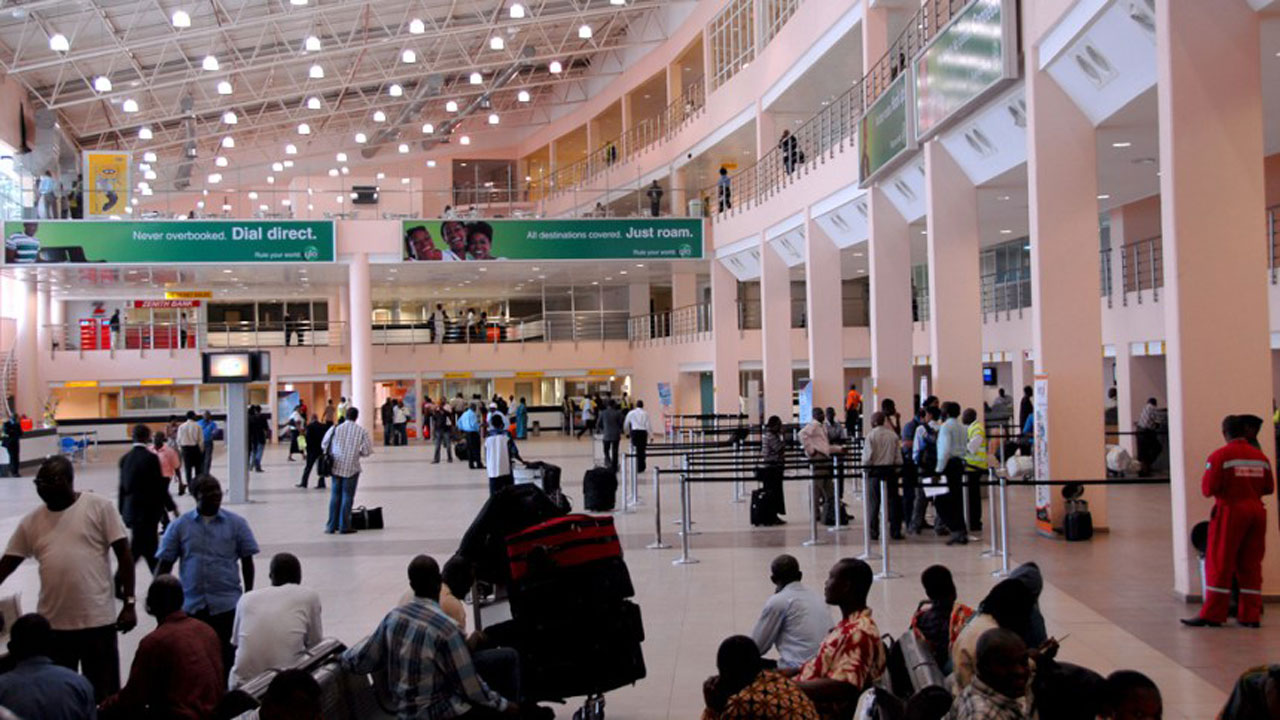
In the global aviation industry, connectivity is key. Unfortunately, no airport in Nigeria has transit facilities for travellers, making the plan to commence direct flight services between Nigeria and Brazil a familiar pattern of ambitious agreement, OLUSEGUN KOIKI reports.
Nigeria’s renewed Bilateral Air Service Agreement (BASA) with Brazil is expected to usher in direct flights between Lagos and Rio de Janeiro. But the arrangement is already facing a tedious challenge even before the first aircraft takes to the sky.
The absence of functional transit facilities at the country’s international airports, unless it is addressed, is one major challenge that may frustrate the dream.
Industry experts warned that unless Nigeria urgently addresses this long-standing infrastructure gap, the ambitious intercontinental air link may struggle to achieve commercial viability, threatening not only the success of the route, but also Nigeria’s broader aspiration of becoming an aviation hub in West and Central Africa.
Data from the International Air Transport Association (IATA) indicate that only one per cent of international passengers arriving in Nigeria continue their journey to another country, which is a glaring anomaly for a country of its size, population, geographic advantage and economic influence.
This means that out of more than four million international passengers who arrived in Nigeria in 2024, only about 40,000 transit onward, while the remaining 99 per cent end their journeys in the country.

The primary reason for this massive gap is not far-fetched – Nigeria lacks proper transit terminals where passengers can seamlessly connect from one international or regional flight to another without passing through immigration, visa processing and border controls.
Nigeria currently operates five international airports: Murtala Muhammed International Airport (MMIA), Lagos; Nnamdi Azikiwe International Airport (NAIA), Abuja; Mallam Aminu Kano International Airport (MAKIA); Port Harcourt International Airport (PHIA), Omagwa and Enugu International Airport.
None of these airports has a functional transit facility that meets global standards. The structural deficiency not only discourages connecting passengers but also cripples the growth potential of Nigerian airlines seeking to operate regional and long-haul routes.
Statistics obtained by The Guardian show that Nigeria handled about 15.5 million passengers across its 26 airports in 2024. Of this number, domestic passenger traffic stood at 11.5 million, while international travel accounted for roughly four million.
Despite these figures, Nigeria remains essentially a destination market rather than a transit hub, a position that contrasts sharply with its peer and even smaller economies. While Nigeria struggles, several countries across Africa, the Middle East and Europe have successfully positioned themselves as transit hubs.
In West Africa, for instance, Kotoka International Airport, Accra, processed over 213,000 transit passengers in 2024, averaging nearly 18,000 monthly. In East Africa, Addis Ababa’s Bole International Airport facilitated more than 11 million transit passengers in the same period, driven largely by Ethiopian Airlines’ hub-and-spoke model.
South Africa’s O.R. Tambo and Cape Town International Airports jointly handled about 12 million transit passengers, while other major aviation countries processed more transit passengers within the period.
For instance, Dubai International Airport (DXB) processed 58.3 million transit passengers in 2024; Hamad International Airport, Qatar, had over 20 million transit travellers; Istanbul Airport, Turkey, had 37 million passengers within the year.
These figures thrived not by accident, but by deliberate policy, sustained infrastructure investment and tight coordination with home-based airlines, according to industry experts. Nigeria’s aviation sector currently contributes about $2.5 billion, representing 0.7 per cent of the gross domestic product (GDP), according to IATA figures for 2023–2024.
There are fears that this contribution could stagnate or decline if the country continues to cede transit traffic to neighbouring countries like Ghana, the Benin Republic and Togo, among others.
Besides, those spoken to by our correspondent feared that without transit facilities, the planned Rio de Janeiro – Lagos scheduled flights slated for later in the year may fail even before they take off.
Also, Caverton Airlines has been designated by the Nigerian Government to airlift cargo between the two countries. However, the airline is yet to make a firm commitment on its designation.
Nigeria had in August 2025, reviewed the agreement with Brazil, which included the Bilateral Air Service Agreement (BASA) arrangement that would lead to direct airlinks between the two countries.
Speaking on the issue, the Director, Research, Zenith Travels Ltd, Olumide Ohunayo, said while the two countries would benefit from the BASA arrangement, he feared that the absence of transit facilities may hinder the success of the entire exercise.
Ohunayo emphasised that there was a need for Nigeria to urgently prepare such facilities at Lagos and Abuja airports, its two busiest aerodromes, for improved passenger growth and sustainability on regional and international operations by the country’s airlines.
He further expressed that, unlike the Lagos-Gatwick route, which was an instant success for Air Peace, developing the Rio de Janeiro route would require funds, support, and subsidies from either country’s government for any airline that wants to fly it.
Also, Ohunayo insisted that for any airline, either from Nigeria or Brazil, to make headway on the route, it must operate beyond point-to-point.
According to him, partnerships with other airlines to ferry passengers beyond the two countries would be required.
He added: “This is long overdue. We cannot sit down here, and neighbouring countries like Ghana and Togo have transit facilities, while we have none. The transit facilities would help that route to grow, carry other West and Central African passengers to Cameroon, Togo and Benin and others.
“I am sure the point beyond Brazil will not be a problem with the commercial agreement, but the point beyond Lagos means we have to start pushing these passengers to other airlines because of the lack of transit facilities.
“The route cannot be commercially viable. It’s not like London that they went on a 78-79 per cent load factor within a year for Air Peace, for instance. It will not be the same with Brazil. There will be a period of sacrifices, building, and marketing to attract tourists, visitors, and business people to grow the business. Will any airline be able to finance that gestation period?
“This is important. Remember that Brazil also delayed signing an open skies agreement with the United States because it was protecting its airlines. I’m not sure what they will do now. Will their airlines allow them to support any Nigerian airline? I find this to be very difficult.”
However, Ohunayo said the BASA arrangement was good for both countries. He said Brazil, being the largest South American country, and Nigeria were set to benefit from their proximity to African markets, large crowds, and cultural affinity compared to their neighbours — Argentina and others.
Also, the Chief Executive Officer of the U.S.-based aircraft brokerage, Nigame Aircraft Consultancy, Femi Adeniji, questioned the rationale for the reviewed BASA arrangement between the two companies after the memorandum of understanding (MoU) was signed in 2018.
He recalled that there used to be a BASA agreement between the two countries, which allowed Varig Airlines to operate to Nigeria till it stopped operations in 1994, attributing the stoppage to inadequate airport safety equipment in Nigeria.
Adeniji, however, said the new BASA would yield several economic, social, and logistical benefits to both countries, but that transit facilities were necessary for the success of the route by any airline.
“There is existing trade demand between the two countries in areas of agriculture, aviation and manufactured items, which would strategically help Air Peace, which at the moment has an ordered fleet of Embraer aircraft. Enhance the proximity for maintenance of their aircraft.
“With the three weekly flights I understand signed, it would boost Air Peace’s profitability and aim for more. Also, encouraging more hubs in South American travel. Cargo transportation within the continent improved. But we need to have transit facilities to make it happen for our airlines,” he said.
He advised the governments of the two countries to consider easing visa requirements to attract travellers, adding that government support through incentives, subsidies, and lower fees on the part of Nigeria would help stabilise Air Peace’s initial operations.
Another aviation analyst, John Ojikutu, said there had been a BASA arrangement between the two countries for over three decades, but expressed regret that it collapsed a few years.
According to him, Varig, the defunct national carrier of Brazil, operated the two routes until the late 1990s with about one weekly frequency.
Like Ohunayo, he said the majority of the travellers, who emanated from Nigeria, were transit passengers to “other questionable countries in South America”.
He explained that for any Nigerian airline’s route to be successful, there must be a transit facility at a Nigerian international airport, especially at the Lagos airport.
He added: “When I visited Brazil in the mid-’90s, I found nothing economically different from Nigeria except for floor and wall tiles, which have more than we do and were being imported from there to Nigeria.
“Unfortunately, Julius Berger turned that around when the construction of buildings started in Abuja, where the Abuja rocks became the major source for tiles for most of the construction of the government buildings.
“I do not know yet what the benefits of the trade relationship between Nigeria and Brazil are, but we must be very careful, look for what will benefit us other than for those who transit the country to neighbouring countries for drug trafficking.”
Besides, Chris Amokwu, an aviation analyst, said instability and high foreign exchange rates, coupled with a lack of transit facilities, would negatively impact the route’s success.
According to Amokwu, the current high foreign exchange rate has shut many businesses and reduced traffic in the sector, warning that the foray of Air Peace to Brazil may not be worthwhile in the long run.
He also doubted the business activities between the two countries, despite their close cultural ties.
He stressed that the defunct national carrier, Nigeria Airways, despite government support, did not stay long on the route, while Varig Airlines, the former national carrier of Brazil, could not sustain the route.
Amokwu mentioned the lack of verifiable information on the travelling public between the two routes as one of the drawbacks of the route, noting that the majority of Nigerians who travelled to Brazil in the past years were traders in leather products.
He said: “A lot of things may not make the route viable for any airlines that may want to fly it now. Where is the transit or hub facility to attract passengers? Will it do a point-to-point service? Where will the passengers come from? What commercial activities can be conducted between the two countries?
“Nigeria is not prepared for anything. All we do is talk and not work the talk. Countries like Ghana, Togo and if possible, the Benin Republic have bigger transit passengers than Nigeria. Given our geographical location, Nigeria should be the hub of West and Central Africa, but the reverse is the case. We need to do more to be reckoned with on the continent.”
Recently, the Chairman of Air Peace, Dr Allen Onyema, admitted that the transit facility remained critical to developing a hub at the airport.
He mentioned the absence of a transit facility as one of the factors that continued to retard the growth of Nigerian airlines.
Transit facility as a game-changer, which can give leverage to Nigerian airlines, enabling them to bring in passengers from different countries in Africa and take them to other destinations, even beyond the continent, if prioritised by the Nigerian Government.

