 Follow Us on Google News


 Follow Us on Google Discover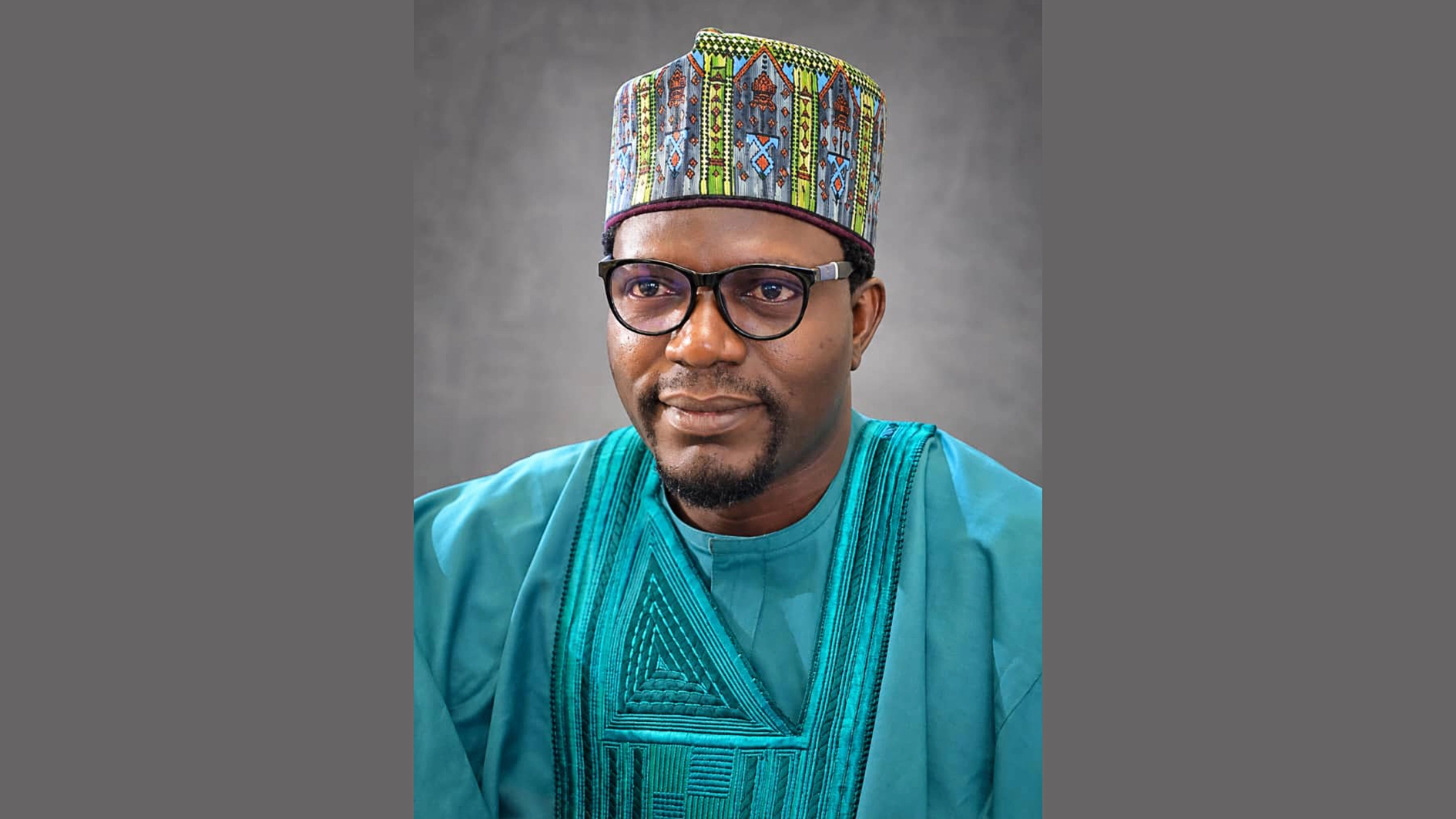
Dr Philip Ugbodaga stands as a defining figure in Nigeria’s specialist healthcare landscape. As the pioneer Medical Director of the National Orthopaedic Hospital Benin City (NOHB) – a federal institution established in 2023 – he was tasked with building a centre of excellence from the ground up and has approached that mandate with uncommon clarity. He brought to the role not only the precision of an Oral and Maxillofacial Surgeon but the experience of a system builder.
His credentials span decades with life membership of the West African College of Surgeons and Fellowship of the International College of Surgeons anchoring a career shaped by service. Early in his career he served as President of the Association of Resident Doctors at the University of Benin Teaching Hospital and as 1st Vice President of the National Association of Resident Doctors of Nigeria, formative roles that foreshadowed a larger appetite for leadership. That trajectory would later see him lead the Nigerian Medical Association in Edo State, transform Central Hospital Benin City as its Medical Director and operate at the heart of federal policy as Special Assistant to the immediate past Minister of State for Budget and National Planning where he handled administration, social development and international cooperation. In him, clinical depth meets public sector reform, a combination that continues to elevate standards in Nigeria’s health sector.
What drew him to medicine was his love for caring for the weak rather than abstract ambition. His eldest brother, Dr Peter ‘Femi Ugbodaga, a retired Permanent Secretary and Consultant Nephrologist, was already in practice before he entered secondary school and that example made any other career difficult to imagine. That influence shaped a philosophy that knowledge must restore dignity, which led him from dentistry into Oral and Maxillofacial Surgery where clefts in children and traumatic injuries carry both physical and emotional weight. His appetite for leadership emerged early at the University of Benin as President of the Dental Students Association, Vice President of the national body and five-time member of the Students’ Union Parliament, and later as Chairman of the Network of Ministerial Aides and Special Assistant on Administration, Social Development and International Cooperation where he contributed to national plans including Agenda 2050 and the Open Government Partnership.
Building a hospital from zero staff tests more than clinical skill — it tests imagination. Dr. Ugbodaga was the only staff on record when his appointment as acting Medical Director took effect on 25th May 2023 under former President Muhammadu Buhari, later confirmed by President Bola Ahmed Tinubu on 1st August 2023. What has followed has been institution building in the literal sense. From that solitary starting point, the National Orthopaedic Hospital Benin City now counts close to 500 clinical and non-clinical personnel, a multidisciplinary core of orthopaedic surgeons and related specialists, and active orthopaedic and trauma services. Recruitment has been deliberately strategic. Dr Ekiomado Eki-Udoko, celebrated recently alongside Edo State Governor Senator Monday Okpebholo, emerged as the first female neurosurgeon certified by the West African College of Surgeons in the history of Edo, Delta and the former Mid-Western Region — a milestone she attained as staff of the hospital after being head-hunted in its 2025 drive to attract high-calibre specialist manpower.
Yet for him the more durable achievement lies beyond theatres and headcount. His administration aligned early with the four-point agenda of the Federal Ministry of Health and Social Welfare under Coordinating Minister Professor Muhammad Ali Pate and Minister of State Dr Iziaq Adekunle Salako, and then pressed further. Under his leadership Management approved an Open Hospital Governance and Accountability Policy 2026-2029, possibly the first of its kind in any federal tertiary hospital in Nigeria, modelled on Open Government Partnership principles of transparency, participation and responsiveness.
SERVICOM has been strengthened to anchor patient experience at the centre of operations, free medical outreaches have reached thousands including host communities and patients from Delta State, and the academic foundation is being laid with the approval of the National Orthopaedic Hospital Benin Journal of Orthopaedics, Trauma and Rehabilitation to generate local evidence on trauma, joint replacement, spinal disorders, prosthetics and rehabilitation. With support from the Ministry, deployment of an Electronic Health Records system is underway — part of a deliberate attempt to make clinical excellence and institutional excellence reinforce each other in line with the Renewed Hope agenda.
Dr Ugbodaga’s vision for NOHB is deliberately continental in scale. “Our vision is to make the National Orthopaedic Hospital Benin a leading orthopaedic and trauma hospital in Africa, renowned for excellence, innovative care and patient satisfaction,” he says, with Patient-Centred Care as the guiding motto that drives all operations. When he assumed office there was no operational structure and no take-off grant, so his first act was to craft a roadmap — drawing on his experience on the health sub-committee of the National Development Plan 2021-2025 — which became the NOHB Strategic Plan 2024-2029 anchored on specialised delivery, human capital, research, innovation and sustainability. Over the next three years he plans to expand joint replacement and reconstruction, spine surgery, sports medicine, orthopaedic oncology, paediatric orthopaedics, trauma, prosthetics and orthotics, while positioning the hospital as “Africa’s leading hub in the operationalization of patient safety protocols” in line with the Federal Ministry’s 2024 National Policy on Patient Safety and Healthcare Quality.
That ambition, he insists, extends beyond medicine into economics. “We want to create an institution that contributes to Nigeria’s One Trillion Naira economy aspiration” of President Bola Ahmed Tinubu by training highly skilled professionals, creating jobs, supporting local innovation and stemming the outflow spent on treatment abroad. It is a vision being built from ground zero against familiar constraints — infrastructure, equipment, funding, logistics and systems — but Dr. Ugbodaga frames challenge as opportunity. Quoting the President’s own ethic that he asked for the job and will not lament, he says his attitude is to roll up his sleeves and work. “Great institutions are never defined by the resources available for their operations but rather by the convictions and character of the people who lead them,” he notes, crediting the Ministry’s support — particularly Minister of State Dr Iziaq Adekunle Salako, former Minister of State Dr Tunji Alausa who approved the 100-bed Mother and Child complex as take-off structure, and Permanent Secretary Daju Kachollom — and adding, “infrastructure alone does not deliver healthcare; people do.”
For Dr Ugbodaga, technology in orthopaedics is no longer aspirational but existential — from advanced imaging and implants to minimally invasive surgery, rehabilitation and digital health. At NOHB the current anchor is the Electronic Health Records system, intended to tighten clinical decision-making, data management and continuity of care, but he is insistent that “technology is only useful when there are competent professionals who can deploy it effectively.” That conviction drives investment in continuous professional development and an open-door partnership model with universities, professional bodies, technology firms and responsible private investors, because a new institution should not try to do everything alone. Innovation, in his framing, is not the acquisition of expensive equipment but “finding better, smarter and more sustainable ways of solving healthcare problems” to bring specialised care closer to Nigerians.
Medical tourism, he contends, reflects deeper structural gaps in infrastructure, financing, equipment maintenance, research, human-capital retention and public confidence, and reversing it requires a functioning ecosystem. Sustained federal investment under the Renewed Hope Agenda, competitive conditions that keep highly trained professionals at home, and well-structured public-private partnerships operationalised through the Infrastructure Concession Regulatory Commission and the Ministry’s own PPP frameworks are central to that ecosystem, delivering infrastructure, technology transfer and long-term maintenance as an integrated system rather than isolated interventions. The goal, he says, is not to stop Nigerians from travelling but to make it unnecessary for them to do so because the expertise and technology they need is available and trusted at home.
Dr Ugbodaga is deliberate about geography as strategy. Benin City, he notes, is a nodal point with “enormous regional importance” accessible to the South-South and other geopolitical zones, and the Federal Government “did not establish the Hospital merely to serve Edo State.” The region carries a heavy burden of road traffic injuries, occupational injuries, sports injuries and degenerative musculoskeletal disorders, and his objective is “firstly to develop the Hospital into a comprehensive regional referral centre for specialised orthopaedic, trauma and rehabilitation services.”
That means building a multidisciplinary workforce, expanding specialist services, strengthening rehabilitation, developing research capacity, investing in digital health and pursuing strategic partnerships, while tightening referral networks so that “a functional referral system ensures that patients receive the right care, at the right level and at the right time.” His ambition is direct: “for a patient from Edo, Delta, Rivers, Bayelsa, Cross River, Akwa Ibom, Ondo or any neighbouring state to know that there is a credible specialist institution in Benin City capable of providing world-class orthopaedic and trauma care.” When that happens, he says, “the Hospital will become more than a healthcare facility. It will become a regional orthopaedic hub for clinical care, training, research, rehabilitation and innovation,” easing pressure on existing tertiary hospitals and reducing the incentive to seek care abroad.
For young doctors, the dynamic Medical Director frames medicine not as a career ladder but as a civic platform. His own path — from student leadership through clinical practice, four decades of professional activism including chairing the Coalition to Save Nigeria during the 2012 subsidy protests that brought together the NMA, NLC, TUC and NUJ, to public service — taught him that clinical skill can become social agency. He urges the next generation to become lifelong learners, fluent in technology, research, policy and communication, but to keep empathy at the core, to learn leadership long before titles arrive, and to guard integrity as the most fragile asset. Success, in Dr Phillip Ugbodaga’s telling, is not measured only in income but in a life altered by competence, and the final counsel is to stay rooted: Nigeria’s challenges are protracted, more cross-country run than sprint, and will require professionals who choose to build at home rather than talk it down.


