 Follow Us on Google News



 Follow Us on Google Discover
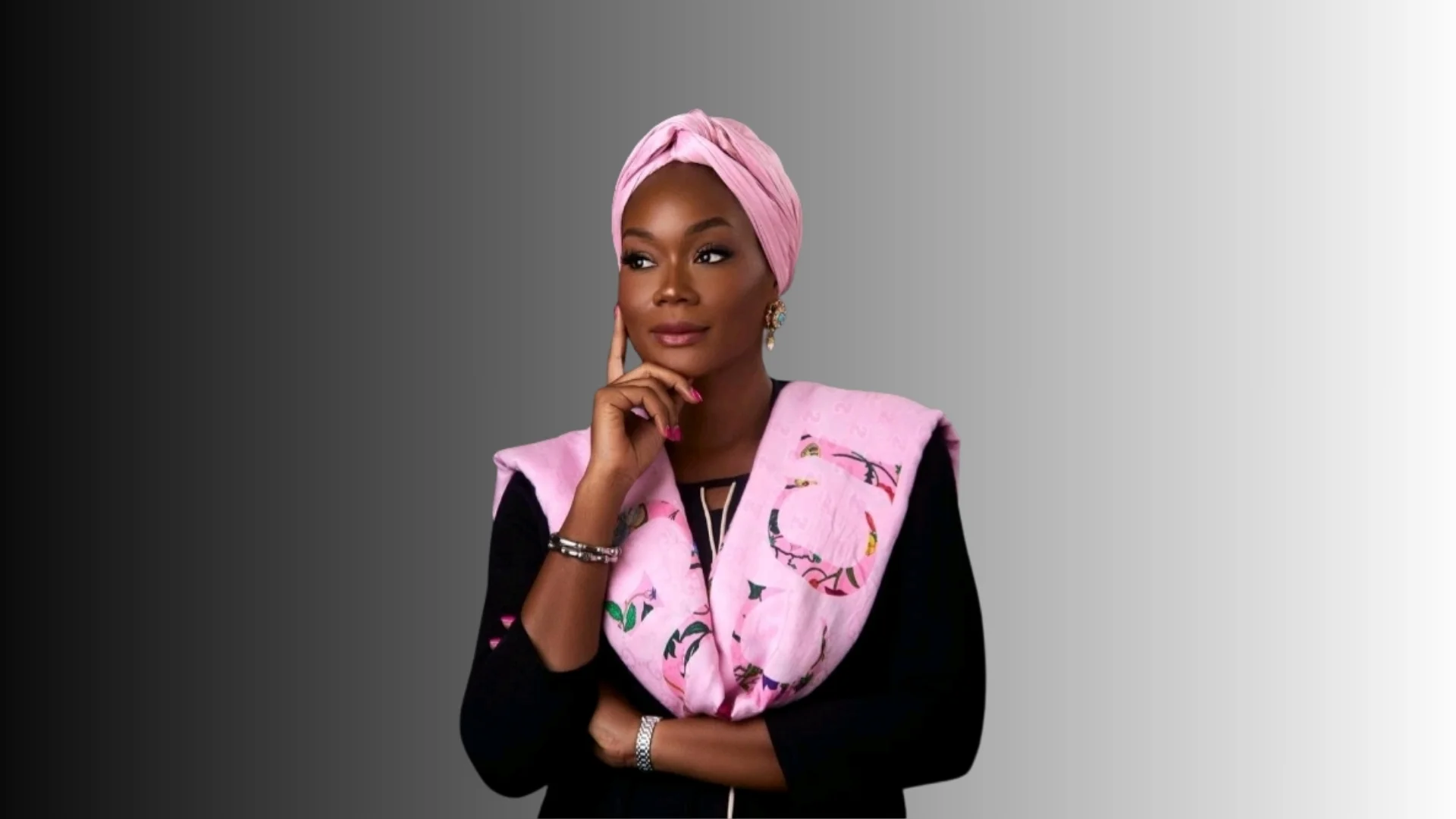
SPECIAL REPORT ON NIGERIA’S 25 EXCEPTIONAL AND MOST VALUE-ADDING FEMALE PROFESSIONALS
Can we have an insight into your background, Chief Osasu Igbinedion Ogwuche?
I am a Nigerian entrepreneur, social-impact investor, media executive and institution builder. But beneath those titles, I have always been interested in one fundamental question: why do some societies succeed in turning their human and natural resources into broad-based opportunity, while others struggle despite having enormous potential? Much of my life and career has been an attempt to understand that question and, in my own way, contribute to the answer. I studied at Stonehill College in the United States and later earned a Master’s degree from Northeastern University, also in Massachusetts, U.S. I have also undertaken executive education at Oxford Saïd Business School and Harvard Kennedy School, among other professional programmes. My work today spans entrepreneurship, media, philanthropy, governance, women’s leadership and development through the TOS Group and TOS Foundation Africa. I see these not as disconnected interests, but as different parts of the same journey: understanding people, building institutions and creating systems that allow people and communities to thrive.
Can you take us through your career trajectory?
Looking back, the different chapters of my career may appear quite different—media, business, philanthropy, governance and leadership—but to me, they have always been connected by the same objective: understanding how to move ideas from conversation to implementation. I began in communications and media, The Osasu Show to be specific, where I learned the power of storytelling, public engagement and the ability to shape narratives. Over time, I became increasingly interested in what happens after the conversation—how ideas translate into businesses, institutions, policies and tangible outcomes. In 2016, at the age of 24, I founded TOS Group. Entrepreneurship gave me an opportunity to build, experiment and understand markets, capital, people and institutions from the ground up. As the Group evolved, so did my interests. I became increasingly involved in development and governance issues, which led to the growth of TOS Foundation Africa and our work across education, healthcare, entrepreneurship, civic engagement, youth development and women’s leadership. My work around women’s participation in governance has been particularly important to me. Through initiatives including Reserved Seats for Women and HerCademy, I have worked to move the conversation beyond simply saying women should participate to creating practical pathways for women to develop the confidence, networks, skills and opportunities to lead. I have also increasingly embraced a Pan-African perspective. Being selected as a 2026 Archbishop Desmond Tutu Leadership Fellow has strengthened that commitment and challenged me to think beyond individual interventions towards the institutions and systems that can shape Africa’s future. So, if I had to summarise my trajectory, I would say it has been a journey from communications, to entrepreneurship, to social impact and increasingly towards systems-building.
Who and who would you say have been most influential on your life and career?

My parents have undoubtedly been among the greatest influences on my life. They taught me responsibility, hard work, resilience, integrity and service. I grew up understanding that whatever opportunities you have should ultimately create opportunities for others. My faith has also been a profound influence. I see leadership as stewardship. Achievement matters, but so does what you do with the opportunities and influence you have been given. My family has also shaped the way I think about leadership. My husband and my children constantly remind me that success is not simply about what you accomplish publicly, but also about the kind of person you are privately and the legacy you leave for the next generation. Professionally, I have been fortunate to learn from many leaders across business, government, philanthropy and development. But Africa itself has been one of my greatest teachers. I have learned from extraordinary leaders, but also from ordinary Nigerians who navigate imperfect systems every day and still find ways to build, provide and hope. Those experiences have reinforced my belief that Africa does not lack talent or potential. We need stronger systems and institutions capable of converting that potential into opportunity.
As a female professional, have you ever experienced any gender bias? If yes, can you relate the experience to the readers? How did you tackle the issue?
Yes. I have experienced gender bias, particularly earlier in my career, when being a young woman sometimes meant that my ideas or capacity were viewed through a different lens. Sometimes the bias is overt; more often, it is subtle. It can show up in who is given the benefit of the doubt, who is assumed to have authority in a room, whose expertise is questioned, or who is expected to prove themselves repeatedly. Earlier in my career, I sometimes felt that I had to work twice as hard to establish credibility. But over time, I realised that the more important question was not simply how I could overcome bias personally. It was how we build institutions in which a woman’s opportunity is not determined by her gender, her connections or her willingness to fight twice as hard to be heard. My response has therefore been twofold: build my own competence and credibility, while also working to make the path easier for those coming behind me. That shift in thinking influenced much of my later work around women’s leadership and representation. I don’t want the next generation of women to spend all their energy fighting for permission to lead. I want them equipped to lead effectively.
Can you relate some memorable experiences in your career?
Some of my most memorable experiences have been moments when an idea moved from paper into real life—or when someone else’s life changed because we created an opportunity for them. One example is HerCademy, where women from across Nigeria were brought together for mentorship, leadership development and practical exposure to the National Assembly. Watching women who may never previously have imagined themselves in those spaces begin to see themselves differently was deeply rewarding. Another was our work around the Reserved Seats for Women campaign. Taking an issue that many considered difficult and building a coalition around it—bringing together legislators, civil society, development partners, media and citizens—taught me a great deal about the power of sustained advocacy and collaboration. Being selected as a 2026 Archbishop Desmond Tutu Leadership Fellow was also particularly meaningful. It was a reminder that work that begins locally can resonate within a much broader African leadership community. But some of my most memorable moments are quieter ones: seeing a young person gain an opportunity, watching a woman find her voice, seeing a business we built create jobs, or watching someone on our team grow into a leader. Those moments have taught me that leadership is ultimately measured not by how many people know your name, but by how many people’s lives are different because you showed up.
You started the TOS Group in 2016 at just 24. What inspired entrepreneurship in you at such a young age?
At 24, I did not know that I was beginning a ten-year experiment in institution-building. I simply knew that I wanted to create rather than wait for permission to create. I have always been uncomfortable with identifying problems without trying to solve them. I saw opportunities around me and wanted to build something of my own rather than wait for someone else to create the opportunity. There was also a deeper motivation. I wanted to build an institution that could evolve with me and create value in multiple ways—not only financially, but socially. Entrepreneurship gave me the freedom to experiment, but it also taught me something much bigger: building anything of lasting value requires discipline, people, institutions and systems—not just vision. Starting young also taught me that you don’t need to have everything figured out before you begin. You need a clear sense of purpose, the courage to start, the humility to learn and the resilience to keep adapting. Ten years later, I am still learning.
What are the various subsidiaries in the group and what does each do?
TOS Group has evolved into a diversified platform with businesses and institutions serving different but complementary purposes. TOS Foundation Africa is our social-impact and systems-change platform. Its work spans women’s leadership, entrepreneurship, education, healthcare, and civic engagement. TOS TV Network is our digital-first Pan-African media platform, using media, storytelling and strategic communications to shape conversations and amplify African perspectives. NatSu Global operates across investment, real estate and related ventures, with a focus on creating commercially sustainable opportunities across markets. LEZEANOO Services Limited operates in the stevedoring and downstream oil and gas space. Nola Restaurant & Lounge is our hospitality business, bringing together premium dining, entertainment and lifestyle experiences in Abuja. Although these entities operate in different sectors, they are connected by a common philosophy: build well, create value and think beyond the immediate transaction.
What are your goals for the group?
My ambition is much bigger than building a collection of successful businesses. I want TOS Group to become a globally respected, financially resilient and mission-driven African institution—one that creates economic value while contributing meaningfully to Africa’s development. Over the next decade, I see TOS becoming increasingly Pan-African, with stronger investments, partnerships and operations across the continent. I also want to deepen the connection between our commercial and social-impact work. We need more African institutions that can generate wealth, deploy capital responsibly, build businesses, strengthen communities and contribute to stronger systems at the same time. But perhaps most importantly, I don’t want to build an empire that depends on me. I want to build institutions that can outlive me. That, for me, is the real measure of institution-building.

