 Follow Us on Google News
 Follow Us on Google Discover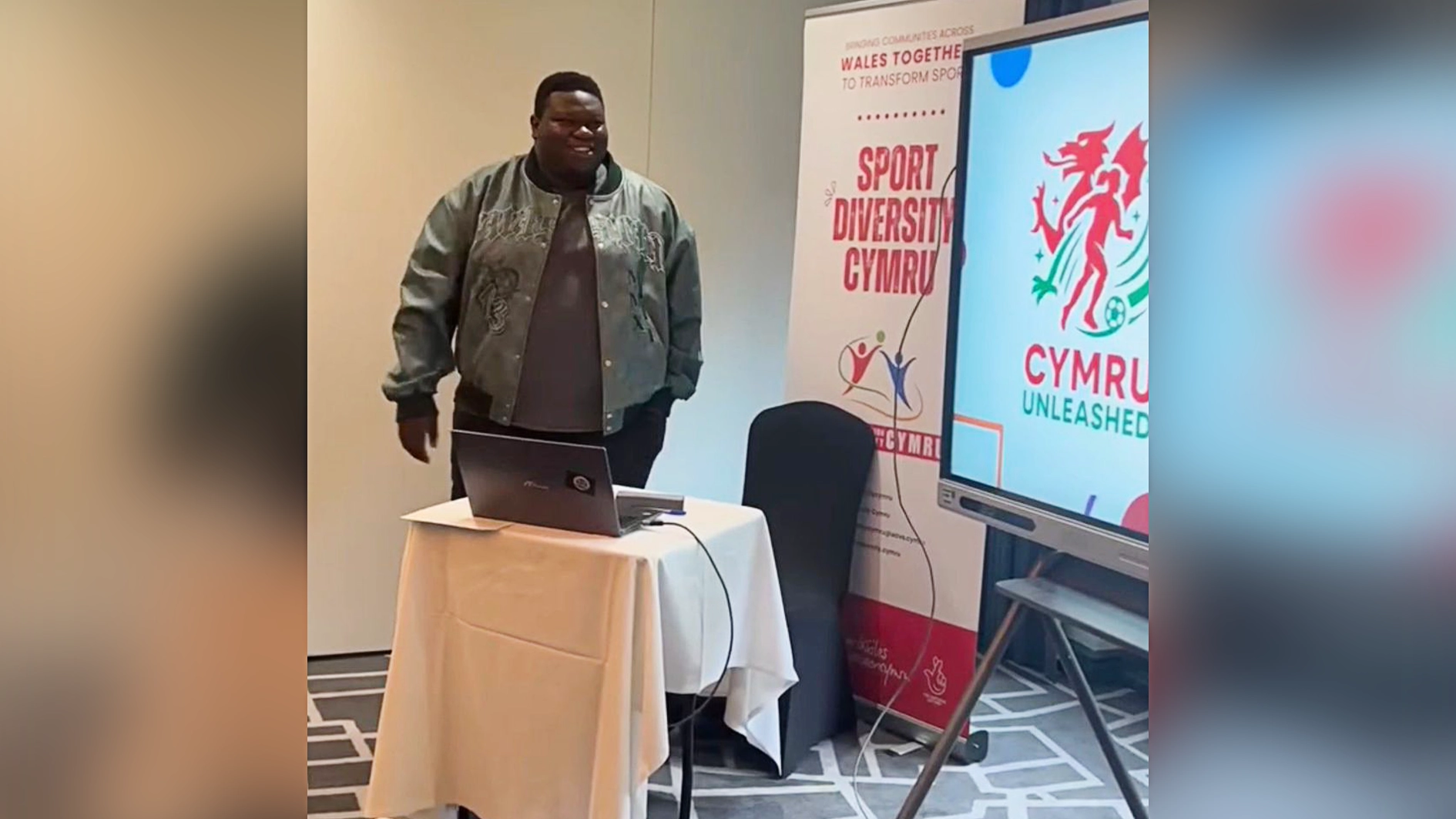
When Wales qualified for the UEFA Women’s Euro 2025, it was the first time the women’s national team had reached a major international tournament, after years of trying. The qualification naturally created its own wave of celebration across the country. It became one of the country’s most important historic moments.
Cymru Unleashed emerged within that atmosphere, but its interest stretched beyond football. Led by cultural producer Osamagbe Izevbigie and developed through OTID Entertainment and Afrowales, the project took the excitement around the tournament and used it to explore women’s leadership, youth participation, Welsh identity and belonging through different creative forms.
It is key to note that projects built around major sporting moments can easily become extensions of the spectacle. There are screenings, murals, concerts and community events, all useful in their own ways, but often existing independently of each other. Cymru Unleashed worked across workshops, mini tournaments, exhibitions, public art, bilingual digital storytelling and immersive technology. Izevbigie’s work was in figuring out how these different parts could belong to the same conversation.
That ability to connect things has followed much of his career. His background began in live sound, lighting and event systems in Lagos before developing into cultural production in Wales. It perhaps explains the practical nature of his approach. Production requires different moving parts to work together before the audience can receive the final experience. Cymru Unleashed applied something similar on a much larger cultural scale, where artists, young people, sporting organisations, public institutions and communities became parts of the same programme.
Ten workshops and mini tournaments were delivered in communities including Butetown, Grangetown and Treforest. Girls and young women were brought directly into the project, with their experiences feeding into exhibitions developed alongside schools, artists and community partners. This is why Cymru Unleashed becomes particularly interesting as a cultural project. The young people involved were contributing to how the moment was documented and remembered.
For a project concerned with women’s football, this was quite the feat. Sport already gives us a fairly straightforward language for remembering history. There are players, statistics, photographs, trophies and famous matches. Cymru Unleashed widened that record to accommodate people experiencing the tournament outside the pitch. The qualification belonged to the players who achieved it, but its cultural impact was unfolding among young girls watching them, communities recognising themselves within the moment and people reconsidering what participation in Welsh sporting culture could look like.

Izevbigie also understood that these audiences would not necessarily encounter the project in the same place. Workshops offered physical participation while exhibitions created another point of access. Digital storytelling allowed material to travel beyond the immediate programme, and the virtual reality component explored how some of that history could be experienced through immersive technology.
Then the work entered Cardiff itself.
Through collaborations with Jack Arts and BuildHollywood, Cymru Unleashed appeared on billboards and poster drums around the city. People could encounter images connected to women’s football and participating communities while moving through Cardiff as part of their ordinary routines. Visibility therefore became practical.
This is one of the clearer examples of Izevbigie’s creative leadership within the programme. He did not personally make every artwork, conduct every workshop or create every piece of technology involved in Cymru Unleashed. The project had its creative collaborators, institutional partners and participating communities, and their authorship remains important. His contribution was building the framework that allowed these different people and disciplines to work towards something recognisable as one project.
That is considerably harder than simply packing multiple activities into a programme. Cymru Unleashed had football, public art, workshops, exhibitions, bilingual storytelling, documentary material and virtual reality sitting inside it.
Even its bilingual approach mattered beyond accessibility. A project examining contemporary Welsh identity would have felt incomplete without acknowledging how language operates within that identity. Similarly, bringing Black and minority ethnic communities into the programme reflected the “Wales” that was actually experiencing this sporting milestone. These choices allowed the project to discuss national identity through the people living inside it.
The Welsh Government supported Cymru Unleashed through its UEFA Women’s Euro 2025 Partner Support Fund, with project records reporting £60,000 in support.
The programme later became a finalist for Community Sport Project of the Year at the Wales Ethnic Diversity Sports Awards and received recognition through the Mastering Diversity Awards. It suggests that the project travelled beyond its immediate participants. It is less interesting, however, than what Izevbigie managed to do with the opportunity.
Cymru Unleashed surfaced during an unusual moment when sport had already given Wales a story people wanted to participate in. Izevbigie recognised that the story could accommodate more people and retain its poetic, original depth. He connected football to music, art, technology and community participation, then gave each format an edge to exist within the wider project.
It is also useful in understanding his evolution as a cultural producer. His work through Afrowales and OTID Entertainment has moved through live music, artist development, festivals and public programmes. Cymru Unleashed shows how that experience can be useful outside a conventional music environment.
Wales qualifying for Euro 2025 will remain part of its sporting history regardless. Cymru Unleashed dealt with another question: what happens around history while it is being made?
The answer: young people participate. Artists interpret it. Communities attach their own experiences to it. Images enter public space. Stories are recorded. Izevbigie’s achievement was recognising those activities as parts of the moment too, then curating a cultural programme capable of meshing them together.

