 Follow Us on Google News
 Follow Us on Google Discover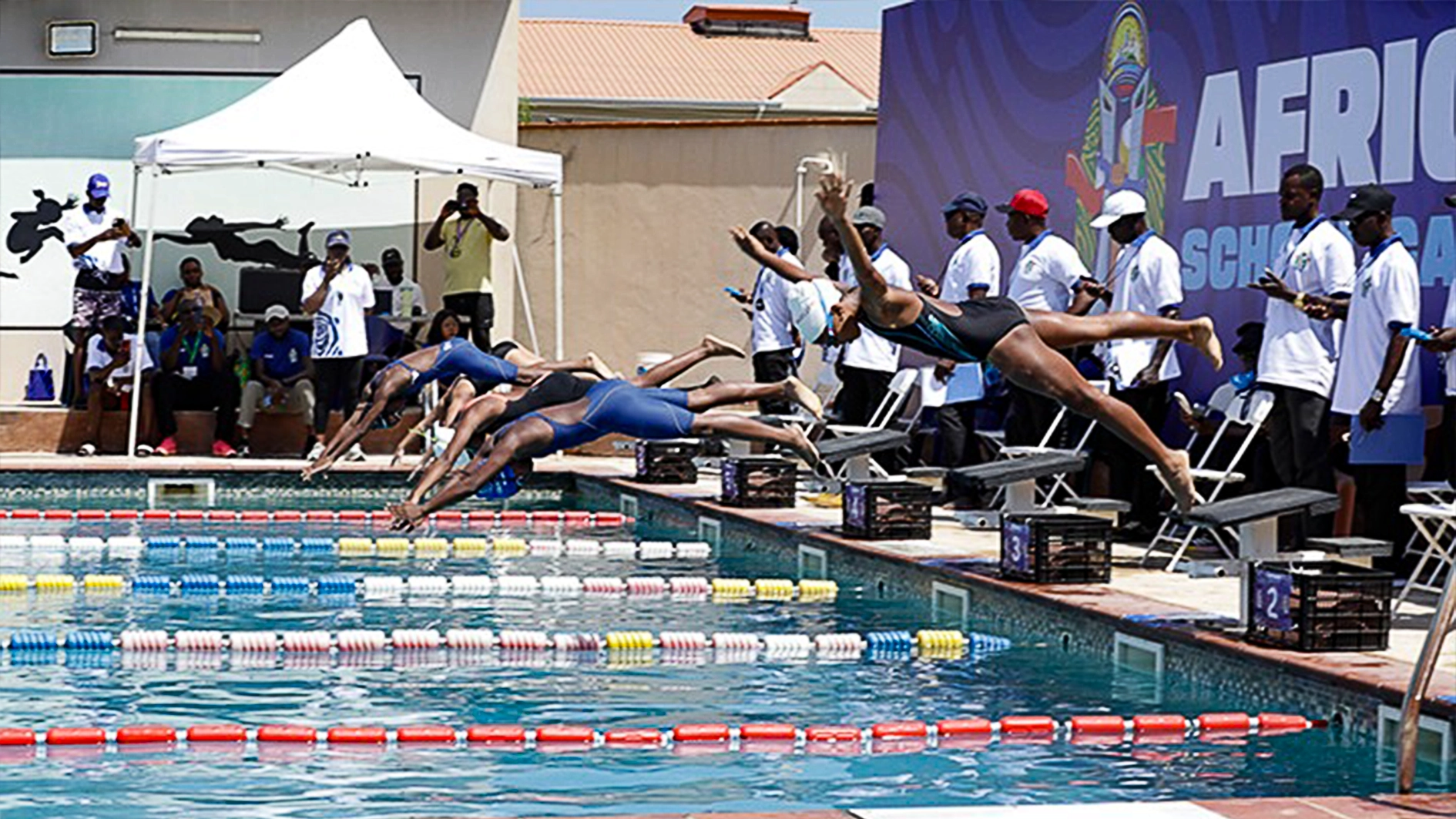
Africa quest for educated athletes has received a big boost from the Pan African School Games, which aims to build the all-round sportsman.
The success of the maiden edition of the games has fueled growing interest among schools and student-athletes that are eager to be part of what is fast becoming one of Africa’s most promising school sports platforms.
As preparations gather pace for the second edition, scheduled to hold at James Hope College, Lekki, from October 16 to 18, 2026, the brains behind the initiative, Dr Seun Akinbohun, Dr Busola Tejumola and Aderoju Ope-Ajayi, insist that the Games are about far more than competition and medals.
For the trio, the ultimate goal is to create opportunities that extend beyond the playing field by providing pathways for talented young athletes to develop both academically and athletically.
One of the most notable developments ahead of the second edition is the competition’s new identity. Formerly known as the Africa School Games, the tournament has been rebranded as the Pan African School Games, a move the organisers say better reflects their long-term vision.
“The change reflects the ambition and direction of the competition,” they explained.

“From the outset, our vision has been bigger than a Lagos or Nigerian school sports event. We want to build a platform that brings young people together across Africa through sport, education and cultural exchange.”
The new name underscores the organisers’ determination to create an African-owned sporting platform where young athletes can compete, build friendships and discover opportunities that could take them to higher levels of sport and education.
Following the success of the inaugural edition, organisers are anticipating a significant increase in participation. The first Games featured 11 schools and more than 300 student-athletes, while this year’s edition is expected to attract even more schools from within and beyond Lagos.
“Our target is to grow participation substantially while maintaining the quality of competition and the overall athlete experience,” they said.
While increasing numbers is important, the organisers emphasise that ensuring every participant enjoys a meaningful and rewarding experience remains their top priority.
Staging a multi-sport event of this scale, however, comes with considerable challenges. Funding, logistics, transportation, facilities, technical officiating, safeguarding and medical support remain some of the key hurdles facing the organisers.
“Multi-sport competitions are particularly demanding because every sport has its own technical requirements,” they noted.
To guarantee the long-term sustainability of the Games, the organisers are pursuing a model built on sponsorships, strategic partnerships and institutional support rather than relying on a single source of funding.
While the maiden edition was primarily about proving that the concept could work, the organisers believe the second edition presents an opportunity to elevate the competition to a higher level.
“The biggest difference is experience and ambition,” they said.
Lessons learned from the first edition have helped strengthen planning processes, improve logistics and enhance athlete welfare programmes. Greater emphasis is also being placed on talent identification, technical standards and stakeholder engagement.
More importantly, the organisers want the Pan African School Games to evolve into a comprehensive sporting ecosystem that connects schools, coaches, scouts, parents and educational institutions.
Perhaps the most compelling aspect of the Games is their commitment to helping young athletes access educational opportunities. The organisers revealed that partnerships with organisations such as Plumptre Advisory have enabled connections with prestigious international institutions, including McCallie School in the United States, as well as Bethany School, Buckswood School and Roedean School in the United Kingdom.
They stressed that the vision goes beyond simply rewarding winners.
“We don’t want a student to participate, win a medal and go home,” they said. “We want outstanding young athletes to be seen, evaluated and connected to opportunities that will help them develop academically and athletically.”
The presence of scouts and representatives linked to these institutions could potentially open doors to scholarships, further education and continued sporting development for exceptional students.
The Games have also continued to attract support from leading corporate organisations and stakeholders. Among this year’s partners are Prime Atlantic, Mikano Changan, UAC Foods, Nigerian Exchange, 33 Productions, What Media, Kantar, Logic City and Flutterwave.
The organisers also acknowledged the support of the Lagos State Government and the Lagos State Sports Commission, particularly in the areas of talent identification and school sports development.
Strong partnerships, they believe, are essential to building a platform capable of expanding beyond Lagos and eventually serving the wider African continent.
Although Lagos remains the launchpad, the long-term vision is unmistakably continental. The organisers disclosed that schools from Kenya and Ghana are already scheduled to participate in the 2027 edition, marking an important milestone in the tournament’s expansion plans.
“Lagos has been an important starting point because it provides the infrastructure and ecosystem required to build the competition,” they said. “But we do not want the Games to remain Lagos-centric.”
The organisers hope the competition will eventually become a recognised pathway for young African athletes while promoting cultural exchange, friendship and unity across the continent.
While medals and trophies remain important, the Pan African School Games are introducing incentives that go beyond sporting success.
Outstanding athletes will gain exposure to scouts, coaches and educational institutions, while schools will compete for one of the tournament’s most attractive prizes: a brand-new school bus sponsored by Mikano Changan Motors.
For the organisers, however, the greatest reward is not a trophy or medal.
“We want students to leave the Pan African School Games with more than medals,” they said. “We want them to leave with confidence, exposure, relationships and potentially a pathway to the next stage of their academic and sporting journey.”
As anticipation builds towards the second edition at James Hope College, the Pan African School Games appear poised to redefine school sports in Africa, creating opportunities that stretch far beyond the playing field and helping young athletes transform their talent into lasting academic and sporting success.

