 Follow Us on Google News



 Follow Us on Google Discover
On paper, Nigeria has two of the best national stadiums in Africa – the National Stadium, Lagos, and the Moshood Abiola National Stadium, Abuja. GOWON AKPODONOR and ERNEST NZOR report that despite acclaimed interventions, both monuments are sorry sights and a national embarrassment.
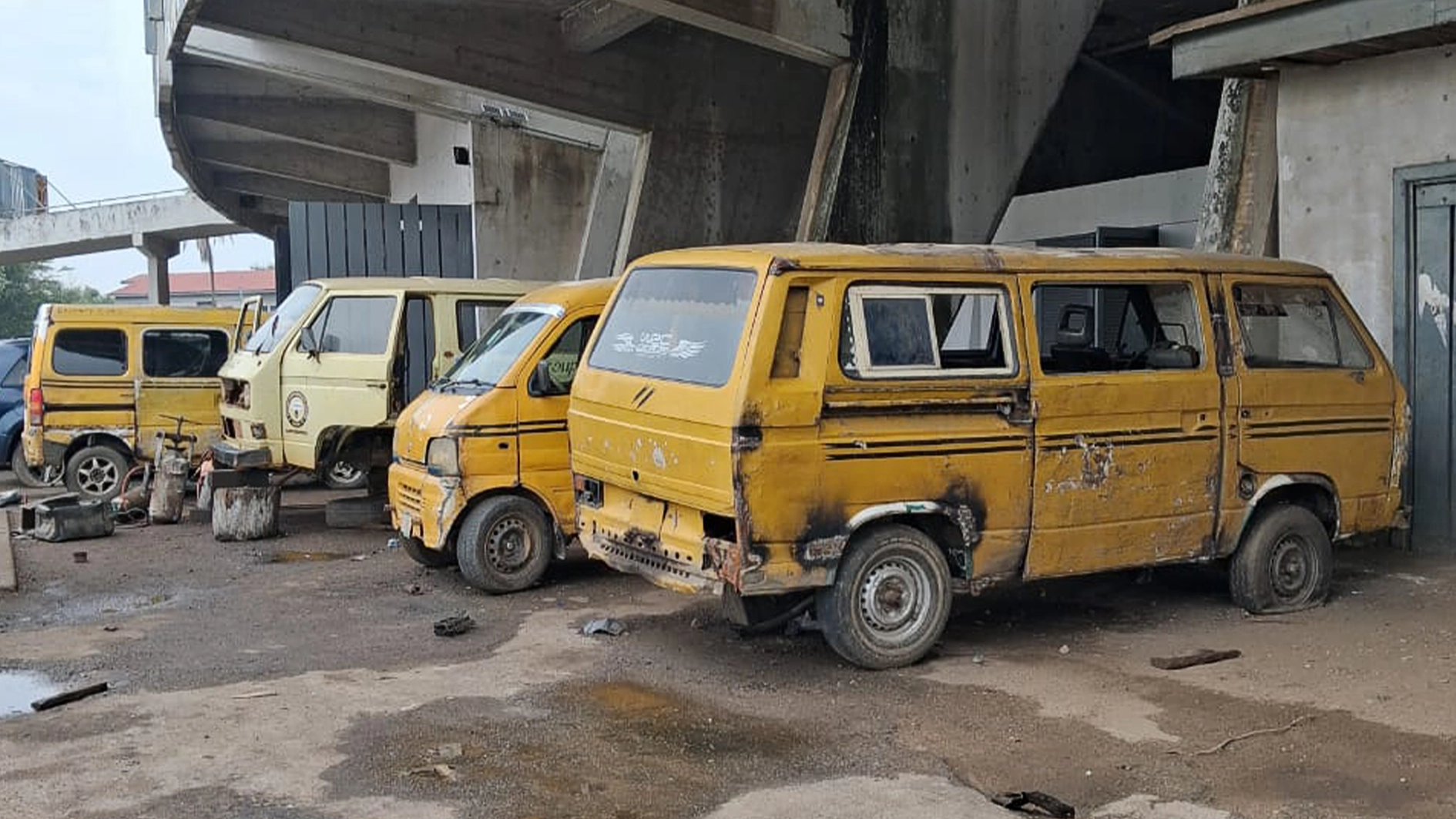
Musibau is one of the most popular mechanics in Lagos’ Surulere area. The former bus driver is known for his expertise in repairing minibuses, commonly called danfo. His popularity stems from his knowledge of his job, as well as the air of security his mechanic workshop gives his customers. But there is a problem with the location.
Musibau’s workshop is under one of the staircases at the National Stadium, which is supposed to be home to sportsmen and women.
For over a decade, the National Stadium, popularly known as the Sports City and once the pride of the nation, has been left to rot by successive governments.
Built in 1972 ahead of the 1973 All Africa Games, the edifice has been turned into a home for all sorts of trades. It is also a large car park, where civil servants and traders working on the Island park their cars before boarding BRT buses to the Island.
People prefer to pay N1000 to park their vehicles inside the stadium because they feel the facility provides cheap security for their cars.
Apart from the Indoor Sports Hall, which still hosts basketball games, the knock-up hall, which hosts table tennis events, and the tennis courts, the stadium is now primarily used by keep-fit groups, churches that organise crusades in some of the facilities, and various artisans.

The Indoor Sports Hall of the National Stadium was recently renovated by the Lagos State government ahead of the now postponed First National Intermediate Games.
In the early days of the Muhammadu Buhari-led administration’s second tenure, then Sports Minister, Sunday Dare, attempted to revive the stadium with the support of popular businessman, Sir Kessington Adebutu.
The project, under the adopt-a-facility programme, which invited wealthy Nigerians to help fix some of the sports facilities across the country, could not revive the stadium even after gulping over $1 million.
It succeeded in fixing the playing pitch of the main bowl, while the stands, which lost their seats over 20 years ago, and the dressing rooms were untouched. He promised that the stadium would be reopened for sports activities in August 2021. But that did not happen.
Dare later claimed that it would take over N20 billion to bring the facility back to life, given the enormous amount of work required.
Dare’s successor under the Bola Tinubu administration, John Owan Enoh, upon assuming office in 2023, promised to revitalise the facility, even if it meant bringing down the structure to build a new one. But after that promise, he did not set foot at the stadium until he was removed after the Paris 2024 Olympic Games.
Like his predecessors, the current chairman of the National Sports Commission (NSC), Shehu Dikko, upon assuming office in October 2024, promised to do everything within his power to revive all existing structures, including the National Stadium, Lagos, once seen as Africa’s best sporting facility.
But the former Nigeria Football Federation (NFF) vice president has not set foot on the facility since he told the world that President Tinubu had given him enough funds to rebuild the stadium and build more stadiums across the country.
A visit to the stadium last week showed how far the facility has been left to rot, with some of the structures distorted by “illegal” occupants, who have carved out some portions for their needs.
The roof of the VIP stand has been completely blown off, while the playing pitch repaired by the Dare administration has returned to square one.
All the plastic seats inside the National Stadium are weathered due to years of abandonment and neglect, just as all the scoreboards around the main bowl have since been brought down after one of them was blown off by heavy rainfall during the Sunday Dare’s tenure.
Some of the parts of the facilities that the Dare leadership pulled down to pave the way for the stadium’s renovation are still littering the stadium.
If the Lagos National Stadium has been left to rot because it is too far from the seat of power, the MKO Abiola National Stadium in Abuja, the country’s political headquarters, is not faring any better.
It has become home to all manner of people, with Package B, made up mainly of indoor halls and the cricket oval, as the only functional parts of the stadium.
Keep-fit enthusiasts, gamblers of all sorts, and car owners who see the facility as the ideal place to park their cars have taken over the facility. The MKO Abiola Stadium has become a haven for miscreants, so the Nigerian Police recently closed it to safeguard the lives of genuine users.
In late 2025, the Federal Government introduced access charges at the Moshood Abiola National Stadium, officials said, as a practical response to years of underfunding and deteriorating infrastructure.
The tolls, ranging from N300 to N1,000 depending on vehicle category, were intended to regulate access, improve security and generate internally generated revenue (IGR) for the maintenance of the sprawling sports complex.
But over a year after the policy was introduced, the conversation has evolved into something much bigger than the cost of entering the facility.
For many Abuja residents, the National Stadium is no longer a venue for football matches and athletics competitions. It is now one of the few public spaces in the Federal Capital Territory where people from different social and economic backgrounds exercise, socialise, network, train and earn a living.
Every morning and evening, the stadium comes alive with joggers, cyclists, amateur footballers, martial arts clubs, aerobics groups, churches, fitness circles, coaches and youth academies. For thousands of residents, it has long functioned as an urban commons, a safe environment where fitness, recreation and community life intersect.
If the entrance fees were charged because the government wants to use it to fix the facility, the questions many stakeholders are asking are: “What has the government done with the money collected for over one year? Why is the collection being done by private individuals and who owns the company responsible for collecting the fees? Why are sportsmen denied access to the stadium unless they pay the entrance fee?”
The Chief Executive Officer and Chairman of a youth League, Chukwuebuka Ugwu, said the toll has significantly altered his pattern of visiting the stadium.
“The charges may seem affordable, but for people who visit multiple times a day, they become expensive. I do not think the toll is fair because the National Stadium is a public facility, and it is not right to impose tolls on it. I have not noticed any visible improvement in the facilities or security. Nothing new has been built, and all the facilities within the premises remain the same, including the main bowl of the stadium. I believe the toll applies only to motorists. It is certainly discouraging for people.”
In May 2026, the federal government unveiled plans for nationwide stadium overhaul and upgrades.
The approvals were announced by the NSC following its Tenders Board meeting, where contracts for a range of projects were ratified under the government’s broader strategy to develop sports as a vehicle for youth engagement and economic growth. However, since the lofty pronouncements by the NSC leadership, nothing has been done or seen to be done to revive the facilities.
The approved sweeping package of sports infrastructure projects across the country included the Moshood Abiola National Stadium in Abuja, whose deteriorating state restricted its use by Nigeria’s national teams in recent years.
While the NSC chairman, Dikko, described the initiative as a turning point for the country’s sporting development, NSC’s Director-General Bukola Olopade said the intervention went beyond bricks and mortar saying: “This is beyond infrastructure renewal; it is about building a complete sports ecosystem that supports talent discovery, athlete development, job creation and global competitiveness.”
A former Head Coach of the Athletics Federation of Nigeria (AFN), Seigha Porbeni, feels the National Stadium in Lagos “needs deliverance”.
Porbeni, a former national hurdler, sprinter and jumper, told The Guardian that the issue with the National Stadium Surulere is very deep.
He said: “The National Stadium, including the National Institute for Sports (NIS), is jinxed,” Porbeni, a former Director of Sports in Delta State, said.
“As far as 1982 or thereabouts, when the IICC of Ibadan played Bendel Insurance of Benin City in a Challenge Cup final, over 30 spectators lost their lives at the facility. Since then, it has been one sad story after another coming from the National Stadium.
“It was after that Challenge Cup incident that Sam Okwaraji lost his life during a World Cup qualifier against Angola in 1989. Also, a javelin struck my chest inside the main bowl, and I barely escaped death. The Director General of the NSC, Mr Isaac Akioye, was forced out of office after being framed by some national athletes. He was one of the best-performing DGs we ever had.”
Porbeni added: “At the NIS, most people who worked there have passed on. From Hoest Bayer to Mr Omagbemi, Mr Anyakudo, Mrs Onanuga, even lately Solomon Abari, just to name a few. The previous Minister for Sports, Sunday Dare, made a frantic effort to give the Stadium a facelift, but only managed to fix the running tracks. I think he also fixed the toilets. The VIP lounge and seats are still in very bad shape. No scoreboard, no grass etc.”
Former Super Eagles and IICC Shooting Stars of Ibadan goalkeeper, David Aigbovo, described the federal government’s attitude towards the National Stadium as bad.
“Every year, we keep hearing the same old story from sports ministers that the National Stadium in Lagos is our top priority, but in the end, nothing concrete is done.
A staff member of the Federal Ministry of Sports, who pleaded anonymity, told The Guardian during the week that the government’s “back and forth approach” towards the stadium is becoming worrisome.
“We only hear of promises that the National Stadium in Lagos will come to life soon, but as we speak, there is really nothing on the ground to suggest so. Maybe it will happen soon,” the staff said.
“But we will continue to play our part by maintaining the Legacy Pitch and a few other areas. We allow some youth teams to play football there because if nobody is using it, the facility will go bad. It will be a waste of time and manpower to be maintaining it while the facility is not put to use,” the staff added.
When contacted, the Head of Facilities at the Moshood Abiola National Stadium, Mohammed Rabiu, said he could not comment without approval from the Director-General of the National Sports Commission.
Efforts to obtain an official response from the Commission were unsuccessful. Calls and messages sent to the management were not returned as of the time this report was filed.
The Guardian check, however, revealed that the NSC budgeted N18.775 billion this fiscal year for the rehabilitation and upgrading of Moshood Abiola National Stadium (main bowl phase 1), Abuja, which it described as an ongoing project.
It also stated in the yearly estimate that it would cost N50 million to provide alternative independent power, including a power bank, to achieve an uninterrupted power supply and reduce diesel consumption for both packages A and B.
But a former staff of the Nigeria Football Federation (NFF), who pleaded anonymity, accused the NSC of not coming clean with the state of things.
He said that the commission has been “posturing as if all is well, when in actual fact many things are not right.”
He said: “The Dangote Group spent so much money to rehabilitate the stadium before the 2022 World Cup playoff against Ghana. That game and the Olympics qualifier between the Super Falcons and South Africa were the only major games played in the stadium before it got to this stage.
“At the end of the game against Ghana, which Nigeria lost, fans thrashed the stadium and damaged many things. There was a report by a committee on the issue, and nobody has said anything about it.”

