 Follow Us on Google News


 Follow Us on Google Discover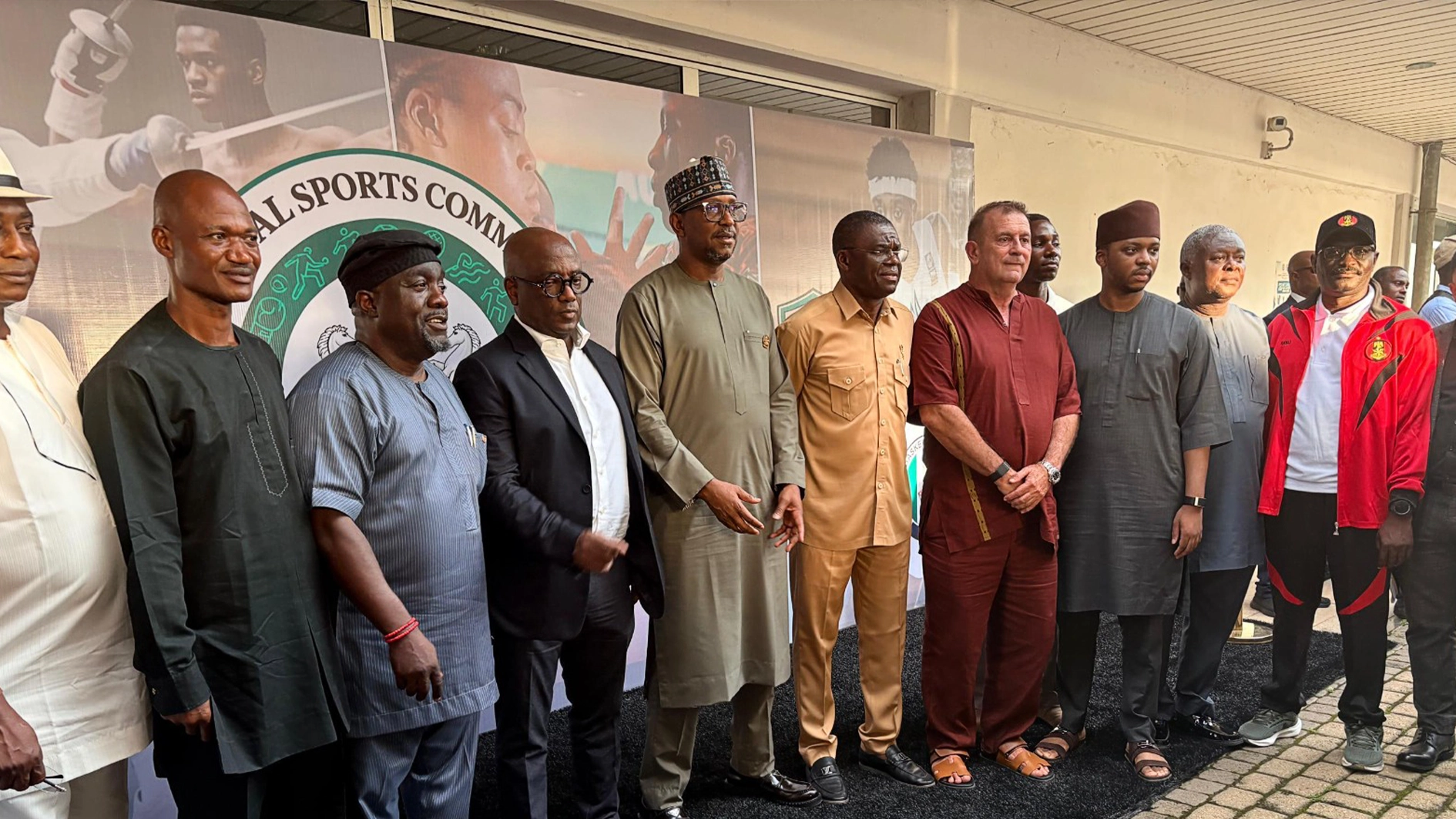
…As Benson Unveils Padel Expansion Plan
The National Sports Commission (NSC) has unveiled plans to raise more than ₦1 trillion through the capital market to develop sports infrastructure, as the newly inaugurated President of the Nigeria Padel Federation, Hon. Babajimi Benson, announced plans to attract private investment, establish training academies and expand the fast-growing sport across the country.
The twin initiatives underscore efforts to reposition sports as a driver of economic growth, job creation and youth empowerment, beyond the traditional focus on medals and international competitions.
Benson announced his plans on Thursday after the NSC inaugurated the boards of four sports federations at the Moshood Abiola National Stadium, Abuja. The federations are the Nigeria Padel Federation, Nigeria Basketball Federation, Nigeria Arm Wrestling Federation and Nigeria Fencing Federation.
Benson, who is also the Chairman of the House of Representatives Committee on Defence, said his administration would prioritise effective governance, infrastructure development, grassroots participation and professional opportunities to establish a sustainable padel industry in Nigeria.
He said the sport offered Nigerian youths opportunities not only as professional players but also in coaching, club management, sports administration and participation in national and international competitions.

“Padel gives them a platform whereby they can grow and gives them opportunities to either be into coaching, being in clubs, representing the country, representing their clubs and participating in international events,” he said.
Benson said Nigeria must position itself to benefit from the sport’s growing international popularity rather than allow other countries to dominate its development.
“Nigeria must not simply watch that growth happen. Nigeria must be part of it, and ultimately, lead it in Africa,” he said.
He identified four priorities for the federation: expanding participation, developing talent, establishing a world-class competitive structure and building a sustainable organisation anchored on sound governance.
On expanding participation, Benson said the federation would increase the number of players, clubs and courts while taking the sport beyond Lagos, Abuja and Port Harcourt to other parts of the country.
He said schools, universities, corporate organisations and local communities would be encouraged to embrace padel as part of efforts to widen participation and build a strong grassroots following.
On talent development, he said the federation would establish structured pathways for junior players, women, girls and high-performance athletes while investing in the training of coaches, referees and tournament officials.
According to him, young players would be supported to progress from learning the game to participating in tournaments, earning national rankings and eventually representing Nigeria at international competitions.
Benson also pledged to develop national competitions, rankings and championships while strengthening collaboration with the International Padel Federation and African partners to bring Nigerian players and officials up to international standards.
He said the federation would seek to position Nigeria as a destination for major padel competitions, creating additional opportunities for athletes, clubs, investors and other participants in the sports industry.
However, Benson acknowledged that achieving these objectives would require sound administration, reliable data, technology, strategic partnerships and a sustainable commercial model capable of attracting sponsors and private investors.
“Sport cannot thrive on enthusiasm alone. We need strong governance. We need technology and reliable data. We need partnerships. And we need a sustainable commercial model,” he said.
Speaking on behalf of the presidents of the four inaugurated federations, Benson pledged that the new leaderships would uphold ethical standards, promote good governance and work to strengthen Nigeria’s sports ecosystem.
Earlier, the Chairman of the NSC, Shehu Dikko, said the commission was targeting at least two million jobs through sports and a contribution of three per cent to Nigeria’s Gross Domestic Product (GDP).
Dikko said the commission’s Renewed Hope Initiative for the Nigerian Sports Economy was designed to expand the domestic sports industry, attract investment and create sustainable opportunities for athletes, administrators and other professionals.
He disclosed that the commission had identified more than 28,000 jobs linked to the sector, including direct, indirect and induced employment, as part of efforts to demonstrate the economic potential of sports.
Dikko also said Nigeria won 375 medals across various sports at international competitions in 2025, describing the achievement as unprecedented.
He urged the newly inaugurated federation leaders to align their programmes with the commission’s vision by strengthening grassroots development, improving administration, investing in infrastructure and creating clear pathways for athletes to compete internationally.
“If the federations succeed, we succeed,” he said, stressing the need for cooperation between the commission and the federations to achieve sustainable progress.
On infrastructure, Dikko disclosed that the commission had secured presidential approval to establish a sports infrastructure development bond, with plans to raise more than ₦1 trillion in an initial phase through the capital market.
The Director-General of the NSC, Hon. Bukola Olopade, urged the federations to embrace unity, sound administration and peaceful dispute resolution, describing cooperation as essential to the development of Nigerian sports.
Olopade commended the new leadership of the Nigeria Basketball Federation for conducting a peaceful election despite previous controversies within the federation.
He said the commission had continued to work towards resolving disputes in sports administration, citing interventions in disagreements involving judo and football as examples of efforts to promote stability and cooperation.
“Sport is a family thing. We all must be united at all times,” he said.
Olopade also highlighted the commission’s regulatory powers under Section 16 of the law establishing the NSC, which he said provides for the licensing of sports federations and the withdrawal of licences where necessary.
He explained that some of the federations being inaugurated had been constituted through appointments by the commission rather than elections.
According to him, basketball, fencing, arm wrestling and padel all had the potential to generate employment, empower young people and improve Nigeria’s performance at international competitions.
He identified fencing, arm wrestling and padel as sports with prospects for winning medals at the African Games, while expressing optimism that basketball could also improve its medal haul under the new leadership.
Olopade urged the newly inaugurated boards to prioritise good governance, talent identification, grassroots development and cooperation with the commission and other stakeholderPlan.

