 Follow Us on Google News
 Follow Us on Google Discover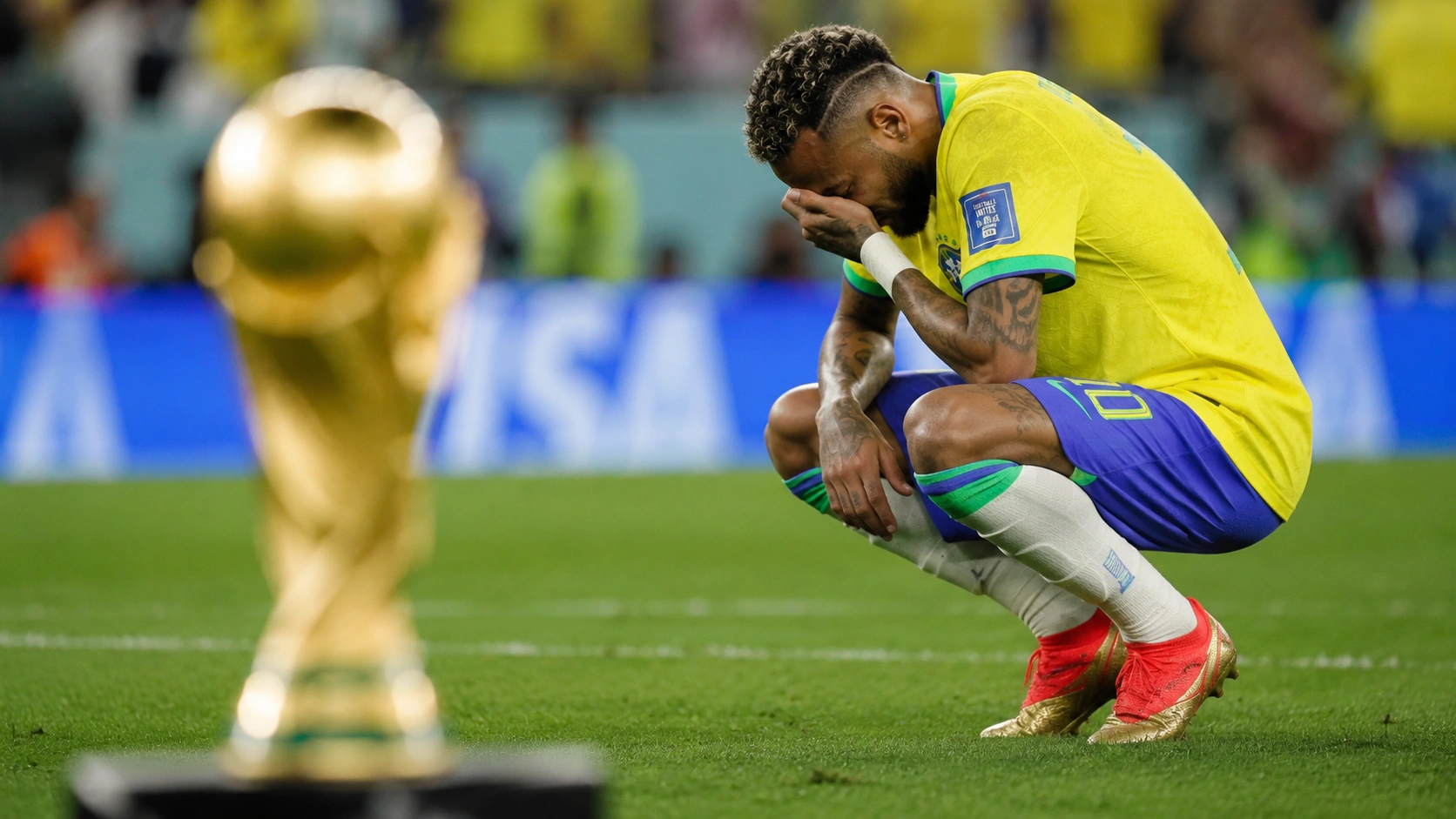
The 2026 FIFA World Cup still has the July 19 final ahead, with Spain and Argentina set for East Rutherford, but several verdicts are already fixed. Brazil lost 2–1 to Norway in the Round of 16 on July 5, Germany fell to Paraguay on penalties in the Round of 32, and Uruguay went home from Group H after a 1–0 defeat to Spain. For Nigerian readers, the coldest number remains zero: the Super Eagles never reached North America.
Brazil’s Shirt Could Not Defend the Channel
Brazil’s exit arrived with Erling Haaland on the other side, and Neymar’s stoppage-time penalty arrived too late to rescue Carlo Ancelotti’s side. Reuters reported Haaland’s goals in the 79th and 90th minutes, both assisted by Andreas Schjelderup, after Bruno Guimarães had missed an early penalty. Brazil had enough individual power to avoid that kind of ending, but Norway attacked the space behind the full-back and forced the five-time champion to defend running toward its own goal. The shirt looked heavier than the ball.
Germany Met a Shootout It Could Not Bend
Germany’s tournament collapsed on June 29 when Paraguay won 4–3 on penalties after a 1–1 draw over 120 minutes. Julio Enciso scored from a Miguel Almirón assist, Kai Havertz equalized, and Germany later missed three penalties through Havertz, Nick Woltemade, and Jonathan Tah. For a team carrying Jamal Musiala, Florian Wirtz, and the old burden of four World Cup titles, the failure was not possession but execution. One loose night can still erase a clean group stage.
The Market Punished Old Reputation
The 48-team format added a Round of 32, which made knockout risk more immediate for public favorites carrying short prices. Brazil and Germany showed why football betting (Arabic: مراهنات كرة القدم) needed more than crest recognition, because compact mid-blocks, heat management, rotation, and confirmed lineups changed single-match risk faster than outright markets could explain. Bettors reading live odds during Brazil–Norway had to notice Norway’s direct runs and Brazil’s broken rest defense rather than chase the name on the jersey. Sensible bankroll control mattered more than recovering losses on the next famous team.
Uruguay’s Bielsa Ball Ran Out of Road
Uruguay arrived with Marcelo Bielsa’s pressure game, Federico Valverde’s engine, and Darwin Núñez’s vertical threat, but it never escaped Group H. FIFA’s match report confirms that Álex Baena scored in the 42nd minute as Spain beat Uruguay 1–0 and sent it out at the group stage. Uruguay pressed hard, yet when Spain bypassed the first line, the distances behind midfield became too large to repair. Running did not become control.
Nigeria Missed the African Surge
CAF sent 10 teams to the World Cup, and Reuters reported that nine of them reached the knockout stage, with Tunisia the only African side to fall in the groups. Nigeria’s absence looked worse with every African knockout fixture, especially after Cabo Verde reached the Round of 32 on its tournament debut. When users tracked knockout markets on MelBet (Arabic: ميل بيت), recent form, defensive structure, injuries, and game state offered firmer evidence than old assumptions about national-team pedigree. Nigeria had Victor Osimhen and Ademola Lookman in its qualification cycle, but no World Cup matchday, no lineup debate, and no late save to remember.

Asia’s Numbers Refused to Flatter the Format
Asia went into the expanded tournament with nine teams, but seven were knocked out in the group stage, managing just three wins from 29 matches, according to a Reuters review on July 4. Australia’s penalty shootout loss to Egypt in the Round of 32 closed off the confederation’s last chance to go further. It wasn’t a lack of effort; just that too many sides struggled with one-on-one situations in attack and lost composure under pressure near their own goal. The expansion gave more teams a chance to compete, but it didn’t improve their technical level overnight.

