Something that has been a puzzle to most Christians through the ages is whether a time shall come when we would claim to have arrived – when we have scored the distinction without blemish. This mindset appears to have prompted the question of the young ruler/lawyer who approached Jesus. The account is presented in different settings in Mark 10:17–25; Luke 10:25–37; 18:18–30 and Matthew 19:16–26. In almost each case, the man was asked to recite the commandments, which he did flawlessly. Indeed, Luke 10:29 indicates that he wanted to justify himself and asked who his neighbour could be. In response Jesus told him the now famous Parable of the Good Samaritan, with the admonition to go and do likewise.
The account in Matthew 19:20-22 highlights something that we need to look at more closely. There the young man asked, which specific commandments Jesus meant, to which the Lord outlined the relational ones at the human level. We further read that the young man said to Jesus, “All these I have kept. What do I still lack?” Jesus, who knew that the man’s eyes were on the scoreboard of merit rather than grace, said to him: “If you would be perfect, go, sell what you possess and give to the poor, and you will have treasure in heaven; and come, follow me.” We are then told that when the young man heard this, he went away sorrowful, for he had great possessions. He wanted to be considered perfect in God’s sight – an impossible feat in this dispensation of grace.
As we return to the passage we have been looking at in this Advent: 2 Peter 1:5ff, we see the Apostle telling his readers about virtues upon virtues to keep adding to their Christian lives: “For this very reason, make every effort to add to your faith virtue; and to virtue, knowledge. 6: And to knowledge, self-control; and to self-control, perseverance; and to perseverance, godliness. 7: And to godliness, brotherly kindness; and to brotherly kindness, love,” (2 Peter 1:5-7, BSB). With this, some might actually nod their heads and say: “Aha, this, at last, is an exhaustive list!” Then, with the scoreboard mentality, begin to use this list – probably with the 10 Commandments, as the distinction criteria!
It is quite likely that someone would even dare to say – like the young ruler, “all these I have kept….” Not until one gets to verse 8: “For if you possess these qualities in increasing measure, they will keep you from being ineffective and unproductive in your knowledge of our Lord JesusChrist,” (2 Peter 1:8, NIV). Not only is it enough to possess these qualities, but we must continue to excel in these virtues. In essence, therefore, we are to cultivate these virtues ad infinitum. No one ever arrives at that point of perfection on this side of eternity. That is both humbling and hopeful. It appears that every virtue has many levels of grace to attain unto, like a ladder with many rungs.
The Apostle Peter did not leave these admonitions to their discretion as if it is a matter of “do as you like.” Whenever we are given such admonitions, we are also warned about the danger of disregarding them. The Apostle Peter does exactly that here when he tells them the benefits and blessings of cultivating these virtues: “For if you possess these qualities in increasing measure, they will keep you from being ineffective and unproductive in your knowledge of our Lord Jesus Christ.” He also goes on to tell them the other side: “But whoever does not have them is nearsighted and blind, forgetting that they have been cleansed from their past sins.” With pastoral precision and candour, he tells them to “make every effort to confirm your calling and election. For if you do these things, you will never stumble,” (vv9-10).
Stagnation is not a desirable thing in life. We are made to keep growing and progressing both physically and spiritually. When we remain dwarfs because we do not want to grow, our abilities and potentials are stunted, and our lives will have minimal impact far below what God intended for us. Advent is a time to remember these essentials of the Christian life – beyond all the noise and ceremonies that sometimes clutter the religious space of our lives.
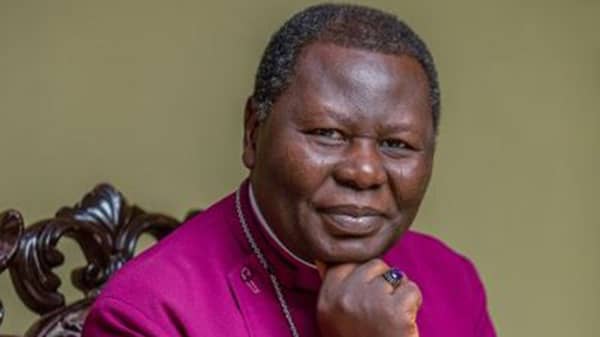
• Most Revd Emmanuel A.S. Egbunu, Bishop of Lokoja