 Get Guardian on Google
The continent’s digital divide is no longer about phones or signals. It’s about the invisible infrastructure of identity and address, and what happens when it doesn’t exist.
A few years into my career as a telecoms engineer, I watched a colleague try to onboard a small business owner onto a mobile money platform. The customer had a phone, a business, and money to deposit. What she didn’t have was a formal address. Without one, the system couldn’t proceed. She left without an account.
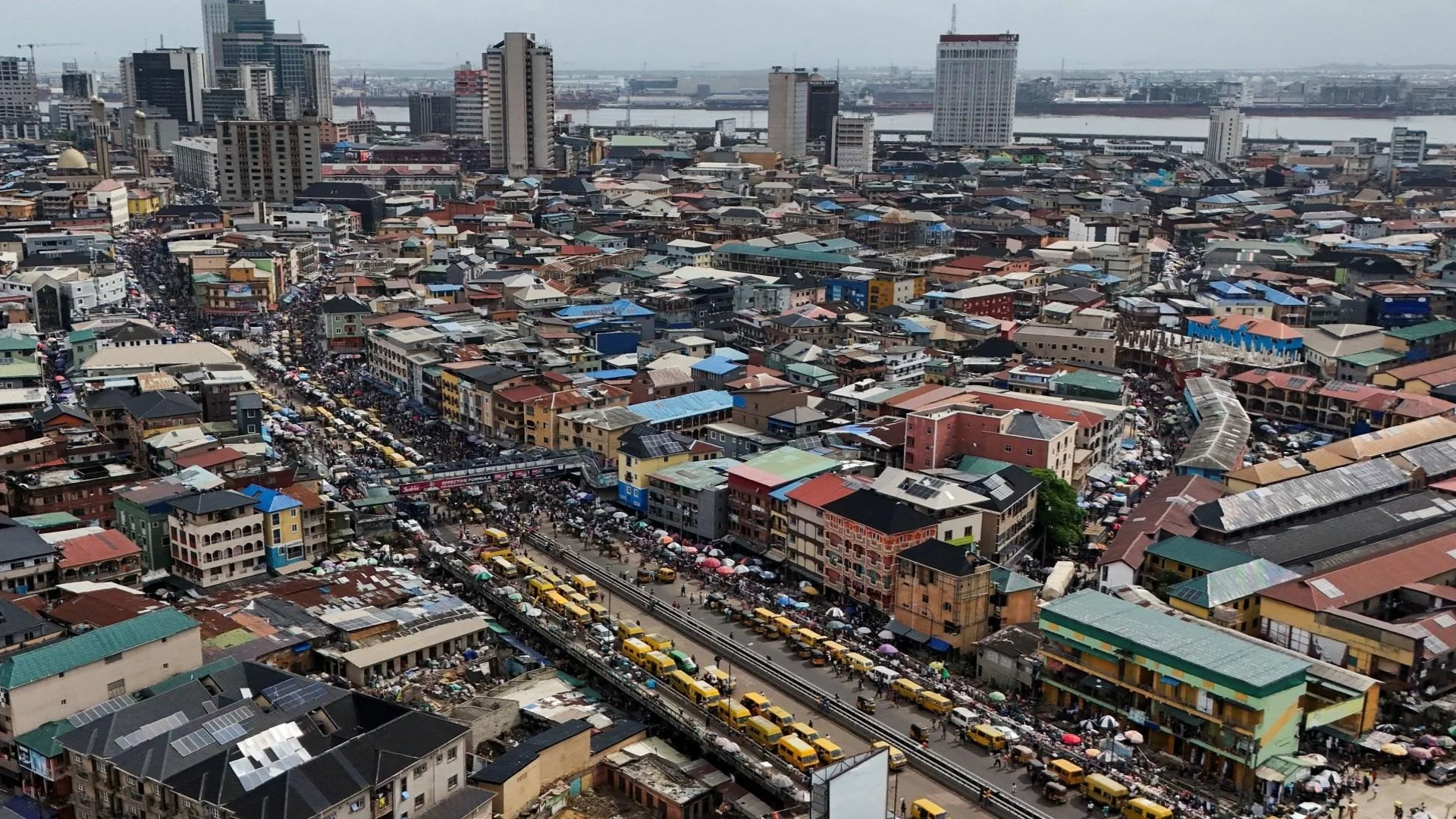
Nigeria has fewer than 3% of its addresses formally mapped. That single fact cascades into consequences most people in the global tech conversation never encounter: failed identity checks, undeliverable financial services, healthcare records that can’t be matched across systems, legal notices that never arrive. Not because the infrastructure to solve it doesn’t exist — but because the infrastructure that does exist has never been pointed at this problem.
We talk about the digital divide as a connectivity problem. It isn’t, not any more. The gap now is trust and almost nobody in the development conversation is talking about it.
Mobile broadband now reaches the majority of sub-Saharan Africa’s population. Smartphone adoption is accelerating. Digital payment platforms have expanded rapidly across the continent. And yet the dominant method for verifying a customer’s address at a Nigerian bank is still a physical visit from an agent: three to five days, thousands of naira per check, and a failure rate approaching 40% in informal settlements. The technology has outpaced the infrastructure beneath it.
I spent over a decade working in telecoms across Africa and Europe. The pattern I kept seeing was the same everywhere: networks generating enormous volumes of operational and location intelligence, and almost none of it being used to help the people producing it. Every SIM registration, every tower connection, every call routed through a network the system sees all of it. Those signals carry real information about where people are and who they are. The gap has never been the data. It has been the will and the architecture to use it responsibly.
The woman who couldn’t open a bank account is not a development statistic. She is a customer, a taxpayer, a patient whose exclusion costs everyone, not just her.
The consequences spread further than financial services. Health ministries across the continent are digitising their systems and discovering that without reliable address and identity infrastructure, electronic medical records become a source of error rather than accuracy. Vaccination records cannot be traced across jurisdictions. Emergency services cannot navigate reliably. Community health workers arrive at the wrong location. These are not technology failures; they are failures of the layer underneath the technology.


The same is true for agriculture, where smallholder farmers remain cut off from insurance and credit products because their land cannot be anchored to a verified identity. For governance, where ghost beneficiaries drain welfare budgets because the address layer that should underpin disbursement systems simply doesn’t function. For logistics, where billions of dollars are lost annually to deliveries that fail because the destination doesn’t formally exist.
What makes this solvable and what has taken too long to be said clearly is that the data infrastructure to fix it is already built. It runs through every mobile network on the continent. The question is not whether the signals exist. It is whether they can be used in ways that expand people’s rights rather than eroding them. That means privacy-preserving architectures, genuine compliance with Nigeria’s NDPA and the African Union’s Data Policy Framework, and governance designed in from the start, not retrofitted after the fact.
The United Kingdom has a direct stake in how this unfolds. Through development finance institutions, a large African diaspora, and a fintech sector that increasingly looks to emerging markets for growth, Britain is connected to the outcomes on the ground. When a Nigerian entrepreneur cannot access credit because her address won’t verify, that loss does not stay in Lagos. It travels.
Connectivity was the first chapter of Africa’s digital story. Trust infrastructure is the second, and it has been waiting long enough to be written.

Nnamdi Osuji is COO of Anadata and co-founder of Chota, a digital addressing platform operating across African markets and the United Kingdom. He is a telecommunications engineer with over a decade of experience spanning infrastructure delivery, systems integration, and digital innovation across Africa and Europe.