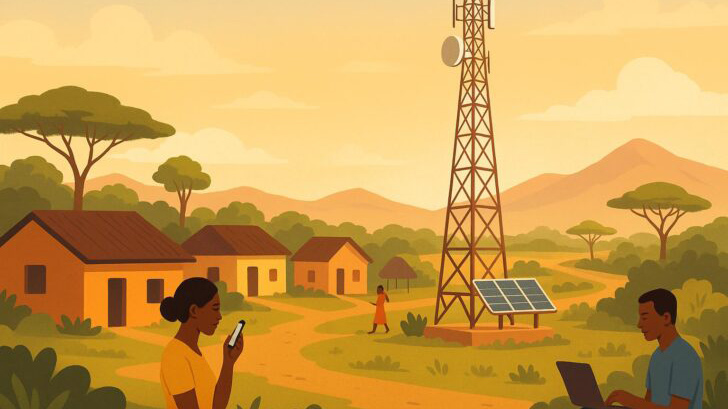
Airtel Africa has announced a partnership with SpaceX to introduce Starlink’s Direct-to-Cell satellite connectivity across its 14 African markets, including Nigeria.
The service aims to extend mobile coverage to areas where conventional network infrastructure is limited or unavailable.
Direct-to-cell a a technology allows smartphones to connect directly to satellites, bypassing the need for mobile towers.
According to Airtel, the service is expected to begin operating in 2026, initially supporting text messaging and limited data for selected applications. A later phase will introduce high-speed broadband via next-generation satellites, capable of delivering data speeds up to 20 times faster, subject to regulatory approvals in each country.
Airtel Africa Chief Executive Officer, Sunil Taldar, described the collaboration as complementary to existing terrestrial infrastructure. “We are very excited about the collaboration with Starlink, which will establish a new standard for service availability across all our 14 markets,” he said.
The company serves roughly 174 million customers across its African markets and is the first mobile operator on the continent to deploy Starlink Direct-to-Cell. Airtel said the partnership is intended to reduce the digital divide by providing reliable connectivity in rural and underserved areas.
Starlink Vice President of Sales, Stephanie Bednarek, highlighted the potential impact of the service. “For the first time, people across Africa will stay connected in remote areas where terrestrial coverage cannot reach, and we’re so thrilled that Starlink Direct-to-Cell can power this service.
Through this agreement with Airtel Africa, we’ll also deliver our next-generation technology to offer high-speed broadband connectivity, which will provide faster access to essential services,” she said.
Starlink’s Direct-to-Cell service is already operational in parts of the United States and Ukraine, supporting messaging and emergency alerts where terrestrial coverage is unavailable.
The expansion into Nigeria marks one of the first deployments of the service in Africa, positioning the country to benefit from satellite connectivity for mobile communications and broadband.