 Get Guardian on Google
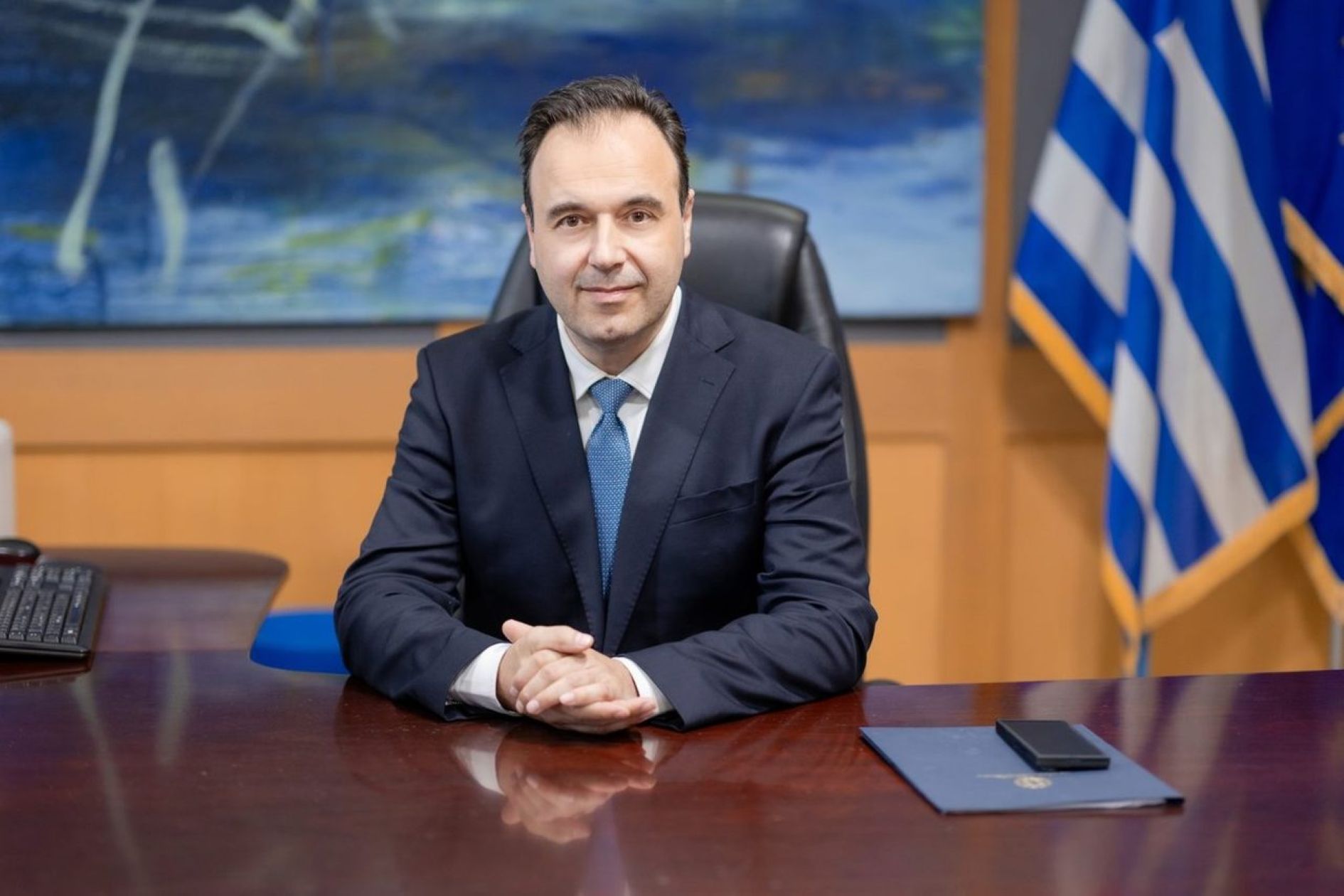
In conversation with Dimitris Papastergiou, Minister of Digital Governance and Artificial Intelligence of Greece
Dimitris Papastergiou, Greece’s Minister of Digital Governance and Artificial Intelligence, has devoted much of his career to showing what technology can do for public services, an approach shaped during his years as mayor of Trikala, one of Greece’s pioneering smart cities. In this full interview for the FOCUS Anniversary Edition, he speaks with Camelia Oros Tsarouchis about bringing the lessons of Trikala to national government, what the Daedalus supercomputer makes possible for Greece, and what closer digital cooperation between Europe and Africa could deliver over the next decade.
The submarine cable linking Greece and Africa via Crete gives Greece a new role as a digital bridge between Europe and Africa. What does this mean for Greece’s relationship with Africa, and what responsibilities come with that role?
First of all, I’m very pleased to speak with you. This is an opportunity to discuss Greece’s role beyond Europe, and Africa is a region of enormous interest and potential.
Greece is indeed a crossroads for continents and cultures, and now for telecommunications, information technology and technology more broadly. Submarine cables are bringing the continents closer together, as are the data centres and artificial intelligence infrastructure being developed in Greece. These can draw on something very important: green energy from renewable sources.
It is therefore very important to develop our digital diplomacy further. We recently did this through the AI Factories initiative, in which Greece, together with Cyprus, Malta, North Macedonia and Serbia, took an initial step towards connecting infrastructure and providing shared services. This enables universities, research institutions and businesses to join forces.
I believe this could serve as a precedent and show the way forward for cooperation with Africa as well.
Europe and Africa have much to learn from one another, from Africa’s digital innovations to Europe’s regulatory experience. Where do you see the greatest opportunities for cooperation, and how could they shape global technology and its regulation together?
I believe the most important thing is to learn from experience.
We learned from other countries what we should do and what we should avoid. Today, despite being a small country, Greece has achieved a substantial degree of digitalisation. We would be delighted to share those lessons with other countries.
For example, we have worked with Cyprus to connect our digital wallets. We share much more than a cable with Cyprus, including language, religion and history.
We were the first two European countries to exchange documents accepted in both countries, ahead of the introduction of the common European digital wallet.
We can do something similar with Africa by sharing the path we followed towards digitalisation. There is no reason for someone else to repeat the same mistakes when we have already made them and learned from them.
We can explore how to provide shared digital services and, of course, how to make infrastructure available. For example, Daedalus, our latest powerful AI infrastructure, offers an important opportunity to share secure infrastructure on safe European territory.
We have recently seen similar interest from Arab countries, which are also outside Europe. At a difficult time, these countries view Greece as a safe location. They are coming to invest and are considering setting up secure infrastructure here as a backup for their own systems. I believe it would be very interesting to explore something similar with African countries.
As we approach the 2027 elections, citizens will assess what has changed in their everyday interactions with the state. Where has technology made the greatest difference in their lives? What more is needed to strengthen their trust and ensure these changes last beyond a government’s term in office?
I believe the Greece we see in 2026 and will see in 2027, when we have elections, is completely different from the Greece of seven or eight years ago.
Take healthcare, for example. We can now access all our test results, referrals and medical imaging in one place through our digital health record. The MyHealth Hub app brings everything together.
Ten days ago, I had blood tests at a private diagnostic laboratory in my hometown of Trikala. The results appeared on my phone that same day, without the laboratory having to send me anything separately.
We can also book appointments digitally. Through MyHealth Hub, we can find the doctor we need at the hospital we choose and book an appointment.
The administration of justice has become much faster because all the information relating to a case is now available electronically in one place to the judge, the lawyer and the citizen. We no longer need to move boxes of documents around.
There are also simpler examples. Greece had a very serious problem with violence in stadiums. We had even reached the point of closing stadiums entirely after a police officer died during disturbances.
We developed an app that personalises tickets and links them electronically to each holder’s identity, so everyone enters using their own ticket. Since that change in 2024, the atmosphere in stadiums has changed completely. We used to see violence, fear and intimidation.
Those are just three clear examples of how the country has changed, and I could mention many more. For example, this year we are making a major effort to reduce fatal road accidents. Road deaths are already down by 33% compared with 2019. How has this happened? Through digital tools such as AI-enabled cameras that monitor speed, seat belt use and whether someone is using a mobile phone while driving, and, of course, through roadside checks.
These are practical solutions and clear examples of how technology can improve our lives.
Before becoming minister, you were mayor of Trikala, where you used technology to bring the municipality closer to its citizens. Was there a moment that showed you what technology could or couldn’t do? How does that experience shape the way you lead today?
One of my greatest assets as a minister is that I was previously a mayor. I truly believe that.
It is very important to develop technology that people can use the following morning to solve problems. We do not want technology for technology’s sake. We want technology that serves people in their everyday lives.
What I saw in Trikala, and what motivated me greatly, was how technology can build trust. Politics today needs greater public trust. To build it, you need evidence. You must demonstrate every day that you are providing solutions. As mayor of Trikala, I used technology to help municipal services respond quickly to everyday problems such as broken streetlights, potholes, stray animals and waste collection.
We used simple technical solutions and kept track of when a citizen called, who took responsibility for the problem and when it was resolved. This allowed us to see which services were having difficulties. Local government was therefore a tremendous learning experience. We have been able to apply that experience nationally, building on the work of my predecessor at the ministry and following the prime minister’s direction. We provide practical solutions to everyday problems.
Another example is what we did for beaches. Greece has beautiful beaches, but we had a serious problem with sunbeds and umbrellas being set up illegally.
We developed an app called MyCoast that shows authorised concessions and rental areas. Citizens could use it to submit complaints, giving them a way to address the problem.
The same applies to tables and chairs occupying city streets and pavements. Through another app, MyStreet, citizens could check whether something obstructing their passage was authorised. Our aim is to use technology to provide real solutions to real problems.
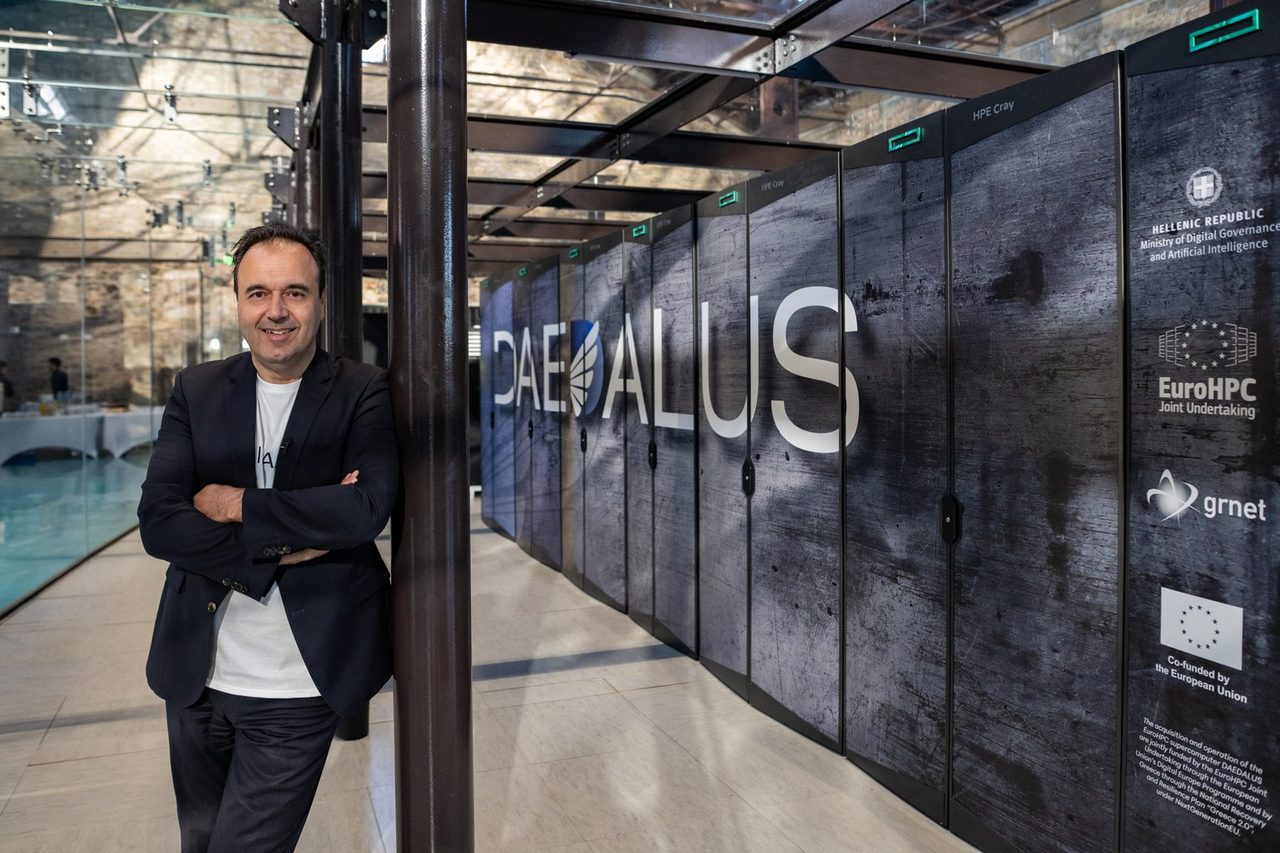
Daedalus gives Greece new capabilities in supercomputing and artificial intelligence. What would you like it to make possible for Greece, and how could it help the country play a more active role in AI in Europe?
What is Daedalus? It is a very powerful computer. Why do we need it? Because artificial intelligence is transforming technology. Almost every solution now includes some form of AI, and AI requires powerful computers of this kind.
Until now, Greece, Nigeria and other countries have effectively had to import AI by using computers located abroad. For Greece, the best-case scenario was to use machines located in Europe. In other cases, the machines were outside Europe.
There is also the issue of data. Artificial intelligence needs data. When the state wanted to run a model, it had to upload data. Some of that data might be classified and therefore require additional security. The same would apply to a country in Africa.
As a result, you did not necessarily have control or sovereignty over your data and infrastructure.
What do Daedalus and comparable machines make possible? They allow you to run these models knowing that the infrastructure is nearby, either in your own country or in a country where you feel secure. Your data stays here, so you have a clear picture of who can and cannot access it.
Your data stays here, so you have a clear picture of who can and cannot access it.
Above all, it enables small businesses to test their capabilities and use artificial intelligence at very reasonable prices, or even free of charge. Daedalus, for example, is funded by the Greek state and Europe. It will provide services to start-ups free of charge for its first two years. It also provides free services to research centres and universities.
It is therefore a very important piece of infrastructure. Energy is essential infrastructure for any country. I believe that, in the coming years, the ability to provide AI infrastructure will be equally important, or perhaps even more important, for healthcare, the needs of the state, small businesses, national defence, universities and research centres.
 As CT Productions marks its tenth anniversary, this edition looks back at what has been built and ahead to what the next decade could bring. What would you like closer digital cooperation between Europe and Africa to deliver for their people over the next ten years? What must Greece do now to help make that happen?
I believe all countries must ensure that essential resources are shared equitably. Energy and water are essential resources, and so is technology. We are entering a period in which the concentration of digital giants in just a few countries is creating new inequalities and deepening existing ones.
Every country has a responsibility to act quickly and share whatever technological capabilities it has. In this case, I am speaking about Greece and Europe. I would not call it technological superiority, because Europe does not yet have that. Whatever capacity Europe has to make technology more widely available, it should use it quickly.
Europe has a responsibility to make technological resources available to other countries and help reduce inequalities between Africa and the rest of the world. Unequal access to technology is one of the inequalities we have a responsibility to address. And we can do it. Infrastructure already exists, and new infrastructure can be developed.
We can also share expertise in energy. Artificial intelligence has an enormous appetite for energy. Renewable sources are available, and we need to work harder on energy storage.
Ten years from now, I would like us to have made technology more widely available in Greece, throughout Europe and around the world, including in Africa, so that standards of public safety and children’s education can be comparable.
Since I have mentioned children, we also need to find a balance between real and digital life. Children are growing up in a world where it can be difficult to tell whether what they see on social media reflects reality. Sometimes they prefer to live in the digital world rather than the physical one.
That is why Greece recently took steps to protect childhood through legislation.
I believe this also concerns Africa. It may be less immediate in some places, but it is becoming more pressing. We all have a responsibility to give children back a childhood lived in the real world.
The interview was conducted by Camelia Oros Tsarouchis for the FOCUS Anniversary Edition, November 2026