 Follow Us on Google News


 Follow Us on Google Discover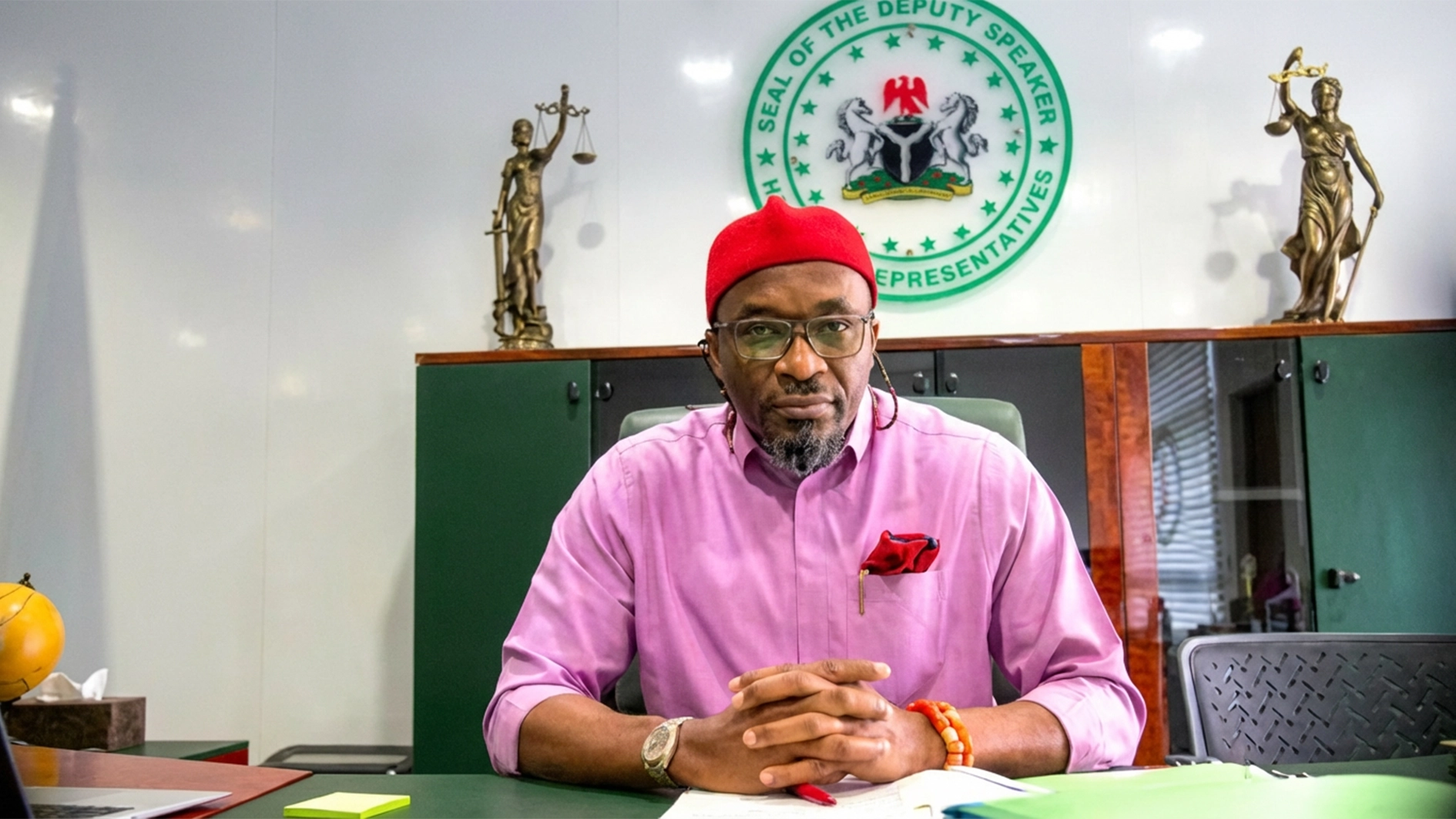
Deputy Speaker of the House of Representatives, Benjamin Kalu, has described reliable telecommunications connectivity as essential to financial inclusion, education and better healthcare in rural communities.
He spoke on Friday at the commissioning of a telecommunications tower under the Federal Government’s National Universal Communications Access Programme (NUCAP) in Bende, Abia State.
The Minister of Communications, Innovation and Digital Economy, Bosun Tijani, inaugurated the facility along the Umuahia–Ohafia Road.
NUCAP aims to extend mobile and broadband services to communities without adequate network coverage. The Federal Government plans to deploy 3,700 telecommunications towers nationwide to connect millions of Nigerians who lack telephone and internet access.
Kalu said reliable connectivity could determine whether rural residents access economic opportunities, complete financial transactions or obtain timely medical assistance.
“For those who have always enjoyed reliable network service, connectivity may seem ordinary. For a rural trader whose payment repeatedly fails, a student who cannot join an online lesson, or a family struggling to contact a doctor, it is anything but ordinary,” he said.

He noted that poor network coverage often limits access to essential services. He added that a person’s place of residence should not determine their opportunities in life.
Representing Bende Federal Constituency in the National Assembly, Kalu said reliable telecommunications could bring banking services closer to rural residents.
He explained that mobile banking applications, electronic transfers and agent banking had become important channels for financial transactions. However, poor connectivity often prevents residents from using these services.
“When the network fails, a trader may be unable to confirm payment. A farmer may struggle to receive money for produce. A household may be unable to access funds sent by a relative,” Kalu said.
He added that reliable connectivity could bring more unbanked people into the formal economy. Affordable services, financial literacy and consumer protection would also help rural residents use digital financial services confidently.
Kalu said the new infrastructure could also improve access to education. Pupils would be able to attend online lessons, obtain learning materials and receive tutoring beyond their immediate communities.
Teachers could use the internet to improve their skills and access wider educational resources. Young people could also apply for scholarships, acquire digital skills and explore employment opportunities without travelling elsewhere to find a signal.
“The talent is already here in Bende. We must provide the connections through which that talent can grow,” he said.
On healthcare, Kalu said reliable connectivity could improve communication between rural health workers and medical specialists.
It could support remote consultations, secure information sharing and referrals. These services would help health workers seek specialist advice when treating patients in underserved communities.
The Deputy Speaker also linked telecommunications access to civic participation and public safety. He said residents needed accurate information and reliable channels to communicate with public officials, especially as another election period approached.
“Communities need channels through which to raise concerns, seek clarification and engage their representatives. Electoral and emergency personnel need reliable communication. These towers must serve the whole community,” he said.
Kalu said Bende’s proximity to neighbouring states made improved connectivity important for trade, transportation and relations between communities.
He stressed that the commissioning should mark the beginning of further interventions in the constituency.
The lawmaker disclosed that officials had identified 16 other locations in Bende requiring improved telecommunications coverage. He urged the ministry and its partners to work with his office and community leaders to verify the locations and assess coverage gaps.
He also called for regular maintenance, adequate power supply and prompt repairs to ensure consistent service delivery.
Kalu thanked President Bola Tinubu and the Federal Ministry of Communications, Innovation and Digital Economy for supporting the project and selecting Bende for the commissioning.
“On behalf of the people of Bende Federal Constituency, I sincerely thank His Excellency, President Bola Ahmed Tinubu, for his administration’s commitment to expanding digital infrastructure and bringing more Nigerians into the digital economy,” he said.
He urged traditional rulers and presidents-general of town unions to protect the telecommunications facilities against vandalism. He described the infrastructure as a critical national asset.
Earlier, The Minister of Communications, Innovation and Digital Economy, Bosun Tijani said NUCAP would help connect nearly 20 million Nigerians who currently lack telephone and internet services.
“Today, we are launching here in Bende a national project to connect close to 20 million Nigerians who currently have no access to telephone and internet services,” the minister said.
He thanked Kalu for drawing attention to the needs of his constituents and supporting efforts to expand digital access.
Tijani said the government planned to deploy 3,700 telecommunications towers across Nigeria. The Bende facility is the first site commissioned under the programme.
He said the project would address challenges facing people whose livelihoods, education and access to essential services suffer because of poor connectivity.
Comparing the tower to a tree, Tijani said its benefits would extend beyond the day of commissioning.
“When we plant a tree, it grows. It gives shade. It bears fruit. Even children who were not born when we planted it can grow up to enjoy it. That is how I want us to see this tower,” he said.
He said improved connectivity could help farmers find new buyers, give young people access to digital skills and enable traders to reach more customers. It would also make communication easier for families.
Tijani assured residents that the ministry would work with Kalu, network operators and community leaders to extend coverage to other unconnected parts of Bende Local Government Area.
The event featured a live e-learning demonstration at Bende Grammar School using the new infrastructure. Organisers also distributed mobile phones to constituents.

