
 Get Guardian on Google
Millions of Nigerians remain excluded from the digital economy due to poor connectivity and unreliable electricity.
Government infrastructure investments are helping address these gaps, but local innovators must turn that progress into practical solutions.
The op-ed positions the USPF Changemaker Challenge as a platform supporting innovators tackling these everyday problems.
More than 23 million Nigerians live in communities with poor or no mobile network coverage. In some of these places, a medical emergency can be made worse by something as basic as the difficulty of reaching help by phone. The Universal Service Provision Fund’s 2024 mapping identified 87 clusters of unserved and underserved communities. Behind that figure are people whose access to services, income and opportunity remains constrained by where they live.
Consider what it means in everyday life. A farmer may struggle to reach a buyer before produce deteriorates. A parent may have to travel to make a payment that others complete on a phone in seconds. A rural clinic needs dependable communication with a larger hospital. A trader needs a safe way to receive payment. Technology is valuable when it makes these ordinary tasks easier, cheaper or safer.
Digital inclusion is also closely tied to access to electricity. According to the 2025 Tracking SDG 7 report, 86.8 million Nigerians lacked electricity in 2023, underscoring the importance of ongoing government efforts to expand reliable power to underserved communities. In places where power is unreliable, a phone may be available but hard to charge; a school may have digital learning materials but no practical way to use them. These barriers affect household living standards, the productivity of small businesses and the quality of public services.
Nigeria’s own experience shows what wider connectivity can achieve. A World Bank and GSMA study estimated that the expansion of mobile broadband between 2010 and 2016 helped lift approximately 2.5 million Nigerians out of extreme poverty, with particularly significant benefits for rural households.
The next priority is to build on these gains by ensuring that wider connectivity translates into better livelihoods, stronger essential services and greater economic opportunities for underserved communities.
There is good reason to be confident about the groundwork already under way. Through USPF, public intervention has helped take telecommunications coverage into communities where commercial investment alone has struggled to reach. The Nigeria Universal Communication Access Project (NUCAP), supported through USPF, plans 3,700 new telecommunications sites to reach around 20 million Nigerians. Its first site was commissioned in Abia State in October 2026. As the rollout progresses, more communities are expected to gain access to services many Nigerians already use daily.
The same practical approach is visible in electricity. The Rural Electrification Agency’s Nigeria Electrification Project has supported mini-grids and stand-alone solar systems, while the Distributed Access through Renewable Energy Scale-up project is expanding that work. These models recognise that a distant grid connection is not the only route to dependable power. In financial services, the Central Bank of Nigeria’s agent-banking framework has helped bring transactions closer to people who live far from a bank branch.
Together, these initiatives demonstrate the value of designing solutions around the realities of Nigerian communities, an approach that should guide how we develop and deploy innovations to address other pressing national challenges.
Infrastructure has its greatest impact when someone can put it to good use. A connected community still needs services that work on affordable devices, accommodate local languages and remain usable when electricity or internet access is irregular. This is where Nigerian innovators, familiar with the constraints of their own communities, have a distinct contribution to make.
The USPF Changemaker Challenge has recognised that contribution for years. In 2017, Nicademia emerged as a winner with an online platform for African-inspired animation and cartoons. Other prizewinners tackled student meals and water ordering.
In 2019, Team Food Prime presented an electronic device designed to reduce pest-related crop losses, while Team BC Scan proposed a breast-cancer detection device. The ideas differed, but each was grounded in a problem Nigerians could recognise.
The 2026 Challenge takes that experience into five areas with direct consequences for everyday life: agriculture, education, healthcare, financial inclusion, and clean and affordable energy. A farmer may need better market information or a way to reduce post-harvest waste. A pupil may benefit from lessons that work without constant internet access. Clinics need practical referral and follow-up tools; families need secure financial services that fit irregular incomes; and households using off-grid power need dependable systems and workable payment options. These are precisely the kinds of needs that should guide innovation.
Building on earlier editions, the 2026 Challenge continues to support promising innovations beyond the competition itself.
Up to 50 teams can advance to six virtual Regional Demo Days, with places for qualifying teams from every state and the FCT. Six finalists will reach the national stage. The top three will share ₦10 million.
In 2019, incubation went to the top three teams. This year, all six finalists receive four weeks of incubation support. As the implementing partner, Ubulu Africa is working with USPF to help promising ideas develop into services that communities can use.
Nigeria’s infrastructure investments deserve to be measured by what they enable people to do. Can a farmer sell at a better price? Can a patient get help sooner? Can a young person learn and earn without leaving home simply to access a service? The next phase of digital inclusion will be shaped as much by the answers to those questions as by the number of new connections.
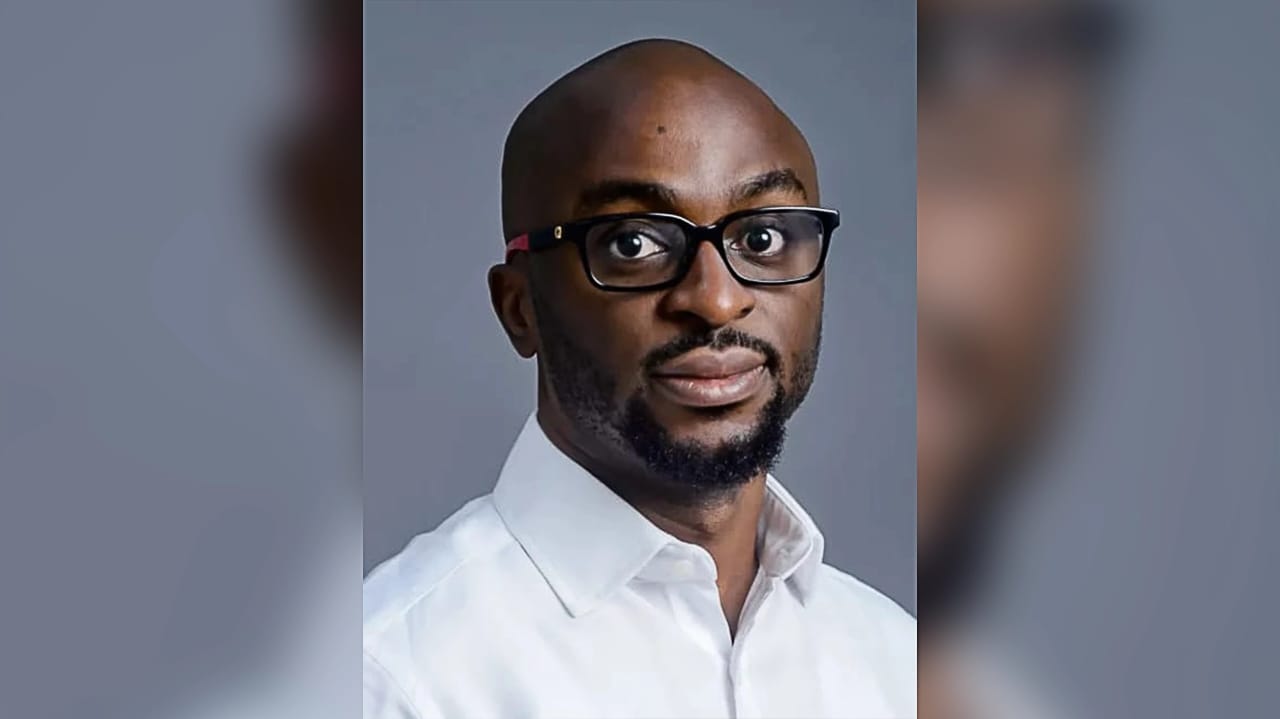
Dr Odiong Akpan is Managing Partner of Ubulu Africa, the implementing partner for the 2026 USPF Changemaker Challenge.