 Follow Us on Google News
 Follow Us on Google Discover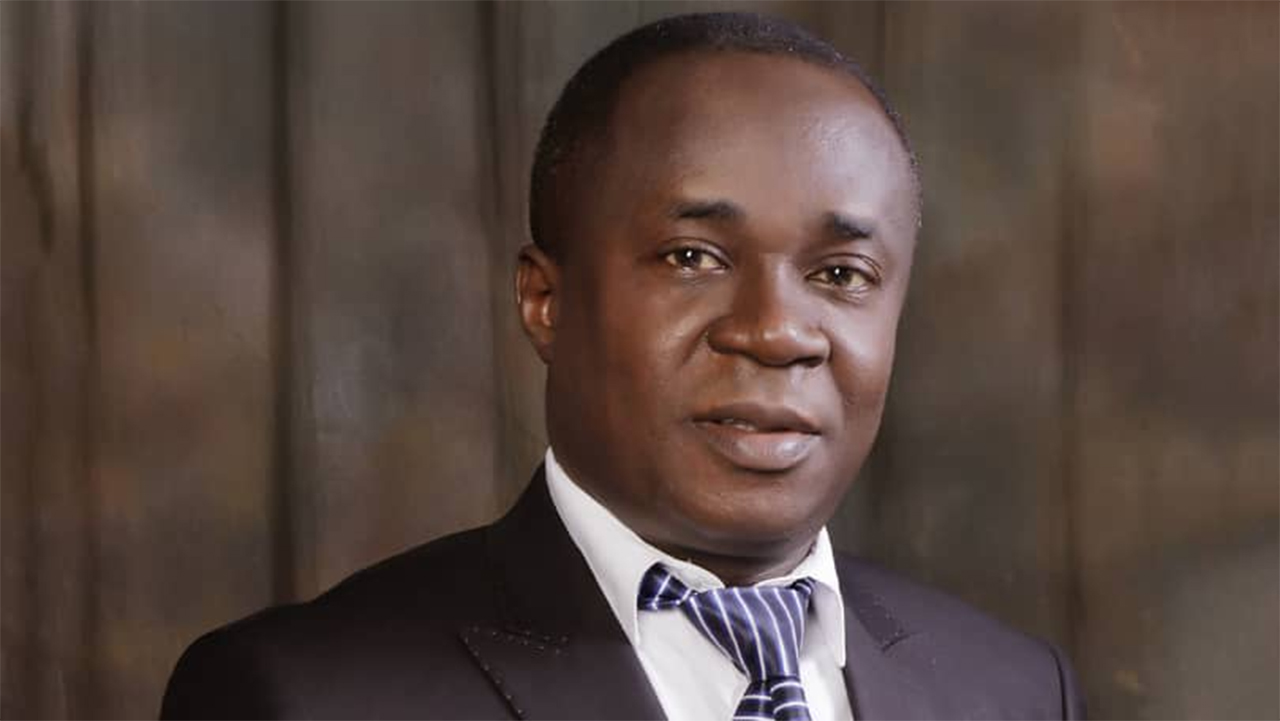

[ad]
At the 2023 Yearly conference of the Capital Market Correspondents Association of Nigeria (CAMCAN) held in Lagos at the weekend, a Professor of Finance and Capital market, Uche Uwaleke stated categorically that with the nation’s infrastructure investment need which had continued to widen, and government debt profile which is substantially high, mobilising long term financing through the capital market and deploying domestic market borrowings into infrastructure bonds becomes critical to achieving the target.
Speaking on the theme: ‘Leveraging Capital Market In Financing The National Development Plan’, Uwaleke pointed out that despite the creation of the development plan designed to tackle the nation’s huge infrastructure gap, Nigeria is still rated one of the lowest stock of infrastructure to GDP among emerging economies.
To narrow the gap, government through the creation of the National Integrated Infrastructure Master Plan, had proposed that Nigeria needs to invest $3 trillion in infrastructure over the next 30 years and $100 billion annually.
This translates to a yearly investment of over N42 trillion which constitute more than the size of the total annual budgets of the federal and Sub National governments.
Obviously, financing this huge infrastructure gap presents a formidable challenge to the government given Nigeria’s low revenue to GDP ratio of less than 10 per cent making inevitable the capital market route.
However, Uwaleke pointed out that the nation’s capital market is currently beset with myriads of challenges, which has continued to constrain its full development inspite of giant strides achieved in the last two decades, noting that the extent to which the Nigerian capital market is able to facilitate economic development is a function of its level of development.
He listed some of tbese challenges to include: weak domestic economy, poor savings mobilisation, small size relative to GDp, market concentration among others.
Uwaleke noted that economic growth in Nigeria has been weak especially in recent times owing in part to overreliance of the economy on crude oil.
According to him, while unemployment rate has grown from 27.1 per cent in Q2 2020 to 33.3 per cent in Q4 2020, the situation is made worse by rising inflation which result in negative real rates of return on investments in the capital market.
In addition, the pursuit of low inflation and GDP growth has been hindered by huge infrastructure gap, even as infrastructure stock represents only 35 per cent of GDP far below that of peer countries.
Data from the National Bureau of Statistics inflation rate surged to 27.33 per cent in October, representing 0.61 percentage point from the 26.72 per cent that was recorded in September.
Also, on a year-on-year basis, the headline inflation rate was 6.24 percentage points higher compared to the rate recorded in October 2022, which was (21.09 per cent).
This showed that the headline inflation rate (year-on-year basis) increased in October 2023 when compared to the same month in the preceding year (October 2022).
[ad]
According to the data, major
contributors to the increase in inflation were food and non-alcoholic beverages, housing, water, electricity gas and other fuel, clothing and footwear, transport among others.
Uwaleke stressed the need to address the issue of rising cost of food prices, noting that this has continued to drive stagflation, a situation of high inflation with weak and tepid economic growth.
He urged government to focus more on reviving the manufacturing sector and agriculture as key drivers of sustainable economic growth.
[ad]

