 Follow Us on Google News
 Follow Us on Google Discover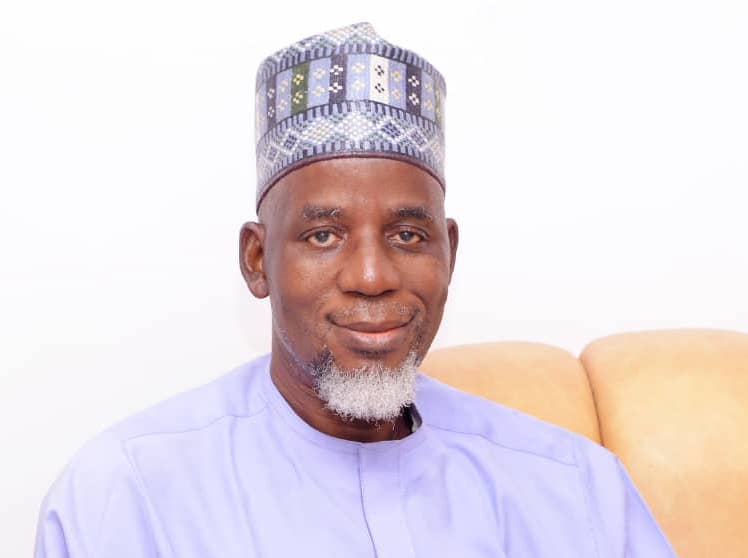
Professor Abdulrazak Kilani of the Department of Religious and Cultural Studies, University of Port Harcourt, who is also the National President, University of Ilorin Alumni Association, is poised to take the association to greater heights. In this interview with BRIDGET CHIEDU ONOCHIE, Kilani revealed his plans for the institution as well as the association, reiterating that alumni associations are all about reciprocating institutions for transforming lives through quality education, not for personal gains.
Motivation for taking up the position
It was a very tough decision for me to accept to serve as the National President but the succour I had was that the University of Ilorin gave me a very quality education and I am always very proud of that. I was transformed by the kind of education I received at the University of Ilorin.
So, when I came to Port Harcourt in 1992, I became so elated with the education and exposure that Unilorin gave me. Having served as Deputy Vice Chancellor at the University of Port Harcourt, I know the wrangling that comes with alumni but with that kind of opportunity at the higher level of university administration, I decided to project Unilorin Alumni as partner and ambassador of the university.
Unilorin has made a good name, locally and globally, and I think the alumni will do well by complementing this role in terms of facilitating development in the university, providing platform for networking for graduates of Unilorin, in terms of socialisation too, ensuring that those who graduated in 1992 and those who graduated in 2024 see themselves as colleagues, not seniors. So, that networking should be strengthened. These are some of the things I consider as my own priority, which I am trying to put on the table towards ensuring that Unilorin alumni remains one of the best in Nigerian universities today.
To kick start that, we started with the secretariat. We have a secretariat that is very old, and I like aesthetics. So, I told my exco that the secretariat should be remodeled because, one, it represents who we are as a university. The school has modern modern infrastructure. So it will be a misnomer for the alumni secretariat to be an old building. It doesn’t represent what the university stands for. So, what we have been doing since I came on board is to remodel the alumni secretariat. We started work this January. Currently, we are almost 70 per cent completed in ensuring that it becomes interactive, functional and that current students go there to access some facilities including the internet and even get some information in respect of their career progression and out of school life experience. So, these are the things we have been doing since we came on board in August last year.
How do you intend to sustain the level of engagement you have brought on board and perhaps, increase it?
What we are doing is to revitalise branches or chapters that have not been active. In December last year, I was in Ogun State Chapter to give a lecture on the role of alumni in strengthening community development and it was a good outing. This year, we are planning about three lectures to celebrate our 50th anniversary – Lagos, Abuja and Ilorin. We will invite a lot of our colleagues and friends to participate in the programme. It will be like a roadshow programme to sustain the good name and to complement the good work the leadership of the university is doing.
Also, in November last year, we invited our colleagues who have graduated and are making it in the industry and honoured about 35 of them, which was the first in recent years. We called it Award Night for Distinguished Alumni of the University of Ilorin, and it was well attended. The feedback we had was that we should make it an annual event. So, we are planning for this year. We are already taking data to identify these people and by doing that, many people will show interest in the activities of the alumni, and they will continue to assist us. The assistance we want them to give is not to us as individuals or as exco but to the university; to assist the leadership of the school to do more in terms of infrastructural upgrade. I think we are good to go and the feedback we are getting from our colleagues is that we are on the right track and they are ready to complement. Also know that there are a lot of alumni who are staff of the university. So, we have a robust Unilorin Chapter. We also have a very active Lagos and FCT Chapters. Oyo chapter is also very active.
So what we are doing now is data gathering to identify our colleagues in all strata of the Nigerian economy and even those who are in the diaspora so that at the press of a button, we know that Mr. A graduated in 1975 or in 1981, he is here and these are the things he is doing. How do we honour him? How can we identify with him? What can he do for the Unilorin? So, these are the things we are doing currently. Thank God, we have a very good exco; it is not a one-man show but an exco that is made up of hot heads; those who are flyers in their respective careers. They are complementing this good idea, ensuring that the university is on top among Nigerian universities.
How would you foster a positive and collaborative relationship between the association and the university leadership?
One of the biggest strengths of my exco is the kind of support we have received from the management of the university. The vice chancellor is an alumnus; DVC, Management is an alumnus and the Director, Academic Planning is also an alumnus. So, we have a lot of people in the university system who are telling us where they need our help. In essence, my eyes in the university are alumni members, who are playing some key roles in the university, giving us information on how and where we can intervene. And as far as the university management is concerned, they keep us abreast of the happenings and developments in the university.
Statutorily, there are some committees that we have in the university, of which the alumni association is an automatic member. That gives us insight into what is happening in such centres and the directorate, and also allows us to also inject our own ideas on who we can talk to within and outside the university to ensure that those centres are in line with the KPI the university management has given to them. At the end of the day, it is going to be a win-win situation for all of us as alumni, the university and current students of the university.
So, what initiatives do you intend to undertake towards building a stronger sense of unity among alumni? In most cases, some branches are stronger than others. There are also cases of friction over leadership positions…
Any time from now, we are planning to have a National Executive Committee (NEC) meeting and the agenda of that meeting is how to revitalise branches that are not up to date. We have about 36 branches currently but they are not on the same level. We know those in grade one and those who are in grade three. So, how those in grade three progresses to grade one will form part of the discussion at the NEC meeting.
We also think that our visibility in the university should be top notch. We have an alumni hostel but we want to build another alumni hostel for the boys. We have a girls’ hostel and the university also gave us a hectare of land to build a guest house. We are also planning to have a very functional, aesthetically good guest house or hotel. We are already talking with partners to ensure that hospitality in the university is equal to none. When you come to the university for convocation or matriculation, you know that the hospitality facility in the school needs to be upgraded to be conducive for our parents, guests and friends who come for conferences, lectures and symposiums, which is a university practice globally. By doing this, the students will have a sense of belonging and when they finish, they will want to partake in alumni activities. These are the plans we have on ground to ensure that continuity in terms of the strategies we have mapped out for ourselves and those within the university will be on the same page.
The university will be 50 this year. How does your association intend to reciprocate the host community for accommodating the school for decades?
As far as the host community is concerned, we have had a very robust relationship. We have a very good relationship with Kwara State, with the local government and even the Ilorin metropolis, where the university is located. And the university has put Ilorin on the world map. The people of Ilorin have also been complementing the university. We have no communal issue or tension between the community and the university. They see the university as their own baby and will do everything to protect it.
You know the University of Ilorin has one of the largest hectres of land in this country today. In some universities, such land would have been taken over but we still have our land intact, which demonstrates the cordiality and the cooperation the host community share with the university management. We also give credit to those who have been vice chancellors of that university for sustaining this cordial relationship between the university and the host community, which I believe is responsible for such kind of collaboration and sustaining of the hectres of land we have. You see farmers coming to farm and the school allowing them. University is not just about teaching but a collaboration between town and gown and if you go to the University of Ilorin, there is a place they call ‘Farm Market’, where they display farm produce for sale and the university patronises them to ensure that the community enjoy the siting of the university in Ilorin.
One of the major problems with the younger generation is the drive for quick money. Do you also consider mentorship and reorientation programmes to put them on the right pedestal?
The university leadership is doing well in that regard. Early this year, the Faculty of Agriculture in particular did a mentorship programme for those in the faculty and they invited graduates some of whom were outside the country to give talks. I remember one of the undergraduates saying that though he was studying Agric, he didn’t know what to do with it. But the resource persons educated him and others on modern agric practices. He also introduced them to entrepreneurship. At the end of the day, many of them became motivated on realising the modern agric methods.
Yearly, graduates of the Faculty of Engineering are brought to the university to talk to current students. We always identify the high flyers among us to provide real modelling for the younger ones. Also, the university has an Advancement Centre, which serves as a midwife between the current students and those who have graduated so that they too will come to the system to provide this kind of enablement. I was there in December last year on the same alumni/stakeholders’ engagement, which we also used to showcase what the alumni plans to do and what it should do so that the current students will know that alumni association is about serving the university and not about honorarium; it is not about how much one is going to make but a pay back to the university that gives you the education that you are likely to enjoy in future. Some of us have already enjoyed good education; we are using it to sustain our lives. So, we are coming back to say thank you, University of Ilorin, for what you have done for us.
As you serve the university in these areas, what are your expectations in reciprocity?
What we want the university to do for the undergraduates who are on campus is in terms of upgrading our facilities and I think they are doing that. We had this discussion with them last year in terms of transportation and early this year, they bought some vehicles to alleviate the transport system of the university. Also, accommodation is opening up by allowing private developers to come to the campus to build more hostels because the Federal Government is not bringing money to the university anymore. So, it doesn’t have money to build additional hostels. So, it is opening up opportunities for Public, Private Partnership.
Electricity has also become an issue and the university is doing well in ensuring that the quality of power supply is improved upon. They sensitise people on how to maximise power. It has also provided pre-paid meters for almost all buildings, staff quarters and even business centres, meaning that electricity bill has reduced drastically and the money channeled into other things to help the quality of education and research. It is also thinking of renewable energy, which the Federal Government is doing. I am sure that when they come to North Central, Unilorin would be picked to access the renewal energy programme. We operate an open door policy with the VC. He calls me and I call him so if there are issues, we discuss them. He is a big brother to all of us and we appreciate the leadership he is giving to us the alumni.
What are some of the challenges militating against the development of alumni associations in the country?
The challenge we all know, which is noticeable, is the issue of leadership. The leadership crisis did not start today. It has to do with people who have no second address; those who have taken alumni as a full-time job; those who think that alumni will be an opportunity for them to make money; those who have over stayed in the alumni job. Maybe you started as an assistant secretary, was promoted to PRO, then to Vice President and Vice President to President. So, they have stayed for a very long time and that was where the problem started in 2019, when somebody assumed the leadership of the association as a President. By 2021, there were lots of allegations against him – infractions. He hired a driver but the alumni had no vehicle and he put the guy on the payroll of the alumni. By September 2021, he was removed by a mere resolution and a caretaker committee was set up to serve out his tenure, meaning that his tenure ended in March 2024. Then another five months was allowed for a fresh election to take place but since then, we have not had peace. He has taken us to Nasarawa Police Station and to the media.
Beside this, the Unilorin alumni do not have any other challenge. A large number of alumni members are solidly behind the exco because this guy has created bad press for the alumni. The university management is also not happy that he created bad press for the alumni and everyone is on the table to ensure that we put him behind us. That is the reason I don’t want to call it a major issue because we are doing our work without disturbance. He goes from one media house to the other to issue press releases but we are not bothered; we are focused.
We feel that Unilorin needs an alumni association that is very strong, very complementary and ready to support the management. Because Unilorin has a good name, many people want to be associated with it. So, we are not going to allow any individual to drag the name of the school into the mud. That is why we are not distracted but focused so that the goal of the alumni is achieved as a payback to the university and not a place to take honorarium or draw from the alumni purse. That is the reason all the members are behind us, saying that this good direction should be pursued without compromise.

