GDN SIDEBAR
AFTER watching Show Dem Camp’s recent live performance of their smash hit, “Fall,” alongside The Cavemen and Nsikak David, during their No Love in Lagos live session run, I couldn’t help but soak in the intrigue from its sound engineering and live mix.
A cursory search led me down the trail of the sonic expert Edward Sunday, a brain behind several other live concert experiences I had hitherto consumed, including BJ Sax Live, Tim Godfrey’s Fearless, and several others. It struck me as both iconic and majestic how Sunday’s sonic architecture seemed to seep from balance to movement. A good case in point is SDC’s “Fall” live performance.
Traditionally, SDC’s symbiosis with The Cavemen has always aligned with their shared emphasis on culture, heritage sounds and a simpler flow, contrasting SDC’s usual complex deliveries, pop-rap soundscape and mentally stimulating jams. So, ideally, a song like “Fall” sits somewhere within moody, dreamlike and heartfelt. I’m leaning more towards the latter; the song’s groove shifts towards stimulating the heart, with its elevation of highlife chords, its gentle pacing and the slow-burn raps. Somehow, Sunday realized how to translate this in live performance, while emphasising the melodicness of the individual sonic elements that make the jam a delight.
The performance opens with a mesh of highlife guitar riffs and trumpet horns that sound like the announcement of a fanfare. From bubbly to sombre, the tune shifts just at the entrance of Ghost’s (one-half of SDC) pensive bars. A strike on the cymbal ushers in his vocals, “Where I’m from most people mark face/ Like your car plates/ Or the bar in your palm when you wan shake.” His deep baritone instantly floats in the air, soaking the ambience with that moody, introspective flow, which The Cavemen and Nsikak’s bright chords flank with a contrasting brightness. Tec’s (second half of SDC) lower alto sears through in smoother bars, separated only by The Cavemen’s vocal chorus. All the time, the energy is mid-tempo, and the ambience shifts from romantic to almost esoteric, adopting a hybrid feel or identity of sorts that made the entire performance cathartic, memorable and enjoyable.
On a closer look, this shows Sunday’s sleight of hand in elevating the live experience of the jam as a shift from tonal clarity to tonal movement. He’s definitely making the listener aware of every adjoining melodic section, from drums to guitars. Yet, he’s recalibrating the emotional temperature of the jam in real time, softening some edges while sharpening others. Altogether, he’s keeping the catharsis or emotional release very accessible, obvious and central to the livewire of the performance.
Another “nerdy” obsession with Sunday’s touch in this performance, and also in Tems’ Tiny Desk performance, is his intricate command of transitions. For instance, with Tems, he treats her voice like an instrument in itself, elevating its resonance with the chords and percussion. It is far from hearing a loud backing melody; it almost feels as if her vocals and the melody sit within the same range, acting like one instrument altogether. From there, he fizzles out each rendition in the medley with her vocals mellowing first, before the chords and cymbals gently recede. Then, he starts the next track with these individual sections rising again, like he does in her switch from “Found” to “Free Mind,” with the cymbals, then chords, then her piercing octaves rising in sequence. Think of it like reading a collection of stories with each chapter starting with the same main character.

Whereas in his handling of BJ Sax Live and Tim Godfrey’s Fearless, he does the same thing with the minor details in the rendition, that is, the worship chants, the melismas, spoken word interludes and percussive sections. It is an extension of his blueprint in elevating live concert and performance engineering across the Nigerian music scene. Another laurel he wears in this regard is his consistency with tension and release. As the old principle goes, everything that goes up must come down, and Sunday gravitates in that direction clearly, intentionally and seamlessly in his live concert production and sound engineering. He warps the cadence, from mesmerising vocals to mood-stabilising sonics, with the purpose of achieving that emotional output. Each time, he gets it right. With SDC and The Cavemen, he builds up the tension from the jump, while fluctuating across tempos right before climax. With Tems, he paces each song individually, while ultimately pacing the tracklist of performances to keep that same glue. It is a neat trick that keeps one hypnotised in the performance’s energy, whether groovy or moody.
In Sunday’s sonic exploits, one other formula that seems to work is how he handles the spatial energy of each performance. In SDC and The Cavemen’s live performance, he preserved the intimate feel of the garden performance. In Tems’ Tiny Desk performance, he glided towards that same emotional arc. In contrast, for the live gospel concerts referenced earlier, he tweaked it to feel hyper-charged. Somehow, the listener can feel like the performance is speaking directly to them, almost as if they were consuming it alone. Yet, it still feels immersive, whether as an arena-worthy sound or a close-knit living room or garden vibe. The atmosphere directly reflects the tonal structure of the songs and performance.
Despite these, the final piece of the puzzle is how Sunday still ties all his tricks to the lead performer(s). In SDC’s case, both rappers are at the tonal summit and foot of the performance. Their renditions are buttered with their voices as melodic leads, while the instruments simply echo, elevate and dissipate with their vocal cues from intro to climax. Simply put, you get to hear the richness in their vocal textures, flows and performance command. It’s one link in the chain of efforts that makes the performance rife with replay value. One is soaked in the lyricism, without being too mesmerized by the melodies or even being oblivious to them. It’s a stealthy mix of elements that keeps Sunday’s hat on as a live production and mixing expert, improving the concert or performance experiences of Nigerian musicians one gig at a time.
Ultimately, Sunday’s genius glows in the subtle but decisive ways he shapes the emotional experience of a live performance. Across SDC’s “Fall,” Tems’ Tiny Desk, BJ Sax Live and Tim Godfrey’s Fearless, his work reveals a rare understanding of sound as both structure and feeling. He knows when to let a voice breathe, when to let the instruments rise, when to thicken the atmosphere, and when to pull everything back into stillness. It is this instinct, this ability to make technical precision feel almost invisible, that makes his hand so vital to the evolution of live performance engineering in Nigeria. In his care, a concert or live performance does not only sound great; it becomes a memento of movement, groove and soul.
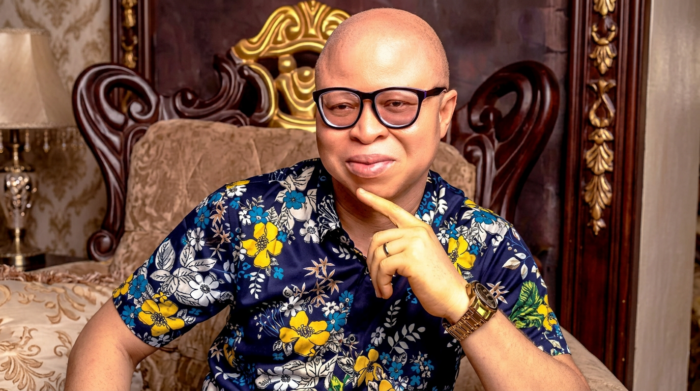
Dr. Edward Sunday is a multiple award-winning Nigerian music producer, sound engineer, concert producer, acoustician and creative director with over 35 years of experience in live and recorded sound. As MD/CEO and Lead Sound Engineer of Azusa Productions, he has shaped major productions including The Experience Lagos, Hallelujah Challenge Festival, Nathaniel Bassey Live Recording, Fearless with Tim Godfrey, Beejay Sax Live in Concert, Sinach Live in Concert and Tems in Concert Abuja. With credits spanning sound reinforcement, studio production, mixing, mastering, multitrack recording, acoustic design and concert direction, Sunday remains one of Nigeria’s most accomplished live sound architects.