 Follow Us on Google News
 Follow Us on Google Discover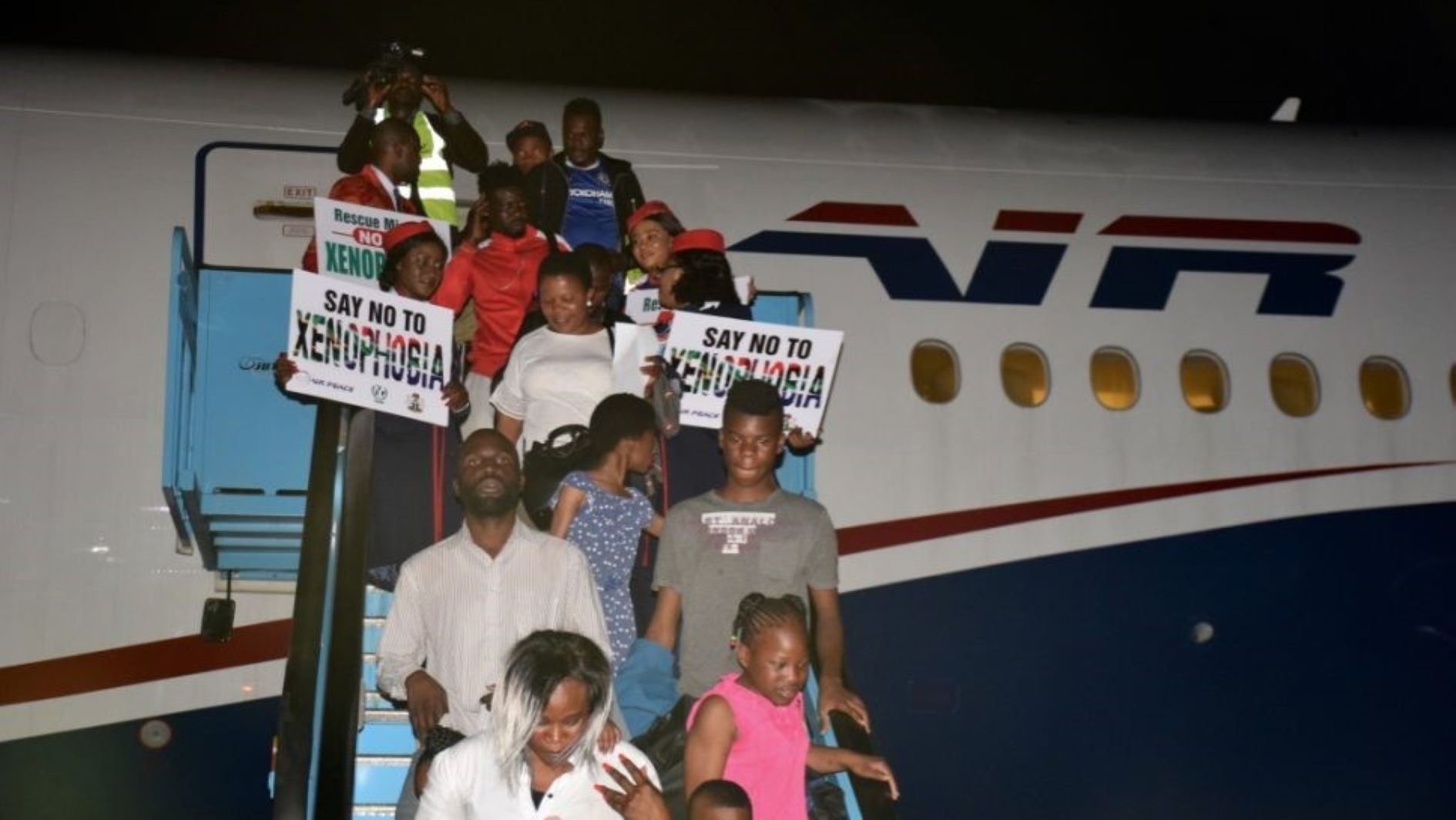
An uneasy sense of anticipation wafted across several communities in South Africa yesterday ahead of today’s nationwide anti-migrant protests and the fears of violence in the rainbow country.
Though the President Cyril Ramaphosa-led government has urged the protesting groups to exercise their rights responsibly, thousands of immigrants were confirmed stranded, as many more live in uncertainty in South African provinces.

While Nigeria, Ghana, Zimbabwe, among others, have voluntarily repatriated citizens to their countries, thousands of Malawians remain stranded in makeshift camps, hoping to return home safely.
The June 30 deadline for undocumented immigrants to leave South Africa, promoted by anti-migrant groups, follows weeks of protests, intimidation, and violence targeting foreign nationals. At least three people, two Mozambicans and one Malawian, have been killed, leaving many migrants fearing for their lives.
One documented migrant said he decided to leave after receiving repeated threats from neighbours who warned they would kill migrants once the deadline arrived. “That’s why today I decided to join our brothers and go home,” he said.
For others, leaving has meant making painful personal sacrifices. Another migrant said he was forced to leave his children behind with his Zulu wife after she told him she could no longer support them on her own.
The growing security concerns have prompted several African countries, including Malawi, Zimbabwe, Mozambique, Ghana, Nigeria, Kenya and the Democratic Republic of Congo, to organise voluntary repatriation efforts, with thousands already returning home.
Nigeria has repatriated a total of 324 citizens from South Africa in two official evacuation flights as part of an ongoing emergency voluntary return programme.
Official census and community survey data historically put the documented Nigerian-born population at approximately 25,000 to 35,000.
South African authorities have condemned the violence and pledged heightened security ahead of planned anti-migrant marches, warning that anyone attempting to incite violence or take the law into their own hands will face arrest.
Police and private security have identified Gauteng, KwaZulu-Natal, the Western Cape, and the Eastern Cape as potential hotspots.
President Ramaphosa, in a statement on Sunday, acknowledged that the right to protest is guaranteed by the Constitution. However, “the right to protest and freedom of expression does not allow people to threaten or intimidate others, or to engage in acts of vandalism or violence.”
He reiterated that South Africa is a constitutional republic governed by the rule of law.
“The exercise of rights by any citizen in a constitutional democracy cannot be determined by intimidation, threats, or ultimatums. It must be determined through democratic institutions, evidence, and the rule of law.
“Some foreign nationals who live in South Africa are here lawfully. They work, study, raise families, invest in our economy, and contribute positively to our society. They, too, are entitled to the protection of our laws and our Constitution.
“We welcome the assurances by some of the organisers of the planned protests that they stand against violence on the part of their supporters. They will be held to this undertaking because no cause, no matter how legitimate, will be an excuse to shift responsibility for violent acts,” Ramaphosa said.
Notwithstanding, many businesses will likely keep their doors closed today due to the threat of public violence from anti-immigration protests, but business and labour organisations said foreigners are incorrectly being blamed for South Africa’s tottering economy.
A National Economic Development and Labour Council (NEDLAC) coalition, comprising Cosatu, Fedusa, Saftu and Nactu, said their message from organised labour was clear: migrants are not to blame for the country’s economic malaise.
In a statement in response to growing tensions around migration and illegal immigration and recognising the legitimate frustrations of millions of South Africans grappling with high unemployment, poverty, inequality, and crumbling public services, the organisations said: “The economic crisis in South Africa is rooted in issues like economic stagnation, corruption, de-industrialisation, mass unemployment and weak governance,” rather than immigrants.
This concern was echoed by Pietermaritzburg Chamber of Business chief executive Melanie Veness, who said foreigners in South Africa had become the scapegoats for anti-immigration protestors for the weak state of the economy.
“Removing foreign nationals from workplaces, communities, or public spaces will not reopen factories or create sustainable jobs,” the labour organisations asserted, calling for a more comprehensive approach that addresses the underlying economic problems.
They warned the rising tide of anti-migrant sentiment was often politically orchestrated to divide the working class and distract from genuine grievances relating to poverty and inequality.
“The enforcement of immigration and labour laws is the responsibility of the state, and no individual or organisation has the right to act outside the law,” the unions declared.
Both the Johannesburg Chamber of Commerce and Industry (JCCI) and the Pietermaritzburg Chamber of Business did not advise their business owner members to close on June 30, or to allow their members’ staff to take the day off, but instead advised against unnecessary travel, and particularly to potential hotspots in city centres and near informal settlement borders where large numbers of people were congregating.
As fears of possible violence and disruption lingered, several migrants spoke about the emotions weighing on them ahead of the protests, revealing stories of anxiety, resilience, and hope that the day would pass without bloodshed.
For 28-year-old Wilson Petro, the countdown to Tuesday brought a mixture of relief and uncertainty as he prepared to leave the Durban Drive-In site after days of waiting.
“We are here because we have been struggling as foreigners,” Petro said. “Today we will be leaving this camp and going to Limpopo and then, hopefully, to Malawi.”
Thousands of people waited in limbo at the site; their lives reduced to makeshift routines as they prepared for an uncertain journey home.
Men, women and children filled the sprawling camp, while clothes and blankets hung from perimeter fences, fluttering in the winter breeze as improvised washing lines. Children lingered beside their families; adults sat quietly with the few belongings they could carry.
At the Che Guevara Home Affairs office on the other side of town, asylum seeker Salima Tusame, a mother of three, with her eldest child aged 13, described weeks of frustration and fear as she waited for clarity on her documentation.
She said she had been at the office for around five weeks, following recent marches and unrest, and showed IOL her papers to prove her legal status in South Africa.
“I came to South Africa in 2015, and I have been at this Home Affairs for five weeks because of the march,” she said. “I know I have papers which allow me to stay in South Africa, but they don’t care whether you have papers or not.”
“They have sworn at me and hit me,” Tusame added. “Even at the hospital, actually, everywhere you go. I used to sell fruit, but now I can’t. They said they want foreigners gone. I don’t know what will happen with the planned protests tomorrow.”
On Sunday, KwaZulu-Natal Premier Thami Ntuli warned against a repeat of past unrest, recalling the devastating impact of previous violence on the province’s economy and communities.
He said the scars of earlier chaos were still visible and cautioned that ordinary residents often suffered most when tensions escalated.
“July 2021 set us back years; we have not yet fully recovered. That is the price chaos extracted from this province,” Ntuli said. “Not from the instigators who vanished into the crowd, but from ordinary workers, traders, mothers and fathers who lost their shops, their jobs, their dignity.”
“We buried that pain once. We will not dig that grave again, not for unrest, and not for hatred dressed up as protest.
“Whatever our concerns about undocumented migration, however legitimate the frustrations beneath them, we will not allow this province to be set alight a second time, whether by criminality or by xenophobia.”

