 Follow Us on Google News
 Follow Us on Google Discover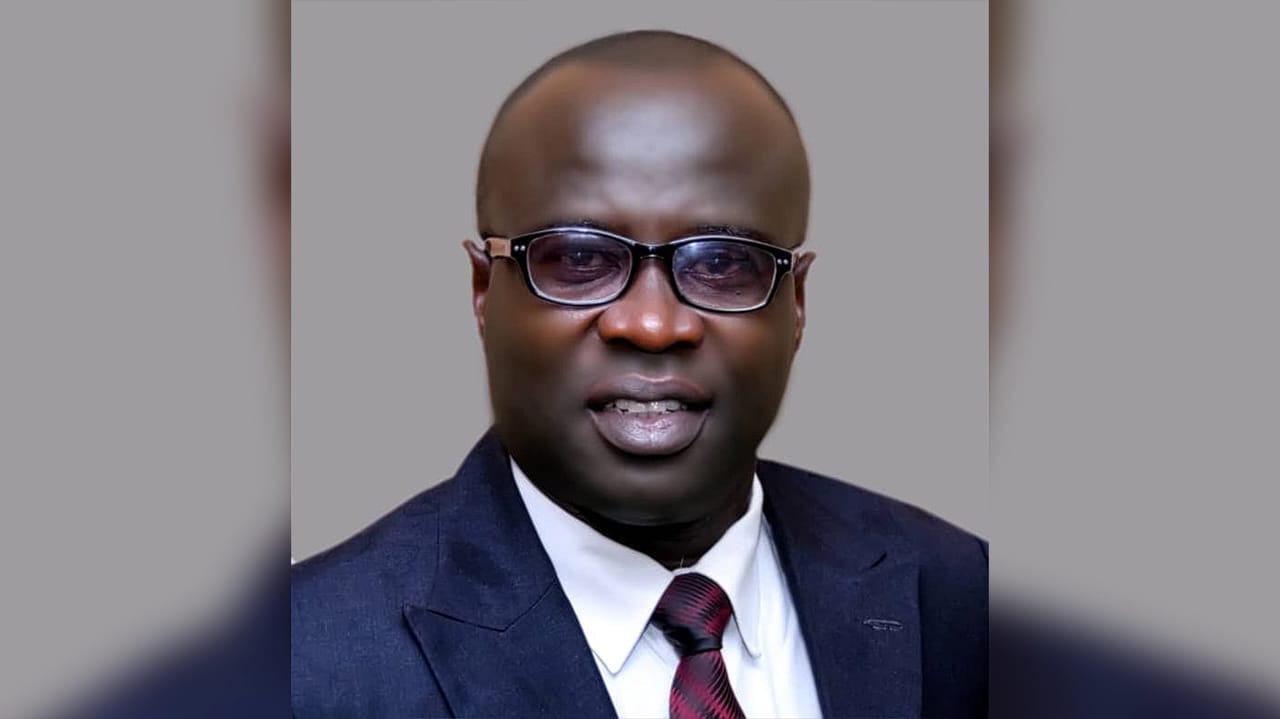
By Ubadire Agua, Ph.D
Last month, Michael Okpara University of Agriculture, Umudike did what it had never done in 33/34 years: it entered the global academic map with its first appearance in the Times Higher Education (THE) Impact Rankings for Sustainability 2026. THE placed MOUAU in the 1001–1500 band out of 1,646 universities from 116 countries that participated in the 2026 assessment, and the certificate was received at THE’s 2026 Global Sustainable Development Congress in Jakarta, Indonesia. I was there, alongside other delegates from universities across the world.
In a country where global visibility has often eluded our public universities, this is significant. Twenty-four Nigerian universities participated in the 2026 Sustainability Impact Ranking and among Nigeria’s 5 Federal Universities of Agriculture — Abeokuta, Makurdi, Umudike, Zuru, and Jalingo — MOUAU showed up and earned a place on the list.
Beyond the overall band, MOUAU was specifically rated in 3 United Nations (UN) Sustainable Development Goals (SDGs) Nos. 1, 9 and 13. To be clear, SDG 1 is about ending poverty in all its forms. SDG 9 focuses on building resilient infrastructure, promoting inclusive and sustainable industrialization, and fostering innovation. SDG 13 is about taking urgent action to combat climate change and its impacts. That MOUAU was measured and recognized in these 3 areas matters, because for decades many of our specialized universities have remained excellent locally but invisible globally.
As a researcher of reputation management in public sector organisations, the importance of this cannot be overstated. In the knowledge economy, ranking is reputation management made visible. It is how an institution proves, with evidence, what it claims about itself. A university that is not measured is a university that is not seen. A university that is not seen cannot attract what it needs to grow. Rankings have become the currency of trust in higher education.
The benefits are practical and immediate. First, funding and grants. International donors, development agencies, and research foundations use rankings as a first filter. If your university is not on THE, you will not even be invited to apply. Second, academic partnerships. Professors in Malaysia, the UK, or Brazil will google a Nigerian university before agreeing to joint research, staff exchange, or PhD supervision. Ranking provides the quick assurance that the institution is real, active, and credible. Third, student recruitment. Both Nigerian students seeking options and international students comparing universities use rankings to decide where to apply. A spot on THE signals quality and puts MOUAU on their radar. Fourth, industry and government collaboration. Companies looking for research partners, and governments looking for expertise on sustainability and agriculture, turn to ranked institutions because they can verify output and impact. Fifth, diaspora and alumni engagement. Scholars in the diaspora are more willing to return, collaborate, or donate to universities that have a global footprint. Ranking tells them the home institution is serious. Sixth, policy and national brand. When more Nigerian universities appear on global lists, it improves the country’s education brand and makes it easier to negotiate bilateral agreements, scholarships, and exchange programs. Finally, internal pride and motivation. Ranking gives staff and students a sense that their work is being noticed beyond the campus gate, and that drives more research, more documentation, and more impact.

Without ranking, a university is asking the world to take its word alone. But with ranking, the world can verify. That is why the 1001–1500 band is not a trophy. If anything at all, it is a receipt and an invoice. It is proof that MOUAU can be counted, and what can be counted can be improved.
This historic first did not happen by accident. It was the product of deliberate institutional effort, sustained over several years, and driven by the understanding that visibility must be managed. Prof. Maduebibisi Ofo Iwe, the 6th Vice-Chancellor of MOUAU must be commended. He gave the directive to explore global rankings and positioned international visibility as part of the university’s strategic direction. His initiative and push in 2021 created the opening for MOUAU to think beyond its immediate environment and to see itself as part of a global conversation on sustainability, agriculture, and impact.
The momentum was sustained through persistent outreach to THE and the painstaking collation of institutional data by relevant offices. Dr. Eberechi Cecilia Osuagwu, a Senior Lecturer in the Department of Environmental Management and Toxicology, also deserves special commendation for restarting engagement with THE, following up consistently, and serving as a recognized data source for THE. In an environment where many wait for committees, she simply told THE that MOUAU exists and is impacting its environment and southeast agro ecological zone of Nigeria. Her dedication kept the process alive at a time when it could have stalled.
From late 2024 to late 2025, a working team from various academic and professional units in the Vice-Chancellor’s office, including DVC (Academic) DICT and Public Relations, tracked the over 200 THE data fields, gathered evidence, and submitted completed forms.
The university website became the primary evidence base. This is where reputation management and ranking meet directly. THE does not visit campuses to verify claims. It looks for what is published, documented, and accessible. Data without narrative is noise and a research project that is not on the website does not exist for ranking purposes. A community sustainability programme that has no pictures, no report, no date, will not count. A university without a digital footprint is a ghost in the ranking world because rankings are 60% evidence that can be found. That is why DICT and Public Relations were central to the process.
The result of MOUAU’s first ranking was due to the foundation laid over the years. It must be sustained. Prof. Ursula Ngozi Akanwa, the 7th Vice-Chancellor of the University deserves commendation too, for taking deliberate steps to institutionalize the process. The appointment of a Director of University Advancement, who is a top 2% world scientist by Elsevier and Stanford University, and a Desk Officer for Rankings, signals that global visibility is now being embedded in the university’s structure. These are commendable steps because they move ranking from the realm of individual effort to the realm of system.
The next task is to build on these signals by creating processes that ensure data is collated year-round, that evidence is uploaded continuously, and that the team that understands THE’s methodology is retained and supported.
There are clear lessons here for other Nigerian universities, particularly those who have not been measured for ranking. First, appoint one accountable person and protect the role. Rankings do not start with large committees. They start with one person given a mandate, a small budget, and freedom from bureaucracy. Second, budget for visibility like you budget for laboratories. Fund data collation, staff time, website updates, and evidence gathering. Third, treat your website as your ranking engine. Today, if it is not on your site, THE will not find it. Fourth, and particularly for MOUAU and others already measured and ranked, institutional memory is an asset. Keep the team that submitted together for the next cycle. They understand the data quirks and deadlines. THE will re-rank in the coming year. Fifth, participation is non-negotiable for specialized universities. If agriculture universities are to lead Nigeria’s food security agenda, they must be visible on global sustainability.
At the heart of this is a simple truth. Reputation is not what you say about yourself. It is what others can verify about you. Ranking is a third-party audit. It tells a donor, a professor, and a student that your laboratories exist, your citations are real, your sustainability work is documented, and your governance can withstand scrutiny. Reputation travels where leadership cannot. It sits on grant applications, admission forms, and partnership agreements.
I need to underline that visibility without value is vanity, but visibility plus value equals legacy. Legacy is what makes a university magnetic and magnetic universities do not chase talents and money, rather talents and money chase them. The question for every Nigerian university now is: what will we do before the next ranking cycle? If we document deliberately, manage our reputation with evidence, and build systems instead of relying on accidents, more universities will move from invisible to verifiable. And when more Nigerian universities are visible, the entire country’s higher education system becomes stronger, more competitive, and more respected on the global stage.
Ubadire Agua, Ph.D is a reputation management specialist in Michael Okpara University of Agriculture, Umudike. He wrote in from Doha, the State of Qatar.

