 Follow Us on Google News
 Follow Us on Google Discover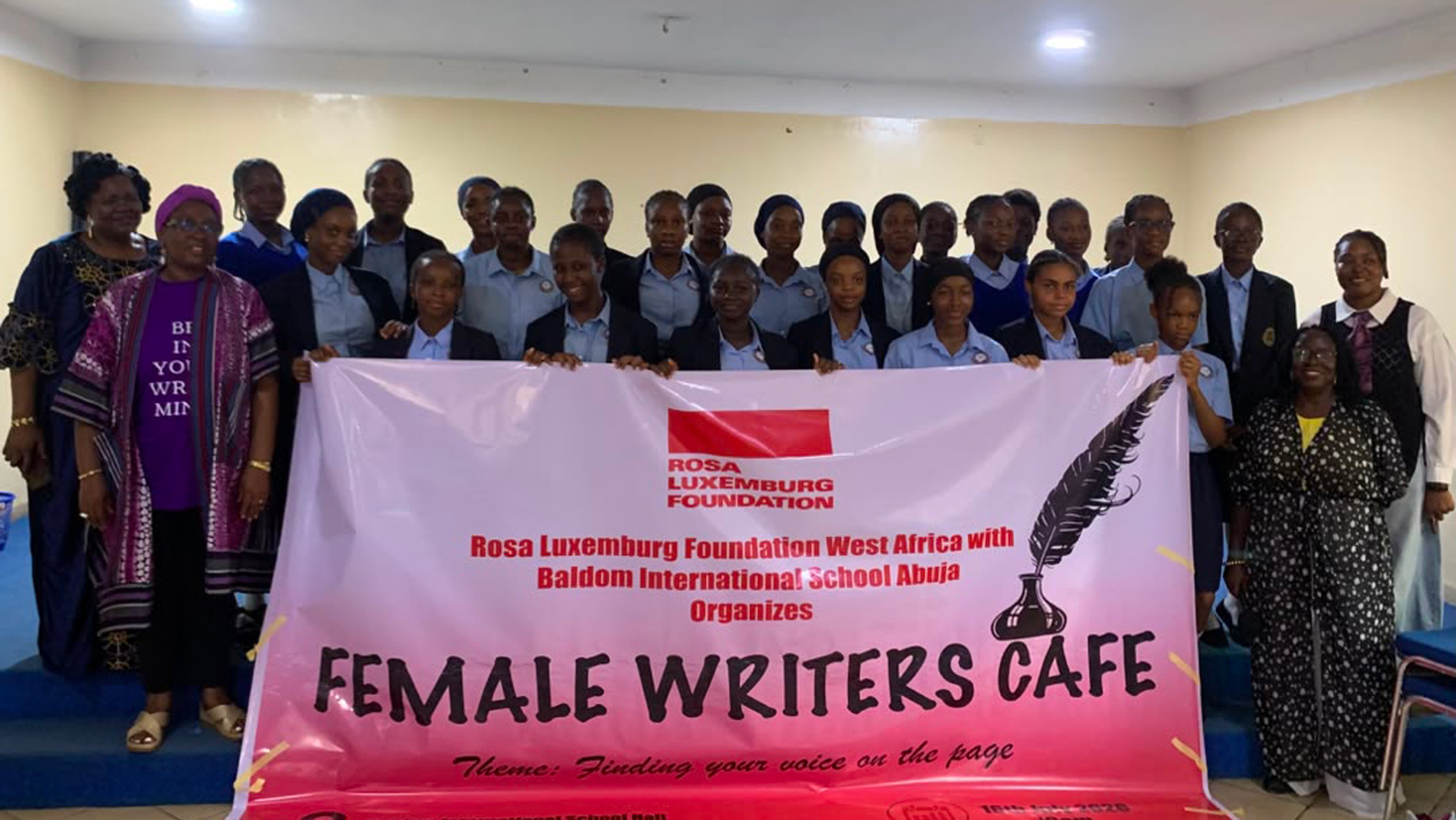
Young Nigerian girls have been encouraged to embrace writing as a means of self-expression, cultural preservation and social change.
Speaking on their experiences as writers, accomplished female authors urged young women to tell stories rooted in their own experiences rather than imitating others.
The charge was delivered at the Female Writers’ Café, organised by the Rosa Luxemburg Foundation for Peace and Development for female students of Baldom International School in Maitama, Abuja.
The programme, ‘Finding Your Voice on the Page,’ brought together award-winning writers, Dr Ejiro Joyce Otive-Igbuzor and Frances Areh, who shared their personal journey into writing and challenged the students to see their own lives as worthy of literature.
A recurring message throughout the event was that every individual has a story worth telling.
Speaking during the session on storytelling and character development, Otive-Igbuzor said authentic writing begins with lived experiences, explaining that the most compelling stories often emerge from ordinary lives, family histories and community experiences.
She described stories as both ‘mirrors’ and ‘windows’ that reflect people’s identities and realities, and windows that expose readers to different cultures, perspectives and experiences.

According to her, writers have a responsibility not only to entertain but also to challenge stereotypes, preserve cultural heritage and provoke conversations that can inspire social change.
Drawing from her own life, she narrated how being raised by her grandmother after her parents left to continue their education shaped her worldview and later became the foundation for several of her published works.
She also recounted how her grandmother negotiated with her husband to finance her daughters’ education at a time when educating girls was not considered a priority, describing the experience as an example of what she called ‘negotiation feminism,’ which advances women’s rights through dialogue and persistence rather than confrontation.
For aspiring writers, she said the lesson was simple: “Your life is material. Your family history, your community and your everyday experiences are stories waiting to be told.”
Areh echoed similar sentiments, encouraging the students to embrace their individuality instead of trying to fit into predetermined expectations.
Reflecting on growing up as the only girl among several brothers, she explained that feelings of isolation and difference eventually became sources of inspiration for her fiction.
She said writers should not be afraid to allow stories and characters to evolve naturally, adding that some of her own books originated from casual family conversations and everyday observations.
One of those conversations, she revealed, centred on relatives joking that she should have been born a twin—a remark that later inspired one of her novels exploring themes of identity and belonging.
According to Areh, creativity often comes from combining seemingly unrelated experiences, observations and ideas into original stories.
She urged the students to cultivate the habit of reading widely, noting that exposure to books, films and different cultures broadens imagination and strengthens storytelling.
Earlier, the Country Director of the Rosa Luxemburg Foundation for Peace and Development, Angela Odah, described the Female Writers’ Café as the first phase of a three-year mentorship initiative to nurture a new generation of female writers.
She said the Foundation intends to support participants beyond the workshops, with the long-term goal of helping dedicated students develop manuscripts that could eventually be published.
“Our objective is not simply to teach writing but to help young girls discover their voices and use them for advocacy, self-expression and positive social change,” she said.
Principal of Baldom International School, Panle Vwar, welcomed the initiative, describing it as an investment in the confidence and creativity of young women.
He urged the students to seize the opportunity to learn from accomplished authors, expressing optimism that some of them would become published writers in the future.
The programme moved beyond lectures to practical writing exercises.
Students were asked to respond to prompts including “The Day I Found My Voice” and “If I Could Speak Without Fear,” producing poems, reflections and short stories that explored themes of identity, confidence, gender equality and courage.
Several participants reflected on overcoming self-doubt, challenging discrimination against women and finding the confidence to express opinions without fear of criticism.
The guest writers later moved around the hall, offering one-on-one mentoring, reviewing participants’ work and encouraging them to continue writing despite criticism or self-doubt.
The programme concluded with participants committing themselves to regular reading and creative writing before the next edition of the Female Writers’ Café.
The Rosa Luxemburg Foundation also announced that outstanding participants who develop complete manuscripts during the three-year mentorship programme would receive support towards publishing their books, allowing aspiring young writers to become published authors.

