
 Get Guardian on Google
…Accuse governors of neglecting MSME sector
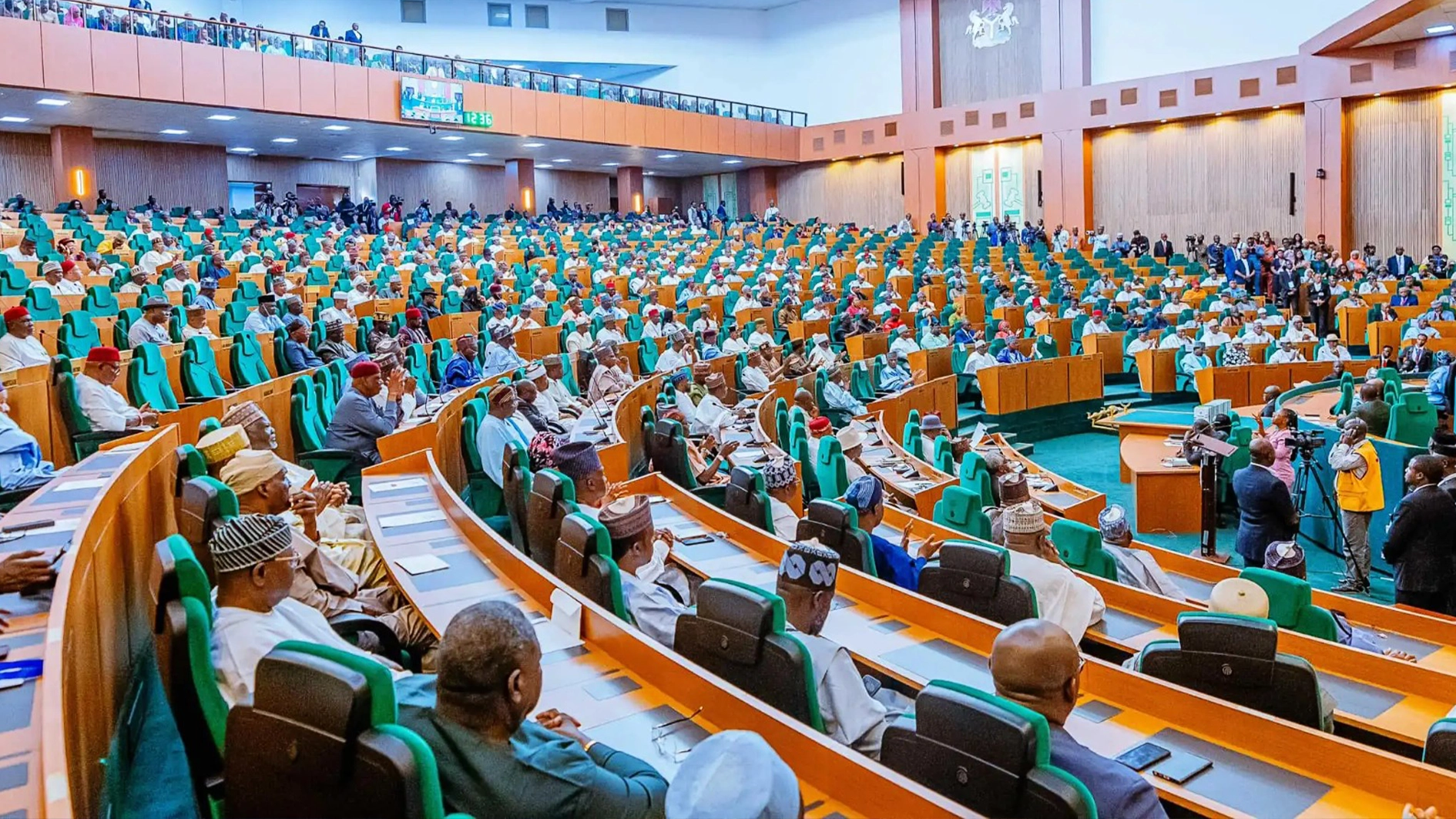
The House of Representatives has decried the bureaucratic bottlenecks and high lending rates stifling the growth of Micro, Small and Medium Enterprises (MSMEs) in Nigeria.
The lawmakers also accused state and local governments of failing to provide adequate support for small businesses despite increased federal allocations.
The Speaker of the House, Tajudeen Abbas, made the observations on Monday through the Majority Leader, Julius Ihonvbere, at a stakeholders’ engagement organised by the House Committee on Small and Medium Enterprises in Abuja.
The meeting, themed “Unlocking the Potential of Nigerian MSMEs Through Legislative Reform, Access to Finance, Market Linkages and Strategic Partnership”, brought together government agencies, financial institutions and business stakeholders.
Abbas said despite the establishment of several intervention agencies and the injection of funds into the sector, many small businesses continued to struggle.
He lamented that businesses which managed to survive did so largely through their own resilience rather than government support.
“Those that are surviving are surviving not because of government and agencies, but in spite of government and agencies,” he said.
The Speaker attributed the situation partly to policymakers’ failure to understand the difficulties confronting entrepreneurs. He said many government officials remained disconnected from the realities of struggling businesses.
He also faulted cumbersome procedures for accessing intervention funds, warning that excessive bureaucracy had discouraged entrepreneurs from seeking government-backed loans.
“I’m a systems man, but I know this system is not working. And it will not work when you bureaucratise a procedure. A lot of red tape,” he said.
The Speaker warned entrepreneurs against borrowing at double-digit interest rates, saying such loans could undermine their businesses before they gained stability.
Beyond federal interventions, Abbas challenged state governors to establish dedicated funds for MSMEs, suggesting monthly contributions of at least N1 billion.
“There is no governor in this country that cannot put one billion a month in a special fund for MSMEs in his state. There is no state that cannot do it,” he said.
Abbas noted that governors could establish transparent guidelines for accessing and monitoring the funds to ensure that genuine entrepreneurs benefit.
He further criticised state and local governments for failing to translate increased federal allocations into tangible economic opportunities.
“All the complaints you are hearing in this country today is not because of Tinubu. Not because of the federal government. It’s because of state and local governments that are not performing,” Abbas said.
He urged Nigerians to hold elected officials accountable, arguing that the quality of leadership at the state and local levels significantly determines the economic opportunities available to citizens.
Earlier, Chairman of the House Committee on Small and Medium Enterprises, Dr Pascal Agbodike, said the engagement was designed to identify practical solutions to the challenges facing the sector.
Agbodike explained that the committee invited relevant government agencies and financial institutions to account for their interventions and identify obstacles preventing businesses from accessing available support.
He said the committee was particularly concerned that substantial government funding had not translated into the expected benefits for small businesses.
“We are lawmakers. Ours is simple, to appropriate the necessary funds. But when we appropriate those funds, how is it being trickled down to the common man in the street?” he asked.
Agbodike said the committee would examine the activities of relevant institutions, including the Central Bank of Nigeria and the Bank of Industry, to determine where implementation had fallen short.
He expressed optimism that the engagement would produce measurable outcomes within 100 days.
Also speaking, Director-General of the Presidential Enabling Business Environment Council (PEBEC), Princess Zahrah Mustapha Audu, identified affordable financing and stronger partnerships with state governments as essential to MSME development.
She said PEBEC tracks 69 ministries, departments and agencies to address bureaucratic and legislative obstacles affecting businesses.
Audu disclosed that the council introduced the ReportGov digital platform to enable businesses to report challenges with government regulators.
She explained that once a complaint enters the platform, the relevant agency receives it and has 72 hours to resolve the issue before PEBEC intervenes.
The PEBEC director-general, however, stressed that state governments must play a greater role in providing affordable financing.
She advocated partnerships between state governments and institutions such as the Bank of Industry, Bank of Agriculture and Nigerian Export-Import Bank.
Under the arrangement, state governments could provide counterpart funding to reduce collateral requirements and make loans more accessible to small businesses.
Audu said PEBEC had facilitated such partnerships in about 15 states, allowing business associations to participate in financing arrangements with development finance institutions.
“For me, the solution for SMEs is patient capital,” she said, urging the Central Bank of Nigeria to review interest rates to make commercial lending more affordable.
She also advised the committee to focus on state-level interventions, particularly for businesses seeking relatively small loans.
In his contribution, a former member of the Anambra State House of Assembly and consultant, Charles Ezeani, blamed cumbersome lending procedures for denying rural entrepreneurs access to government intervention funds.
He said many applicants lacked the technical capacity to satisfy the requirements imposed by commercial banks, even after securing preliminary approvals from development finance institutions.
Ezeani particularly criticised the lengthy process of obtaining letters of intent from commercial banks under intervention financing arrangements.
He argued that banks had little incentive to process such applications quickly because the transactions offered them limited returns.
He therefore called for legislation to establish government-backed credit guarantee institutions that would protect commercial banks against lending risks.
Such institutions, he said, could guarantee loans for entrepreneurs with viable business proposals but insufficient conventional collateral.
“Government institutions should have the capacity to give guarantees of almost zero collateral to the downtrodden,” he said.
Ezeani maintained that stronger credit guarantees would encourage commercial banks to extend more loans to small businesses instead of concentrating largely on bigger enterprises.