 Follow Us on Google News
 Follow Us on Google Discover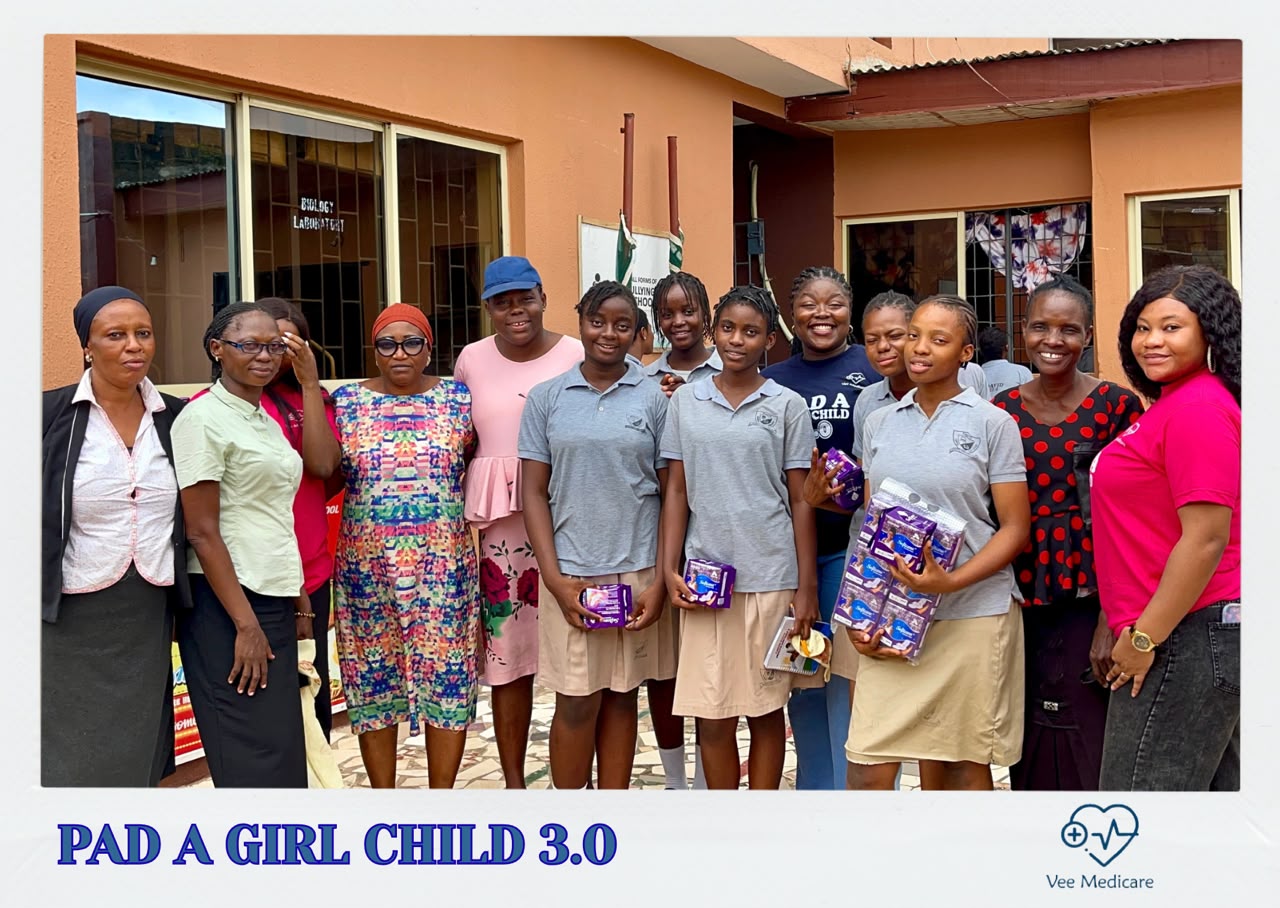
Experts have said that poor menstrual health education, stigma and limited access to sanitary products are undermining girls’ confidence, classroom participation and school attendance.
They noted that while some girls are forced to miss classes during their menstrual periods, others struggle to concentrate because of severe cramps and fear of embarrassment. The experts called for greater parental involvement, improved menstrual health education and better access to sanitary products.
Speaking during the third edition of the Pad a Girl Child Outreach organised by Vee Medicare Consult at King David College, Alagbado, Lagos, public health professional and Founder of Vee Medicare Consult, Genevieve Njoku, said poor menstrual health education, stigma and limited access to sanitary products remain among the biggest challenges girls face.
“Most of these girls tell us they are afraid of staining their uniforms because, when it happens, they fear being teased,” she said.
According to her, the fear undermines girls’ confidence, discourages classroom participation and, in some cases, keeps them away from school. She added that widespread misinformation and stigma surrounding menstruation continue to prevent many girls from accessing accurate menstrual health information.
Njoku said the organisation combines menstrual health education with sanitary pad distribution because while the pads provide immediate relief, knowledge equips girls to manage their menstrual health throughout their lives.

“The pad distribution is just the icing on the cake. Education is the main focus because we believe that giving a girl a pad would help her that day or that menstrual cycle, but when you give her knowledge, you’ve empowered her for life,” she said.
She disclosed that the initiative has reached about 500 girls across schools in Alimosho through three editions of the programme, providing menstrual health education and sanitary products to girls who might otherwise lack access to both.
According to her, the outreach also seeks to break the silence surrounding menstruation, noting that many girls still have unanswered questions because they lack trusted adults with whom they can discuss menstrual health.
The concerns mirror broader UNICEF findings that poor menstrual health and hygiene management contribute to school absenteeism, reduced classroom participation and missed educational opportunities due to inadequate menstrual health information, limited access to menstrual products, and poor water, sanitation and hygiene (WASH) facilities.
One of the school’s administrators, Mary Salokun, said the effects of menstrual challenges are evident in the classroom.
She said some parents are unaware when their daughters begin menstruating or fail to prepare them beforehand, leaving schools to provide immediate support when girls experience menstrual emergencies during school hours.
“We have many of such cases. Sometimes, some parents don’t even know when their daughters have started menstruating,” she said.
She added that severe menstrual cramps often prevent affected students from participating fully in school activities. “When students experience severe menstrual cramps in school, they are unable to participate in day-to-day activities and many of them end up in the sick bay,” she said.
Salokun called for stronger collaboration among schools, parents and non-governmental organisations to expand menstrual health education and improve access to sanitary products. She also urged parents to educate their daughters about menstruation before they begin menstruating.
Teachers also acknowledged that menstrual discomfort can affect learning. A teacher at the school, Toyin Oluwasanya, said many students complain of severe abdominal pain during their menstrual periods and often require reassurance that menstruation is a normal biological process rather than an illness.
Another teacher, Leke Elizabeth, said that although menstrual experiences vary among students, some girls struggle to concentrate in class because of the pain. She said teachers primarily provide emotional support, encourage affected students to inform their parents and advise them to seek medical attention when symptoms become severe.
For the students, the impact extends beyond physical discomfort. Head Girl of King David College, Mary Oladiran, described severe menstrual pain as the biggest challenge girls face during their periods, saying the pain often makes it difficult to concentrate and, at times, forces some girls to leave school.
Oladiran also underscored the importance of menstrual health education, saying it helps girls better understand menstruation and manage it effectively.
She urged adults to take girls’ menstrual pain more seriously rather than dismissing it as an exaggeration. “I think they should understand that the pain is sometimes unbearable,” she said.

