 Follow Us on Google News
 Follow Us on Google Discover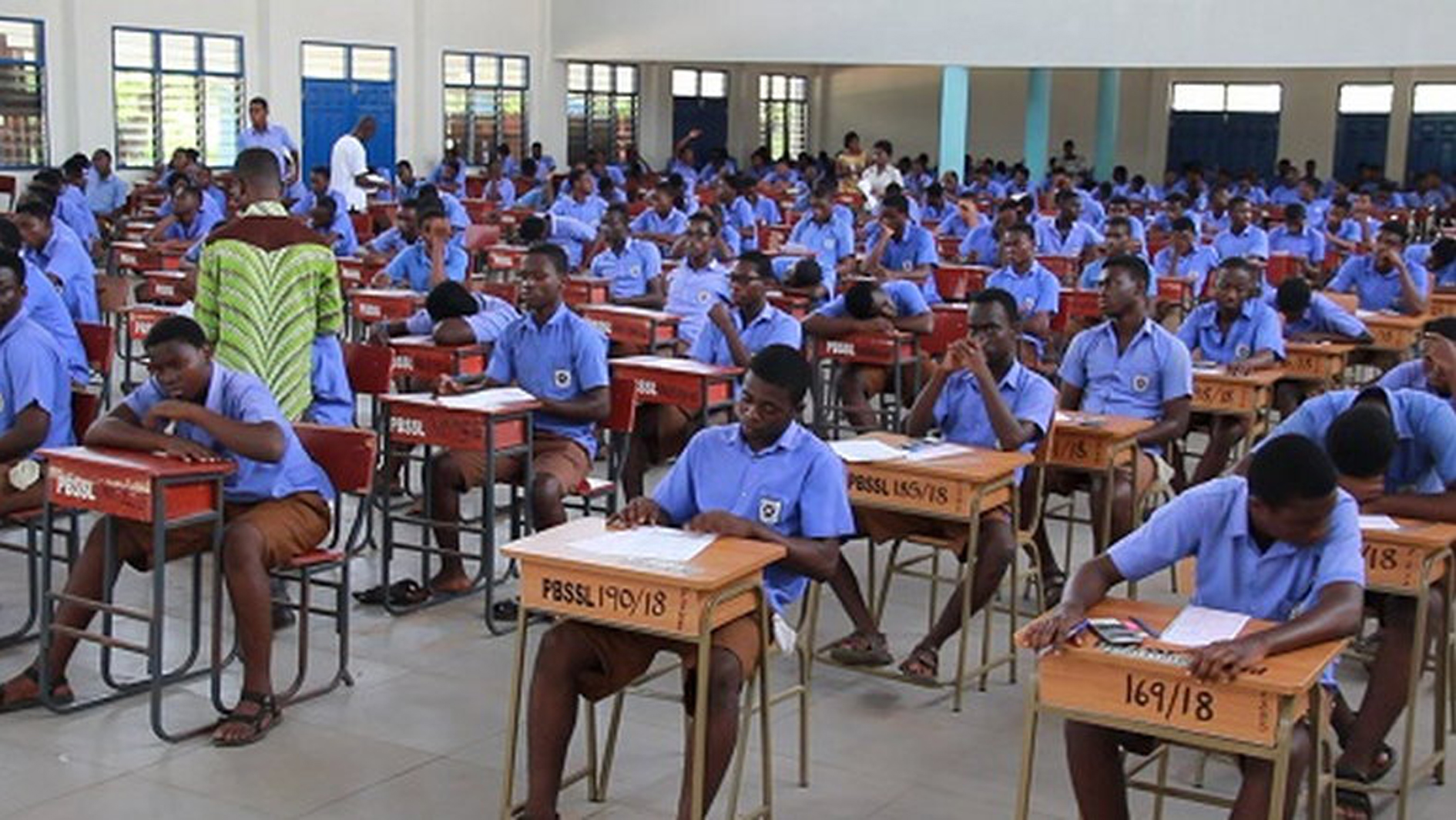
By suspending the implementation of an earlier approved 82 per cent increment in the registration fees for the West African Examinations Council (WAEC) and the National Examinations Council (NECO) Senior School Certificate Examinations (SSCE), the Federal Government has acted wisely. Such a sharp increase in examination fees is bound to increase the burden average Nigerian parents have to meet, as regards their obligation to their children; just as the decision may worsen the precarious state of the country’s out-of-school children.
However, the government, through the Federal Ministry of Education, ought to be more circumspect and avoid undue haste in announcing a sensitive increase. In its remarkable volte-face, the Federal Government suspended the implementation of the increment, citing concerns and feedback from the public over the planned increase, as well as the need to widely consult with stakeholders. These are cogent reasons that should have informed government’s decision before the announcement. Its consideration of the factors enumerated would have spared many Nigerians the anxiety of the increase.
No doubt, approval by the Federal Government granting an 82 per cent increment in the registration fees for the examinations is a discountenance of the financially precarious state of the average Nigerian who will no doubt struggle to meet the new fees. Government approved N50,000 from the current registration fee of N27,500, making the decision one of the sharpest increases in examination charges in recent years. It is no surprise that education experts and other stakeholders have been quick to warn that the upward review could place additional financial pressure on millions of struggling families and worsen the out-of-school crisis.
Explaining the rationale behind the increase, the education ministry said that the decision followed a meeting between the Minister of Education and the examination bodies on March 31, 2026, where the rising cost of conducting public examinations was discussed. At the meeting, the minister directed both WAEC and NECO to adopt a uniform registration fee for their Senior School Certificate Examinations.
The ministry also directed the Registrar of NECO to notify all relevant stakeholders ahead of the implementation of the new fee.
According to the ministry, the proposed review was necessitated by rising operational costs associated with conducting credible national examinations, noting that registration fees had remained largely unchanged for several years despite increases in expenses.

The ministry listed logistics, security, printing of examination materials, technology deployment, quality assurance and other essential services as some of the major cost drivers behind the proposed adjustment.
At a time that the country is unable to find a solution to the world-class out-of-school syndrome, which makes it impossible for 15 million children of school age to be in classrooms, as well as the failure of 26 million children to complete secondary education, thereby worsening the country’s school attrition crisis, any increment in examination fee done without extensive consultations is, to say the least, most unwelcomed, as it could plunge the sector into deeper crisis.
If anything, the Federal Government should be concerned with availing Nigerian children free education as detailed in Section 18 of the 1999 Constitution of the Federal Republic of Nigeria (as amended). The matter as recorded in Chapter II outlines the Fundamental Objectives and Directive Principles of State Policy on education.
Specifically, Section 18(1) mandates that the government must direct its policy toward ensuring that there are equal and adequate educational opportunities at all levels, while Section 18(2) states that the government shall promote science and technology. Section 18(3) pointedly addresses free education, stating that the government will strive to eradicate illiteracy and, “as and when practicable,” provide: (a) Free, compulsory, and universal primary education; (b) Free secondary education; (c) Free university education, and (d) Free adult literacy programmes.
Given this scenario, the botched increment of WAEC and NECO registration fees from N27,500 to N50,000 placed a single examination fee at roughly N20,000 less than the N70,000 national minimum wage, directly negating the directive imposed on it by the constitution that it should “strive to eradicate illiteracy.”
Since the implementation of the new examination fees has been suspended, it should be stated without equivocation that initiating an increase without considering the purchasing power of parents, and at a time when workers were clamouring for improved pay, was insensitive.
With technology playing an immense role in public examinations, WAEC and NECO demanding an increase based on rising cost of materials is not convincing, as technology ought to make the examinations cheaper.
It is troubling that a government that has failed to address the soaring cost of living would, at the speed of lightning, increase examination fees of hapless pupils simply because the managements of WAEC and NECO cried out over alleged rising cost of materials to organise the examination.
In the past, many state governments took up the task of paying WAEC fees for secondary school leavers in their states, knowing very well that their parents are multidimensionally poor. Nothing has changed from what was the case then. If anything, Nigerians are way poorer than they were a decade ago when state governments were playing that all-important role.
Therefore, in line with the dictates of the constitution, the government should aim at providing free education to all Nigerians, and not resort to acts that are capable of not only widening the out-of-school children pool, but also robbing the poorest of the poor basic education. Not aiming for this is a violation of the constitution of the Federal Republic.
For all intents and purposes, the government should be concerned with the high number of school dropouts and out-of-school children. A child out of school is one too many.
Calling for stakeholders’ engagement is belated, but wider consultations are a welcome reprieve, even as the suspension of implementation is not a solution. There is a compelling need to ensure that the policy matches the spirit of Section 18 of the Constitution.
Rather than pass down the burden of inflation to the poorest citizens, the Federal Government should treat public examinations’ integrity as a national security and public infrastructure cost; hence, public examinations should be heavily subsidised, if not made completely free, for candidates in public schools through targeted budgetary allocations.
Since education is on the concurrent legislative list, the Federal Government needs to work out a cost-sharing formula with state governments, which will lead states to pick up the WAEC/NECO bill for their public school students.
There is a need to introduce a tiered pricing structure that would enable students in public schools, particularly in rural or economically depressed areas, to pay a heavily nominal fee, while elite private schools can be charged closer to the true economic cost of the exam, thereby effectively cross-subsidising public school candidates. However, all stakeholders should be allowed input into the arrangement.

