 Follow Us on Google News
 Follow Us on Google Discover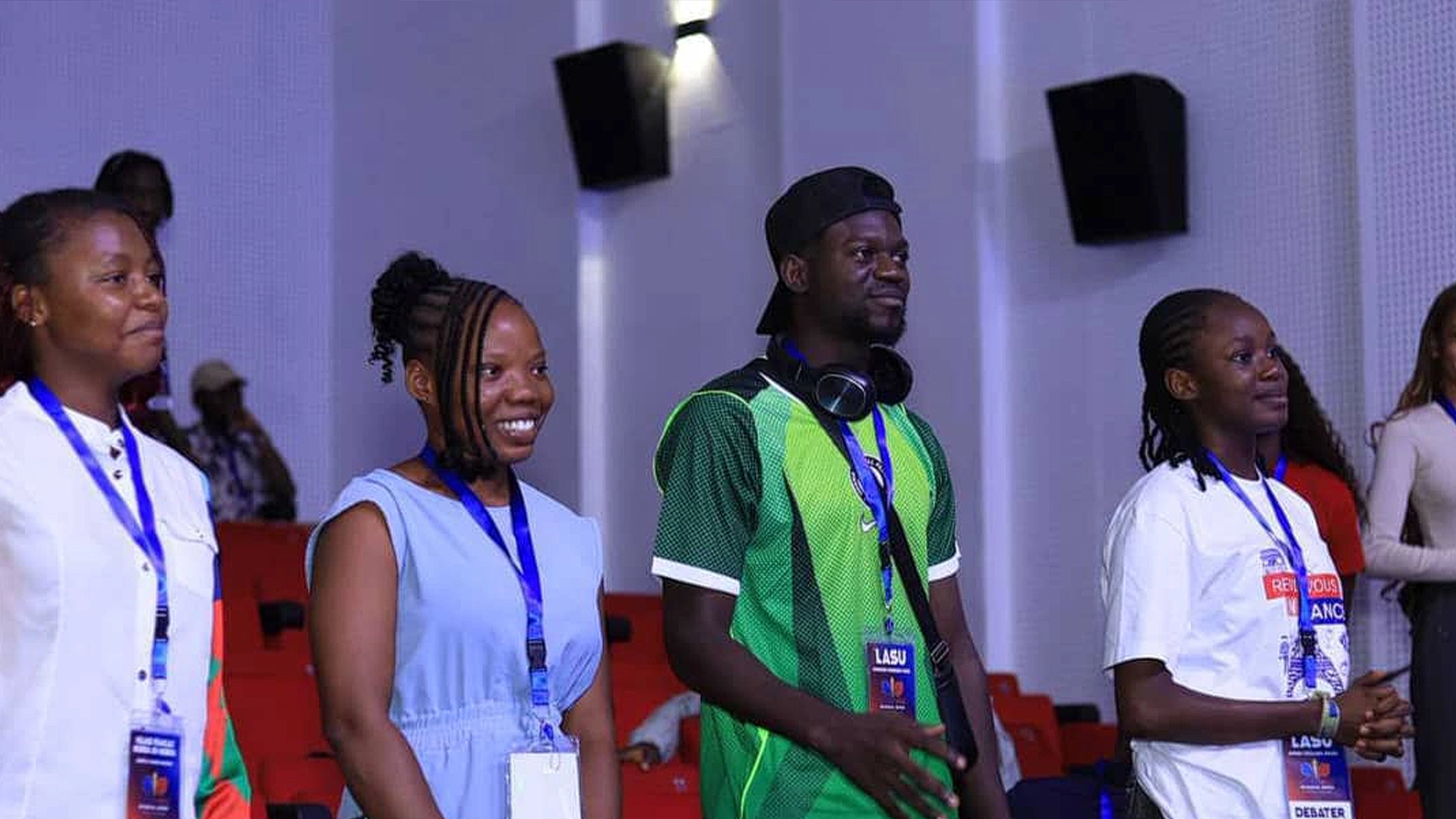
The Nigerian French Language Village has emerged winner of the inaugural Word-Wise Bilingual Series – University Edition, defeating students from five other tertiary institutions in a competition designed to promote bilingualism, leadership and African integration.
The four-day competition, organised by the Word-Wise Educational Support and Advancement Foundation in partnership with the Embassy of France in Nigeria through the French Embassy Fund, Bilingual And Competitive Project (FEF-BAC), brought together 12 student debaters from six institutions across the Southwest.
Participants drawn from the University of Ibadan, University of Lagos, Lagos State University, Obafemi Awolowo University, Olabisi Onabanjo University and the Nigerian French Language Village competed in English and French, debating contemporary issues affecting Nigeria and the wider African continent.
The competition also featured an Africa Solution Room, where finalists were challenged to develop practical responses to some of the continent’s pressing problems, including youth unemployment, education, governance and regional integration.
The organisers said the initiative was designed to demonstrate that language learning could go beyond classroom instruction by equipping young people with the confidence and skills to communicate, collaborate and provide solutions to real-world challenges.
Speaking on the outcome of the competition, Cooperation Attaché and Coordinator of the FEF-BAC Project at the Embassy of France in Nigeria, Madam Magaly Losange, said the confidence displayed by the students was one of the major highlights of the programme.
“What impressed me most was not simply the quality of the debates, but the confidence and intentionality the students demonstrated, particularly during the Crossfire rounds,” she said.
Losange said the participants were able to rely largely on the French they had learnt in the classroom to think, respond and engage spontaneously with one another.
According to her, such practical application of language was central to the objectives of the FEF programme, as bilingualism should serve not only as a means of communication but also as a tool for building confidence and creating opportunities for young people.
She congratulated all the participants for embracing the challenge, saying their performance showed the importance of preparing young people for an increasingly interconnected world.
Co-Chief Executive Officer of the Word-Wise Educational Support and Advancement Foundation, Senami Ohiomokhare, said the competition had demonstrated the potential of bilingualism to produce young Africans capable of bridging cultural and linguistic divides.
Ohiomokhare said, “At Word-Wise, we believe that every young person has a story worth telling and a voice worth hearing.”
She said the four-day programme enabled students to build confidence, challenge ideas respectfully and communicate across languages, adding that leadership begins with “listening, understanding and connecting with others.
Also, Co-Chief Executive Officer of the foundation, Mr Victor Ibrahim, described communication as a critical component of effective leadership.
“Leadership is impossible without communication,” Ibrahim said, adding that participants had moved beyond memorised speeches to engage in authentic conversations, thoughtful debate and meaningful collaboration.
He said the competition demonstrated that language could unite rather than divide people, while giving young people the confidence to take greater responsibility for Africa’s future.
More than 200 students attended the University Edition as a live audience, which builds on earlier editions of the Word-Wise Bilingual Series involving upper primary and junior secondary school pupils.
The foundation said the two editions have now directly impacted nearly 1,000 young people, providing them with communication, leadership and employability skills while strengthening relationships between Anglophone and Francophone communities.
The organisers said the impact of the initiative would continue beyond the competition through a digital storytelling campaign featuring participant profiles, mentorship sessions, behind-the-scenes experiences, debate highlights and success stories across social media platforms.
They added that preparations were already underway for future editions, with plans to expand participation, deepen partnerships and provide more opportunities for young Africans to collaborate across linguistic and national boundaries.

