 Follow Us on Google News
 Follow Us on Google Discover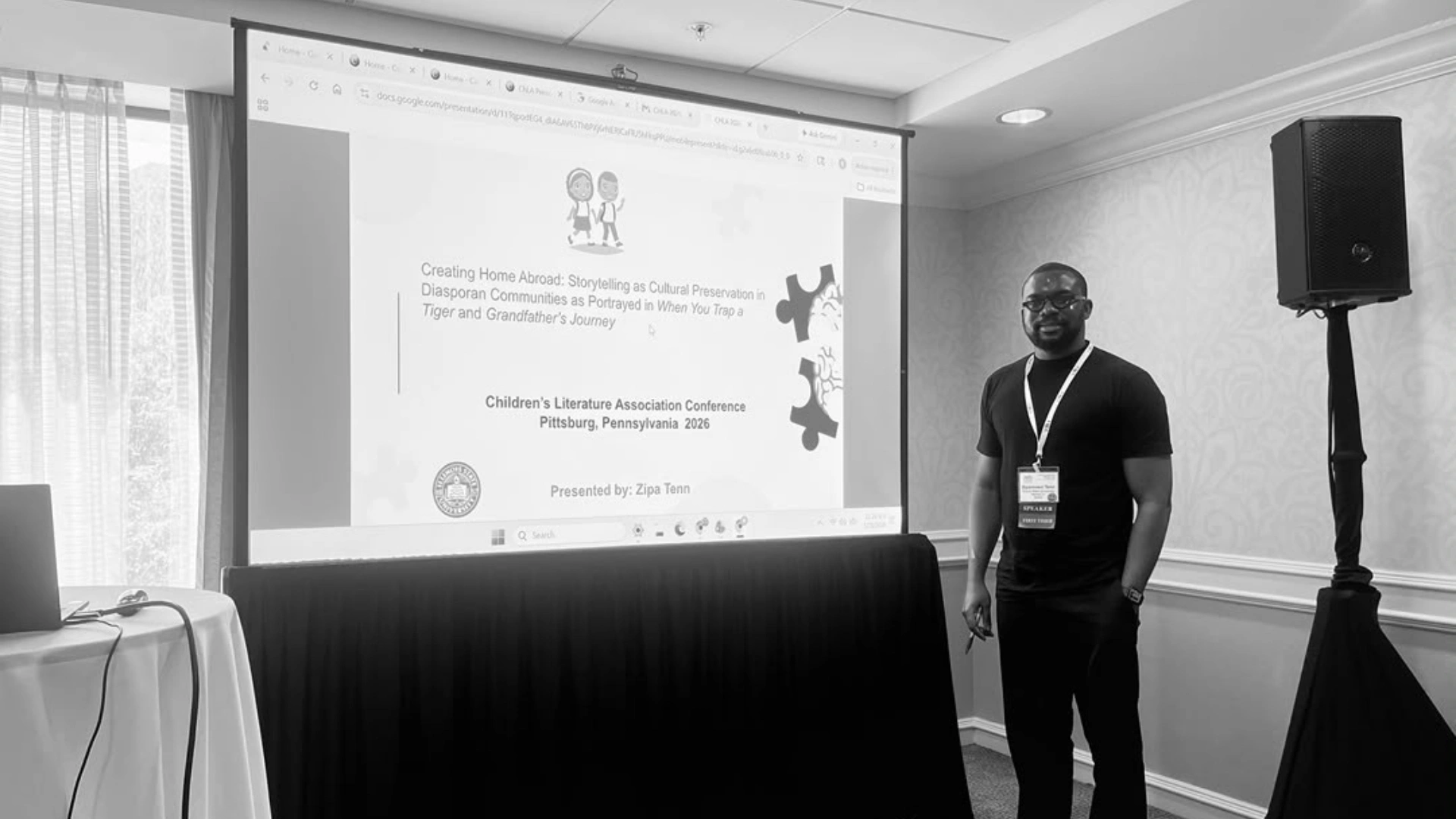
As the world faces rising temperatures, environmental degradation, and the growing effects of climate change, most conversations about solutions focus on science, policy, technology and finance. While these are essential, Nigerian children’s author, environmental educator and scholar Zipa Tenn believes another powerful tool deserves greater attention: children’s literature.
Tenn argues that the stories children read can play an important role in helping them understand climate change, sustainability, and the Sustainable Development Goals (SDGs). For children, global environmental challenges can seem distant and complicated. A well-written story, however, can make those issues personal.

A child may not understand carbon emissions, but can understand a story about a community affected by environmental changes. They may not understand renewable energy policy, but they can follow the journey of a character discovering the possibilities of wind or solar energy.
This is where literature can become a bridge between knowledge and action. Literacy is often understood as the ability to read and write. However, Tenn’s work emphasizes a broader understanding of literacy, one that enables children to understand their world, ask questions, communicate ideas and participate in solving problems.
The 17 goals address issues that directly affect children’s lives, including quality education, clean water, clean energy, sustainable communities, responsible consumption, reduced inequalities and climate action. Yet the language used to discuss these goals can often be difficult for young readers to connect with.
A story about a tree can introduce biodiversity and conservation. A story about waste can encourage conversations about responsible consumption. A story about renewable energy can introduce clean energy concepts. A story about an environmentally vulnerable community can help children understand that climate change does not affect everyone equally. Literature can create a space where children encounter important ideas through characters, experiences, imagination, and emotion.
This thinking contributes to the emerging concept of what he describes as Children’s Literature for Sustainable Development. The use and study of children’s literature as a space for developing children’s knowledge, critical thinking, empathy and agency around sustainability. The approach asks an important question: What happens after a child reads a story about an environmental problem?
For Tenn, moving children from awareness to imagination and from imagination to agency is essential. Climate education should not only tell children that the planet is in danger. It should also help them believe that they can contribute to its protection.
Tenn’s own work as a children’s author provides an example of this approach. He has published four children’s books: Jemima and the Wind Turbine, The Travails of Nkem, King Hauwa, and Ade and Baby Oak. The books explore social, cultural and environmental themes relevant to young readers. Jemima and the Wind Turbine, for example, provides an accessible way of introducing children to renewable energy, while Ade and Baby Oak encourages children to think about their relationship with nature. The inclusion of Tenn’s books in the Lagos State learning curriculum has also taken these stories beyond individual readers and into formal educational spaces.
His work extends beyond publishing. As a co-founder and Chief Education Officer of Ekopages, Tenn has helped develop literacy and sustainability programs that connect children with the SDGs through storytelling, reading, creative writing, art, games and environmental activities. Through the SDG Literacy Drive, Ekopages has reached more than 80,000 children, particularly in underserved and marginalized communities. The experience has demonstrated the importance of making global issues local. A conversation about climate change can begin with a tree in a child’s neighborhood. A discussion about responsible consumption can begin with household waste. A lesson about conservation can begin with a story.
Tenn’s interest in children’s literature and sustainability has also developed into academic research. He is currently pursuing a PhD in Children’s Literature at Illinois State University, where his research examines the intersection of children’s literature, environmental issues and the Sustainable Development Goals. His work considers how environmental issues are represented in children’s literature and how young readers are positioned within those narratives. Are children portrayed only as victims of environmental crises, or are they given the opportunity to see themselves as participants in creating solutions?
His scholarship has been recognized through the Taimi Maria Ranta Children’s & Young Adult Literature Scholarship at Illinois State University, awarded to support scholarship in children’s and adolescent literature. Tenn has also participated in international academic conversations around children’s literature, including presenting research at the 2026 Children’s Literature Conference in Pittsburgh, Pennsylvania, where he examined storytelling as a means of cultural preservation in diasporan communities.
Children’s literature cannot solve climate change on its own. Books cannot replace scientific research, environmental policy or international cooperation. But books can help shape the people who will participate in those efforts. A story can give a child the language to describe an environmental problem. It can develop empathy, encourage curiosity and help a young reader understand experiences beyond their own. It can make a global issue feel local and, perhaps most importantly, allow children to imagine that change is possible.
“As the world works toward the 2030 Agenda, sustainability education must become more accessible and meaningful to young people. The challenge is therefore not simply to give children more information about climate change. It is to give them knowledge, stories, imagination, and agency. If children are expected to help build a sustainable future, they must first be given the stories that allow them to imagine one.”

