 Follow Us on Google News
 Follow Us on Google Discover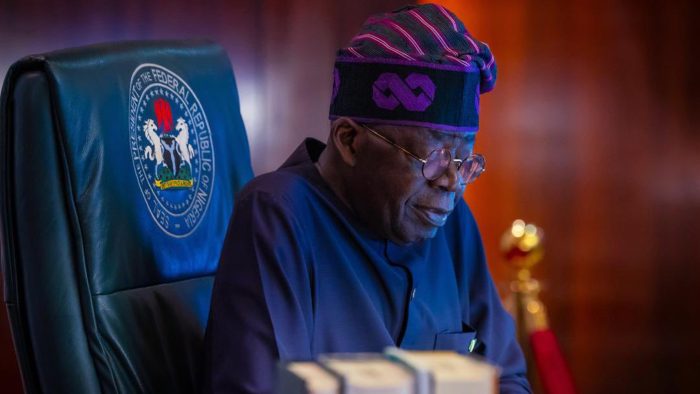
***Unveils The Nigerian Grand Book, urges Nigerians to draw lessons from history
President Bola Tinubu has described the Daily Times of Nigeria (DTN) as one of the defining chroniclers of Nigeria’s political, social and democratic evolution, saying the newspaper’s 100-year history mirrors the country’s own journey from colonial rule to modern democracy.

The President made the declaration, Thursday, in Abuja while delivering the keynote address at the DTN@100 Centenary Celebration, where he formally unveiled The Nigerian Grand Book, a compendium documenting significant personalities, events and milestones in Nigeria’s national development.
Represented by the Secretary to the Government of the Federation, Senator George Akume, Tinubu said the centenary of the Daily Times was not only a celebration of journalism but also an opportunity to reflect on Nigeria’s history and the forces that have shaped its development.
He said the newspaper had remained a witness to some of the most consequential moments in the nation’s history, from the colonial era and the struggle for independence to the birth of the Republic, nation-building and the evolution of contemporary democracy.
“Through the colonial era, the struggle for independence, the birth of our Republic, the challenges of nation-building and the transformations of our contemporary democracy, the pages of the Daily Times have captured the personalities, events and aspirations that have shaped our national journey,” the President said.
Tinubu described the newspaper’s 100 years of existence as “a testament to endurance, relevance and institutional resilience,” stressing that its archives constituted an important record of Nigeria’s national experience.
“It is a great honour and privilege to join you today as we celebrate a remarkable milestone in the history of Nigerian journalism, and indeed in the history of our nation, the centenary of the Daily Times of Nigeria,” he said.
The President said The Nigerian Grand Book was particularly significant because nations that fail to understand their history risk repeating past mistakes.
“A nation that forgets its history risks repeating its mistakes. But a nation that understands its history can draw wisdom from its successes, learn from its setbacks and confidently design its future,” he said.
He said the publication was also consistent with his administration’s philosophy of national renewal, arguing that Nigeria’s current challenges must be understood within the context of structural weaknesses that have accumulated over decades.
According to him, the task of rebuilding the country requires Nigerians to understand the past, confront the factors that have impeded development and make difficult but necessary choices about the future.
Tinubu said the reforms being implemented by his administration under the Renewed Hope Agenda were aimed at changing Nigeria’s development trajectory rather than merely introducing new policies.
“The reforms of the present administration are therefore not simply about changing policies; they are about changing the trajectory of our nation,” he said.
He listed the objectives of the reforms to include strengthening the country’s fiscal foundation, building a more productive economy, strengthening institutions, unlocking investment, improving infrastructure, expanding opportunities for young Nigerians and positioning Nigeria to compete more effectively in the global economy.
The President said history should serve as a tool for shaping the future, rather than merely preserving memories of the past.
“President Tinubu’s approach reminds us that history should not be a museum of yesterday. History should be an instrument for engineering tomorrow,” he said.
He commended The Nigerian Grand Book for providing an opportunity for Nigerians to tell their own story, celebrate individuals who have contributed to national progress and preserve institutional memory for future generations.
Tinubu also commended the DTN@100 Times Heroes Awards, describing the recognition of outstanding Nigerians as important to preserving the country’s collective memory.
“Nations are built by people,” he said, citing entrepreneurs who create jobs, farmers who feed communities, scientists who expand knowledge, public servants who uphold institutions, artists who enrich culture, innovators who solve problems and citizens who serve their communities. “Their achievements deserve to be remembered,” he said.
On national unity, the President reaffirmed the Federal Government’s commitment to strengthening national identity and social cohesion, describing Nigeria’s diversity as one of the country’s greatest assets.
“Our diversity is one of Nigeria’s greatest assets, and our history provides us with countless examples of what Nigerians can accomplish when our differences are transformed into strength rather than division,” he said.
He said the Renewed Hope Agenda was designed to build an economy that creates opportunities rather than dependency, institutions that command public confidence, infrastructure that connects communities and markets, and a society where every Nigerian can contribute to national prosperity.
Tinubu congratulated the leadership of the Daily Times, under Mr. Fidelis Anosike, and all those involved in producing The Nigerian Grand Book, describing their efforts as a “historic contribution to the preservation of our national heritage.”
He also acknowledged the enduring role of the media in national development, saying the Federal Government recognised the press not only as an instrument of information and accountability but also as a custodian of national memory.
“The Daily Times has fulfilled that responsibility for a century,” he said.
The President urged Nigerians to approach the next chapter of the country’s history with courage, unity, innovation and patriotism.
“As we unveil this remarkable compendium today, let us remember that the first hundred years of Nigeria’s story have been written; the next chapter is in our hands,” he said.
“May we write that chapter with courage, unity, innovation and patriotism. May the Nigeria of tomorrow be more prosperous, more secure, more competitive and more united than the Nigeria we inherited.”
He thereafter formally unveiled The Nigerian Grand Book and urged Nigerians, schools, libraries and institutions to embrace the publication as an important repository of the country’s history and national memory.

