 Follow Us on Google News
 Follow Us on Google Discover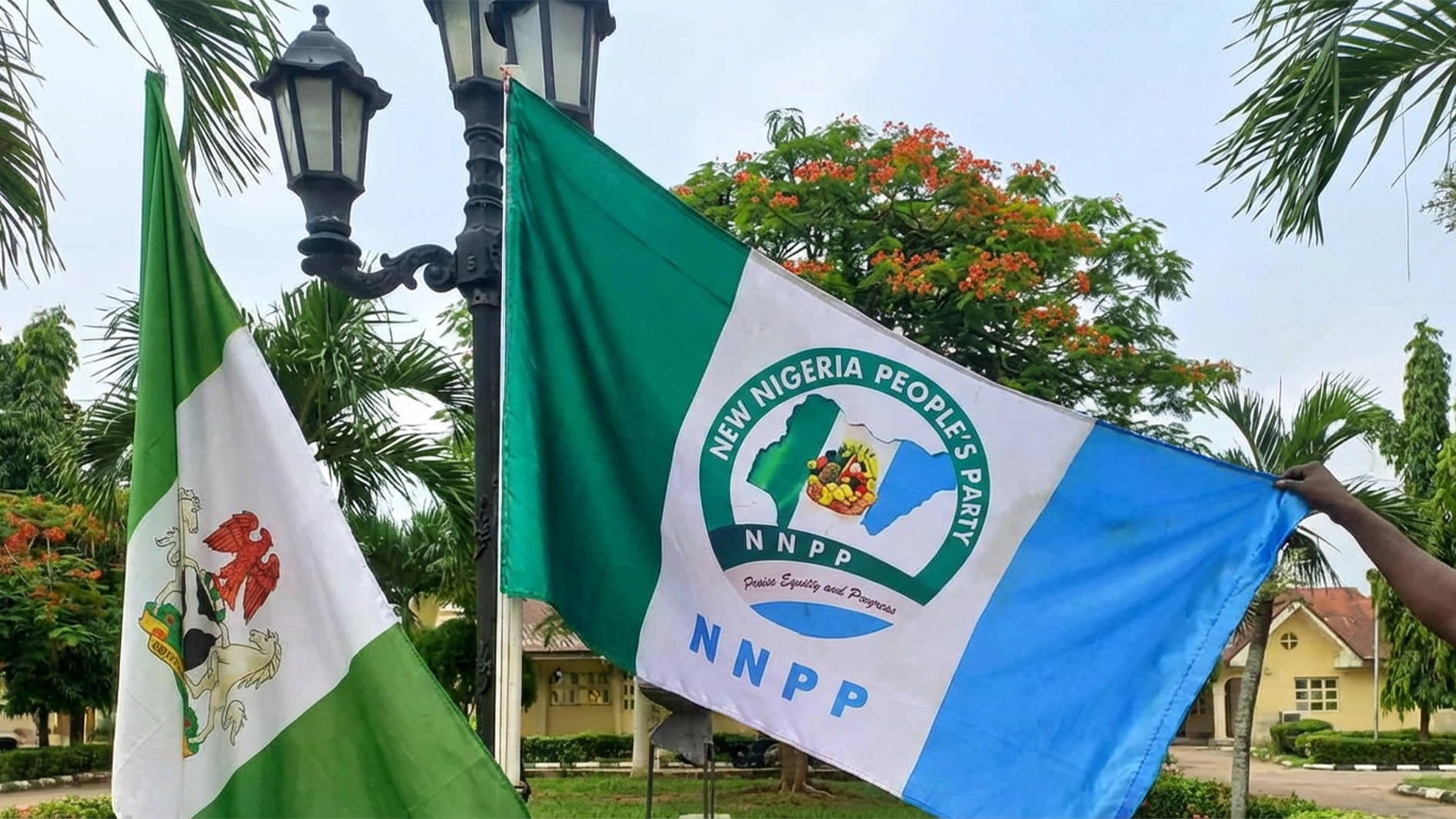
Fresh crisis has engulfed the Agbo Major-led New Nigeria People’s Party (NNPP) following the omission of its presidential candidate, Mr. Suleiman Mohammed Dikwa, from the final list of candidates released by the Independent National Electoral Commission (INEC) on Sunday.
Dikwa, who had earlier secured the party’s unanimous nomination and whose name was published on INEC’s provisional register, was conspicuously missing from the final publication, triggering widespread confusion, anger, and suspicion across party ranks.
Grassroots members and party delegates have mounted pressure on the national leadership to explain the candidate’s sudden disappearance from the ballot. However, the party hierarchy has ordered an immediate gag order.
Speaking to The Guardian, the Chairman of the NNPP State Chairmen’s Forum, Hon. Mamman Damisa, confirmed that internal investigations were underway but stated that state leaders had been instructed not to escalate the matter publicly.
Damisa said investigations are ongoing, and I have been directed to keep mute until this issue is resolved.” When asked whether the party leadership had deliberately initiated Dikwa’s withdrawal, he added: ” I cannot say yet, but I have been directed not to grant any interviews.”
Addressing the procedural rules governing candidate omission, a senior INEC official in Abuja clarified that the electoral body cannot unilaterally drop a validly nominated candidate.

“INEC cannot remove the name of a candidate without an official request for replacement submitted by the party or an explicit order from a court of competent jurisdiction,” the official noted, fueling speculation of clandestine internal maneuvering or legal disputes behind the scenes.
Efforts to reach Mr. Dikwa for comment were unsuccessful, as his lines remained unreachable and messages went unanswered.
The omission comes at a critical juncture when Dikwa’s presidential campaign had begun rattling the political establishment with an unprecedented policy agenda focused on systemic state restructuring, fiscal decentralization, and constitutional overhaul.
In a recent broadcast interview on KT 103.9 FM in Jos, Dikwa articulated an economic and governance doctrine that fundamentally breaks with conventional Nigerian party politics, warning that the centralized federation has become an unsustainable rentier state.
At the core of Dikwa’s manifesto is the dismantling of Abuja’s fiscal monopoly in favor of a bottom-up, polycentric development framework. Rather than maintaining centralized allocations where states and federal bureaucracies consume over 70 percent of national resources on recurrent overheads, Dikwa proposed a constitutional reallocation transferring 55 percent of federation revenue directly to the 774 Local Government Areas (LGAs).
Under this model, development priorities are determined from the bottom up by local communities rather than imposed top down by federal and state executives. Dikwa argued that because more than 80 million Nigerians depend directly on the rural economy, local councils must possess the sovereign liquidity to build infrastructure, secure local land, and foster productive municipal economies.
Complementing this fiscal devolution is a proposed structural return to regionalism and legislative rationalization. Dikwa advocated collapsing Nigeria’s costly bicameral National Assembly into a lean, unicameral parliament, redirecting trillions in legislative overhead into capital investments across regional economic blocs.
His policy blueprint also takes aim at Nigeria’s subsidy regime and security architecture. Rather than funding corrupt consumption subsidies or granting non-performing corporate tax waivers, Dikwa introduced the concept of “surplus subsidies”—directing state capital into agro-processing and local mineral beneficiation nodes to turn waste into captured wealth.
On escalating national insecurity, Dikwa insisted that kinetic military campaigns are structurally incapable of winning the war on terror and banditry if the economic vacuums in ungoverned spaces remain unaddressed.
His administration proposes securing the country through organized agro-ecological development corridors anchored to the Land Degradation Neutrality (LDN) framework. By replacing illicit rural shadow economies with managed agroforestry concessions, legitimate community wealth creation displaces criminal enterprise.
Dikwa grounded his reformist platform on a revitalized social contract, arguing that the Nigerian state cannot legitimately enforce coercive taxation while citizens receive zero return in security, sanitation, healthcare, and education.
As rank-and-file NNPP supporters await formal communication from the party headquarters, analysts note that the attempt to sideline Dikwa’s candidacy underscores the intense friction between entrenched political forces and his proposed revolutionary restructuring of the Nigerian federation.

