 Follow Us on Google News
 Follow Us on Google Discover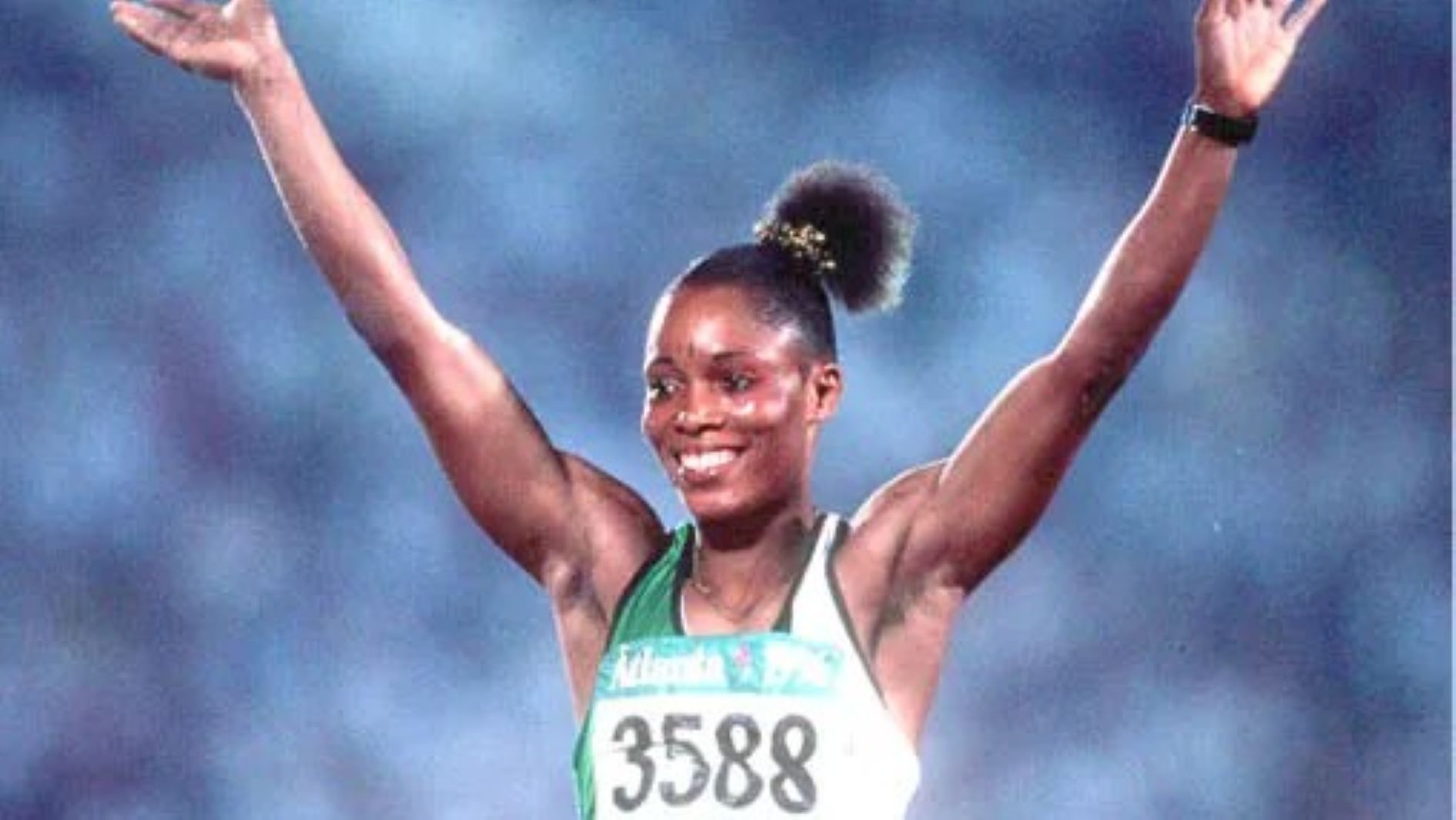
Nigeria’s military and paramilitary services have played major roles in the country’s sporting evolution, with stars from these agencies among the best performers in the country’s sporting history. However, those days of glory appear to be long gone as these agencies have taken the back seat. CHRISTIAN OKPARA reports that this development is hindering the sector’s growth.
As police woman, Chioma Ajunwa, stood on the long jump runway oblivious of the weight on her shoulders since she was not the favourite for the women’s long jump gold medal, the pressure to grab the gold was heavily on Italy’s Fiona May and the United States’ Jackie Joyner-Kersee, who, before the 1996 Summer Olympics, were the dominant figures in the sport.
But Ajunwa had a point to prove. Written off by even her compatriots due to her struggles before the Games, she knew that her legacy depended on whatever she did at the pits. And to the amazement of followers of the Games, she leapt so high in her first jump (7.2 meters) that nobody after that could get close to her as she took the gold medal. That feat on August 2, 1996, at the Atlanta Games was Nigeria’s first-ever gold medal at the Olympics.
That outing, which has been acknowledged as the country’s best-ever appearance at the Olympic Games, also included other military and para-military personnel who competed in other sports, including Sunday Bada, a police officer who, four years later, led Nigeria to its first track gold medal at the Sydney 2000 Games.
Apart from Ajunwa and Bada, Kikelomo Ajayi, another police officer, is one of the success stories of the women’s national football team, with a career that spanned more than 15 years defending the country’s honours on the pitch.
The legendary captain of the Super Falcons won five consecutive African Women’s Championships during her football career and also competed in multiple FIFA Women’s World Cups and Olympic Games.

In male football, Julius Aghahowa, a policeman, was a delight in his heydays as far as goal scoring was concerned.
Over the years up to the early 2000s, Nigeria had police officers and military personnel playing vital roles on and off the pitch as the country asserted its position as one of the world’s sporting nations. In the boxing ring, the police also made their mark when Samuel Peter emerged as the World Boxing Council (WBC) heavyweight champion in 2008.
In fact, Nigeria’s first-ever international gold medal in a major sports competition was won by a soldier, high jumper, Emmanuel Ifeajuna, at the 1954 British Empire and Commonwealth Games in Vancouver, Canada.
But since the turn of the century, the country’s police and the armed forces have, seemingly, lost their place in the country’s sporting milieu.
This, according to stakeholders, is unfortunate because the security agencies have the numbers in trained personnel, good facilities in their barracks, disciplined officers, an established tradition in physical training, and the power of government fiat to get things done with military precision without any bureaucratic bottlenecks to worry about.
Looking back on the glorious days of the military in sports, former Green Eagles Captain, Segun Odegbami, said that the military offered gifted young Nigerian athletes incentives to join any of the armed forces, become soldiers, and compete for the military.
He said that many of the athletes were NCOs (non-commissioned officers) and represented the country, enjoying the benefits of two careers – sports and the military.
“The years from shortly before the Nigerian Civil War and for about two decades after, were glorious years for Nigerian sports with the military and para-military in the driver’s seat. The memories of that time have become nostalgic.
“The military also produced several outstanding athletes that represented Nigeria at major international events, including the African Cup of Nations in football, the All-African Games, the Commonwealth Games, the Olympics and the World Military Games.”
According to Odegbami, among the outstanding athletes were Major Emmanuel Ifeajuna; Alfred Bell (Navy); Colonel Jaiye Abidoye; Kola Abdullahi (Air Force); Edward Akika (Air Force); Major Tunde Panox; Green Eagles stars, Warrant Officer (WO) Inua Lawal Rigogo, WO Olusegun Olumodeji, WO Samuel Opone, Sergeant Kadiri Ikhana, WO Emmanuel Tetteh and Colonel Taiwo Ogunjobi. There were also the legendary long-distance runners, Abass Mohammed and Yohanna Waziri; Rufus Ejele; WO Ganiyu Salami; WO Kenneth Olayombo; WO Eyo Essien; Sergeant Emmanuel Obasuyi (1001) and others, all former national team footballers.
“Disciplined service personnel provided the cutting edge as well as ready platforms needed for optimum physical and mental development of athletes. They had the institutions in place that became excellent breeding grounds for athletes across most sports in Nigeria, from even before Independence in 1960.”
He said that things began to change when civilians took over government, and the military retired to their barracks in the late 1990s, “leaving a vacuum in the relationship that blunted the very important roles the military can continue to play in national sports development even in a civilian dispensation.
“Today, the military clubs, the facilities the military put at the disposition of national associations, and their highly trained personnel have left the sports space, and their presence as part of various sports associations has reduced to a trickle. The result is a big hole in sports development.
“Any sports reforms must include a careful reabsorption of this crucial demography into new sports development architecture. Nigerian sports must return to forgotten or neglected pages in Nigeria’s sports history, dust them up, learn from them, and chart a new path into a great future in sports, once again.”
Retired soldier, Pius Anuna, who said that he played alongside such great legends as Chris Udemezue in the 1960s, said that the military started losing its place in the mainstream sports when the civilians decided to neglect the forces in the scheme of things.
He said: “In the early days, just after independence, we had the Green Berets and the Police Machine, which were the army and police football teams respectively across the major cities of the country. Scouts scouted talents from these teams and other military games that were held periodically in all the regions.
“Then, we had such dedicated sports officials who paid genuine attention to talent discovery and nurturing without looking at ethnicity or what they would make personally from the sport. Then, no talent, no matter the formation he was found in, was left untapped. But now the quest for money and other considerations that do not help the country have ruined everything.”
He said that the National Sports Commission (NSC) and the various sports federations must bring back the forces into sports by liaising with the various physical and health officers in the Army, Navy, Air Force, Police and the other para-military agencies to get the best of the sportsmen and women in these organisations.
“There are still many Chioma Ajunwas, Sunday Badas, Tony Igwes, Anunas and Abbas Mohammeds in the police and the army. All we need to do is look for them; we will find them.”
The Director of Naval Information, Captain Abiodun Folorunsho, does not agree that the Nigerian military has taken the back seat in the country’s sports development. Rather, he said that the security forces were at the forefront in the efforts to reposition the sports sector, pointing to the Navy’s various interventions to buttress his point.
He said: “The Nigerian Navy is more or less sponsoring the swimming federation. The shooting federation that was comatose has been reformed by a naval commodore. I think at the last count, they’ve done almost three championships since this year.
“If you follow the news, you’ll see that the Chief of Naval Staff Spikers won the Volleyball Super Cup. In fact, there’s a Customs Championship coming up in October, which the team is already preparing. One of our referees, Abdullateef Busari, was the only Nigerian selected to officiate at the CAVB U-18 Volleyball Championship held in Tunisia.”
He said that the Nigerian Navy has not been courting the limelight, but that does not mean that it has taken the back seat in the country’s sports development. “But the truth is that with the insurgency and terrorism, you know, we are not coming all out to pay the required attention to sports. But we are still there among the top organisations contributing to Nigeria’s sports development.”
For the Police Sports Spokesperson, SP Atabor Job, the force has continued to pull its weight in Nigeria’s sports development since the exit of Ajunwa-Opara and the Late Bada from the scene.
Job said that the problem affecting the country’s sports development cuts across all facets of society, adding that even then, the police have done great things in the midst of such problems.
“Though Nigeria has not been able to win another gold medal individually at the Olympics for the past 26 years, following those of Ajunwa-Opara in Atlanta 96, and Late SP Bada and team in Sydney 2000, but the Police sports is working assiduously to renew Olympic medal successes.”
He recalled that only recently, Corporal Ezekiel Nathaniel made Nigeria proud at the Commonwealth Games in Glasgow, winning a gold and a bronze medal.
Also, at the Africa Games in Ghana – Accra 2024, Police athletes contributed immensely to Nigeria coming second overall after Egypt. The best Nigerian swimmers, male and female, are police officers, namely Corporal Collins Obi and Corporal Dorcas Eworo. Our volleyball teams are preparing for the next phase of the National Premier League.
Blaming scarce resources for the NPF’s inability to break new grounds in sports, he said: “If we were lucky to have the kind of funding that they have in Europe for events like the UEFA Champions League or the World Cup, for instance, we would be able to do all that and reproduce many Olympic gold medallists and others.”

