 Follow Us on Google News
 Follow Us on Google Discover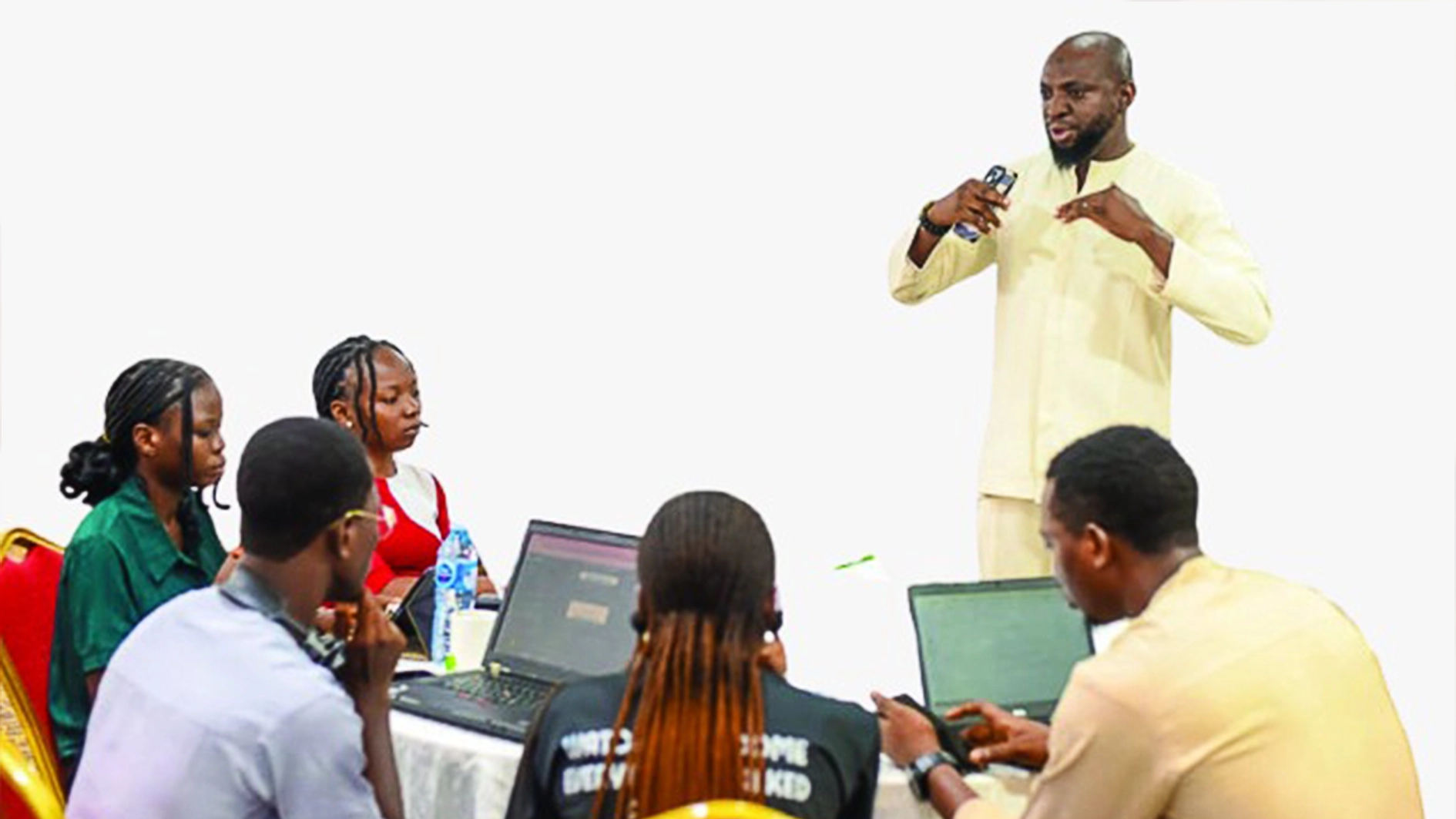
Ahead of the 2027 general elections, members of the Fundación para la Internacionalización de las Administraciones Públicas (FIAP), through its implementing partner FactCheckAfrica, in collaboration with Wikimedia Nigeria, have stressed need for journalists, newsroom editors and fact-checkers to counter mis-information disinformation and mal-information. They stated this at a three-day interactive media seminar held in Lagos.
In recent times, FIAP has expressed concern over growing impact of digital technologies, social media and Artificial Intelligence (AI) on electoral integrity, public trust and democratic participation in the country and West Africa.
Objectives of the seminar include, straightening the capacity of journalists, Wikipedia editors, newsroom editors and fact checkers to use Wikimedia platforms as tools for countering disinformation and fake news; building a shared cross-professional workflow through daily group work and presentation, seeding a coordinated response for the 2027 electoral cycle; producing high quality Wikimedia content on information disorder, media literacy, counter disinformation efforts and fact checking frameworks and concepts rather than individual political figures and introducing the newsroom template for integration of verified content and the quick guide for sensitive interviews, as durable resources for post-training use.
In his speech, Founder of FactCheckAfrica, Abideen Olasupo, described electoral integrity as an information integrity challenge.
To him, “citizens need access to information that is accurate, verifiable and presented with sufficient context to understand the issues that affect their democratic choices. This training brought together fact-checkers, journalists and Wikimedia editors because each plays a different but important role in the information ecosystem. The immediate outputs from the edit-a-thon show that participants not only learned about information integrity; they applied those lessons to improve the accuracy, sourcing and coverage of election-related information on Wikipedia.”
The seminar combined training on information integrity, fact-checking, source verification, digital investigation and open-source information verification with a practical Wikipedia edit-a-thon that enabled participants to apply these skills to election-related and public-interest content.

Over the three days, participants rigorously dissected fundamentals of information disorder and its implications for democratic participation and peaceful elections. They also examined practical approaches to assessing sources, verifying claims, conducting digital investigations, and identifying reliable evidence that can support accurate public-interest content.
The Wikimedia-focused sessions introduced participants to the principles and practical requirements for developing reliable and neutrally written Wikipedia content. Participants examined sourcing, citation, neutrality, and the importance of independently assessing evidence before incorporating information into Wikipedia articles.
Participants were also introduced to the FactCheckAfrica corpus and explored how verified fact-checks can help identify recurring narratives, information gaps and areas of public knowledge requiring further documentation.
The edit-a-thon generated immediate outputs across Wikipedia and Wikimedia Commons, with seven new articles created, 52 articles edited, and 296 total edits recorded during the programme.
Participants added approximately 17,400 words and 170 references to Wikipedia articles, alongside nine uploads to Wikimedia Commons, three of which were used in articles.
The immediate outputs recorded through the Wikimedia Outreach Dashboard show that the seminar generated six new articles and 52 edited articles, with participants making 296 total edits. The participating editors added an estimated 17,400 words and 170 references to Wikipedia articles.
The dashboard also records nine Commons uploads, with three files subsequently used in articles.
Articles edited during the programme included 2027 Nigerian general election, 2026 Osun State gubernatorial election, 2026 Ekiti State gubernatorial election, 2019 Nigerian general election, Independent National Electoral Commission (Nigeria), Bimodal Voter Accreditation System, INEC Result Viewing Portal (IReV), among others.
The 2027 general election article received an estimated 2,938 words and 35 references, while the 2026 Osun State gubernatorial election article received 1,099 words and 11 references. The Independent National Electoral Commission (Nigeria) article received 1,347 words and nine references, while the Bimodal Voter Accreditation System article received 1,343 words and 11 references during the programme period.
New articles were also created on topics including BVAS, the INEC Result Viewing Portal (IReV), Permanent Voter’s Card and other subjects identified as relevant to Nigeria’s electoral information ecosystem.
The Lagos seminar is the first of two regional cycles under the activity. The second cycle is scheduled to take place in Abuja later this month.
Across the two regional cycles, the activity is expected to engage 70 participants and support the development of practical resources and outputs focused on electoral information integrity, including an electoral-integrity article target list, a Wikimedia editing guide and a portfolio of improved and newly created Wikipedia articles.
The seminar forms part of Activity 3.1.5a(7)ii titled, ‘Wikimedia for Electoral Integrity: Strengthening Wikimedia Editors’ Capacity to Counter Disinformation in Nigeria, under Thematic Area 1: Mis/Disinformation, Fact-checking and AI Learning of the EU Support to ECOWAS in Peace, Security and Governance (EPSG) Project.
This activity is organised by FIAP in collaboration with FactCheckAfrica, under the framework of the EU Support to ECOWAS in Peace, Security and Governance (EPSG) Project.
FIAP is the Spanish Cooperation institution specialised in promoting the participation of public administrations in international cooperation programmes. Operating in more than 120 countries, FIAP mobilises public sector expertise to strengthen public institutions, democratic governance, and sustainable development through peer-to-peer cooperation.
Within the EPSG Project, FIAP contributes to efforts to strengthen democratic governance, peace and security through initiatives addressing electoral integrity, information disorder, civic participation and the prevention of electoral violence.
The EU Support to ECOWAS in Peace, Security and Governance (EPSG) Project is a multi-donor initiative designed to strengthen peace, democratic governance and regional stability within ECOWAS member states. The project is supported by the European Union (EU), the German Federal Ministry for Economic Cooperation and Development (BMZ), and the Ministry of Foreign Affairs of Denmark (MOFA), and is jointly implemented by GIZ, Expertise France, and FIAP.

