 Follow Us on Google News
 Follow Us on Google Discover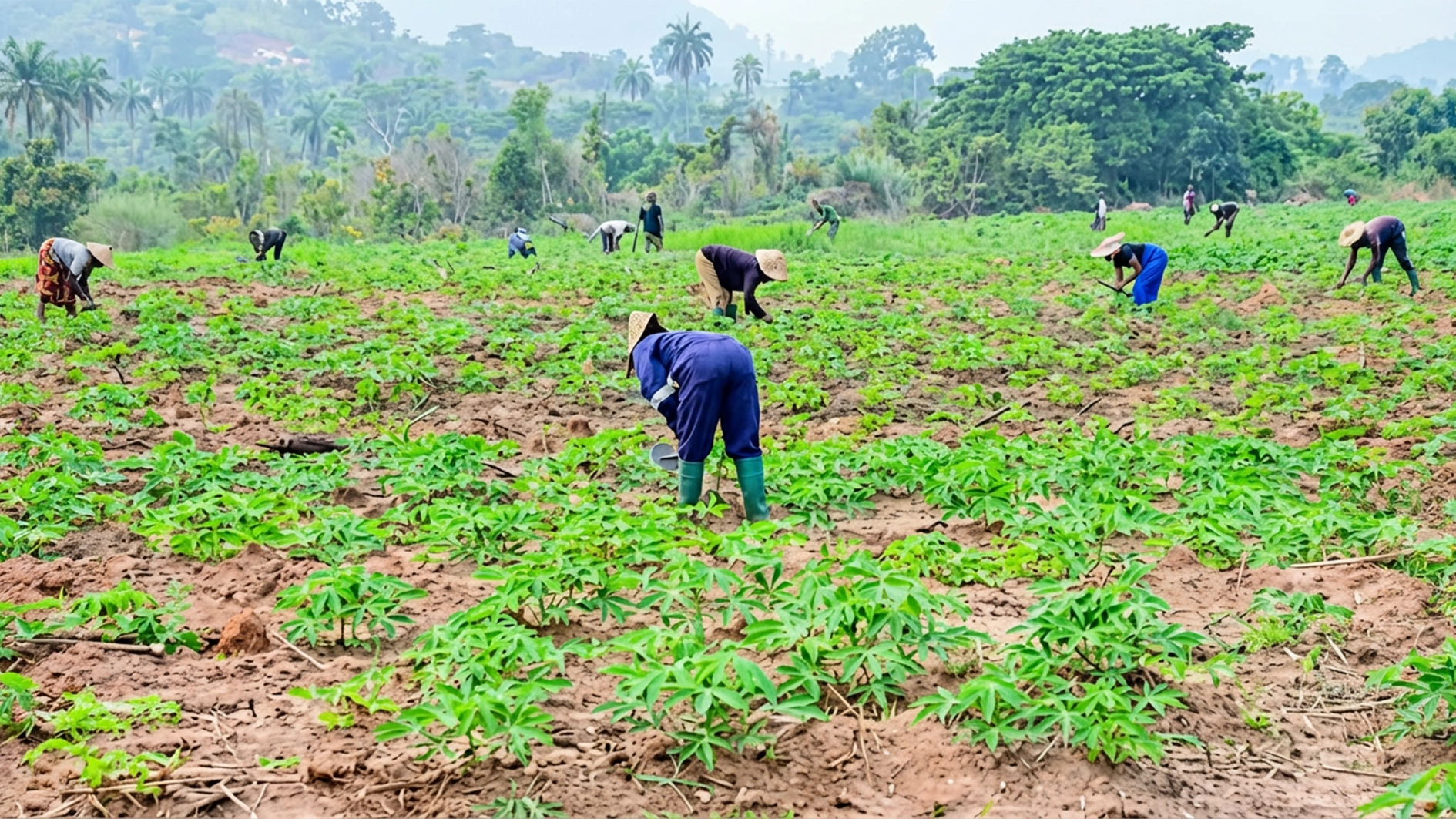
Smallholder women farmers in Oyo State have called for increased investment in agriculture and improved budget implementation, saying adequate funding and concrete government support are critical to strengthening food security in the state.
The call was made at the Oyo State Campaign on Accelerating Women Farmers’ Impact Towards Food Security and a press briefing organised by the Small-Scale Women Farmers Organisation in Nigeria (SWOFON), with the theme, “Women Farmers’ Voice to Action,” at Koltol Hotel and Suites, Agodi GRA, Ibadan.
Addressing journalists, the Oyo State Coordinator of SWOFON, Mrs. Tinuke Akinbade, said despite the critical role played by women farmers in food production and rural livelihoods, investment in agriculture remained inadequate.
Akinbade cited the IBP-SWOFON SPARK II Policy Brief, which showed that between 2021 and 2025, agriculture’s share of Oyo State budgets never exceeded 4.31 per cent, while agricultural capital budget execution averaged 17.5 per cent.
She said the execution rate was the weakest among the five states assessed under the programme.
According to her, women farmers had consistently engaged the government and developed a 10-point Charter of Demands, but their priorities had not translated into corresponding budgetary allocations and implementation.

“Receiving women farmers’ demands is not enough. Government must demonstrate how those demands are reflected in budget lines, how much is allocated, when funds are released, and what is ultimately delivered to farmers,” she said.
Akinbade urged Governor ‘Seyi Makinde, the Oyo State House of Assembly and relevant ministries, departments and agencies to increase and protect agricultural investments and ensure timely and transparent release of approved capital budgets.
She also called for the identification of three to five priority demands of women farmers annually and their conversion into cost and traceable budget commitments with clear implementation timelines.
The SWOFON coordinator also advocated the institutionalisation of women’s participation in state and local government agricultural planning and budgeting, improved access to land, and the publication of information on agricultural budget allocations, releases, expenditure, procurement and beneficiaries.
She urged the government to strengthen agricultural services beyond the distribution of inputs to include extension services, irrigation, storage, processing, transportation, aggregation and access to reliable markets.
“Investment should go beyond the distribution of inputs. Women farmers need access to extension services, irrigation, storage, processing, transportation, aggregation and reliable markets so that increased production can translate into improved incomes,” she said.
Speaking at the event, the Head of Democracy and Governance Programme, Justice, Development and Peace Commission (JDPC), Ibadan, Mr Jide Bamgbose, decried poor budgetary allocation and performance in the agricultural sector, warning of implications for food security.
Bamgbose said agriculture, particularly at the state level, continued to receive inadequate budgetary attention, with governments often prioritising infrastructure such as road construction over agriculture, education and health.
He also criticised poor budget implementation, saying little of the funds allocated to agriculture was available for capital investment in irrigation, farm inputs and other infrastructure required to support year-round farming.
He advocated increased agricultural funding, suggesting that governments should allocate between 10 and 12.5 per cent of their budgets to agriculture, with 75 to 80 per cent of the allocation directed towards capital investment.
Bamgbose said farmers were increasingly recording losses and becoming discouraged from farming because of rising production costs and poor returns.
He cited the cassava sector, where he said some farmers spending between N100,000 and N200,000 to cultivate an acre were selling their produce for between N15,000 and N20,000.
“If you see what is happening in the cassava sector today, you will pity farmers. Do you think he will go back to the farm? He will not,” he said.
Also speaking, a farmer, Adebukola Adekola, called on governments at all levels to support smallholder farmers with land, inputs, credit and storage facilities to prevent worsening food insecurity.
Adekola, who described herself as a farmer driven by food security and youth employment, said many young Nigerians had entered agriculture with enthusiasm and financial resources but struggled because of multiple challenges.
She identified climate change, poor rainfall, land degradation, bacterial and fungal infections and unreliable seeds from untrusted sources among the challenges confronting farmers.
Adekola also identified government policies and instability in governance as major challenges affecting agricultural development.
She said bureaucracy had made it difficult for farmer organisations to access government facilities and interventions for their members.
Other participants at the event raised concerns over inadequate processing and storage facilities, high input costs and low prices of farm produce, saying the challenges were discouraging young people from taking up farming.
They called on the government to move beyond verbal commitments and provide concrete support, including land allocation, subsidised inputs, credit facilities, storage and processing centres.
One of the participants said food security could not be achieved without coordinated support for farmers, urging the government to provide the necessary resources from land and inputs to credit, storage and processing facilities.
The stakeholders also called for greater attention to the autonomy and functionality of local governments to enable them to play a more effective role in agricultural development.
The event was attended by representatives of the Oyo State Ministry of Agriculture, Ministry of Environment and Natural Resources, Oyo State Agribusiness Development Agency (OYSADA), development partners, civil society organisations and women farmers

