 Follow Us on Google News
 Follow Us on Google Discover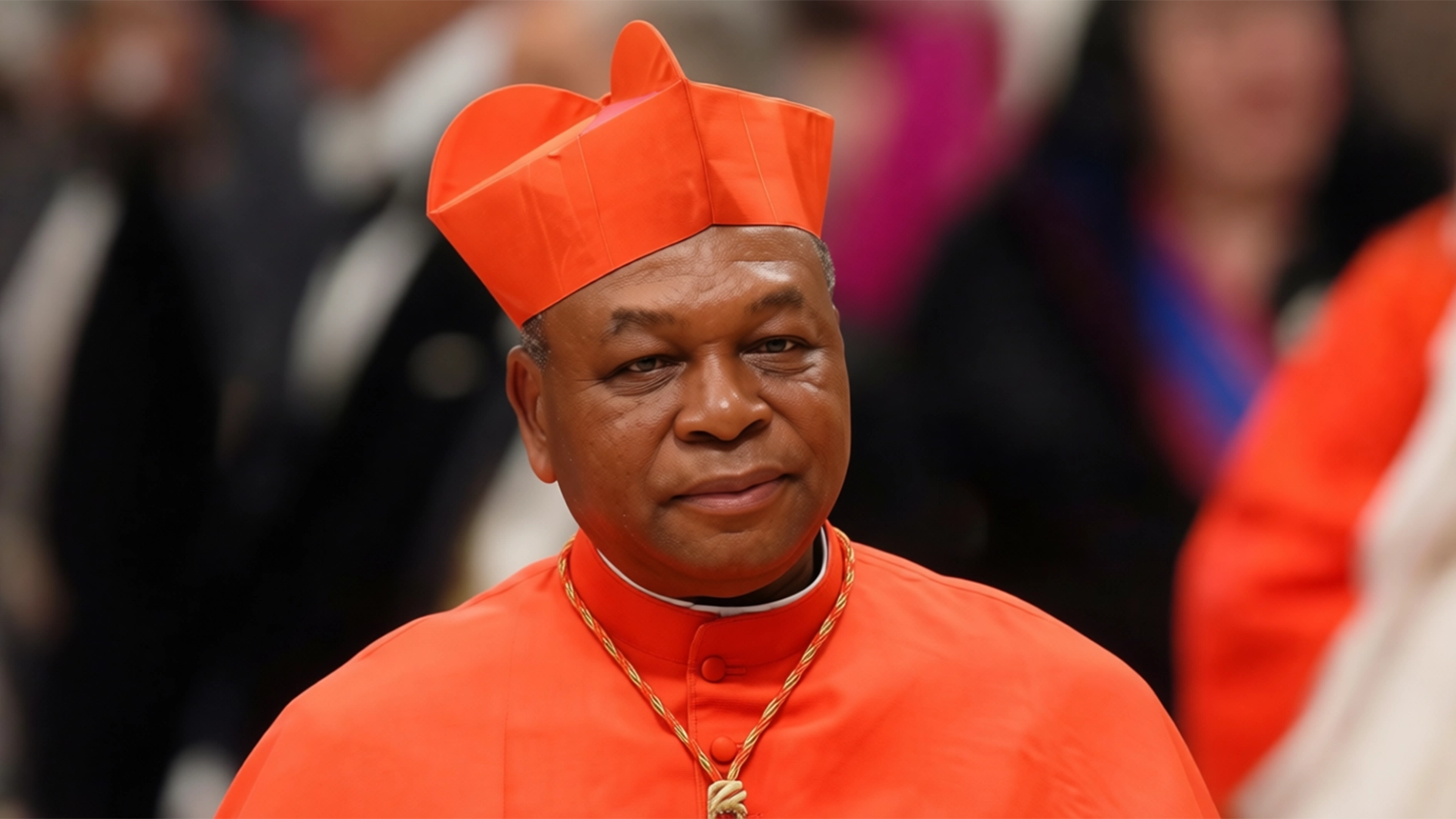
Former Archbishop of the Catholic Diocese of Abuja, John Cardinal Onaiyekan has lamented the retrogression that has bedeviled the quality of elections in the country, stressing that Nigeria has continued to witness poor elections since 1999.
He stated however that President Bola Tinubu has assured the independence of the Independent National Electoral Commission (INEC) in executing the 2027 General Elections, saying that Nigerians are now looking on the commission to “provide the change”.
He spoke as Vice President, Kashim Shettima said that the reforms of President Tinubu’s administration had required difficult choices, expressing the hope however that the country was beginning to see encouraging signs.
He therefore, charged the media to while scrutinising the government to also continue to tell the full story of the progress being made by the administration.
Both men spoke in Enugu on Thursday at the 22nd All Nigerian Editors Conference with the theme: “The Ballot, the Media and the task of keeping democracy alive”. The event was organised by the Nigerian Guild of Editors (NGE)
Onaiyekan, who traced the history of democracy, stated that though the majority part of it had been dominated by the military, activities of the electoral stakeholders had continued to contribute to its poor delivery and inability to meet the needed expectations.

He said: “Elections are meant to choose leaders at all levels and to assess their performance. In Nigeria, our elections are guided by laws, by the constitution of the Federal Republic of Nigeria, by the electoral laws that have been passed by the National Assembly and also by INEC rules and regulations. The purpose is to ensure free, fair and credible elections, to make sure that the will of the people is correctly ascertained. We must insist on the primary position of the people who cast their votes.
“Electoral institutions are umpires that conduct elections among candidates who contest. The candidates present themselves to be voted for, and for this reason, their role is passive, not like the role of the people who cast the votes. Political parties are very important in Nigeria because, by our own law as of now, it is a necessary vehicle for political contest. Political parties are generally driven by political ideologies, which they present to the people as options for their choice in the elections.
“In Nigeria, we have had several elections since 1999. It is difficult to believe that we have been making progress. In fact, it seems that the quality of the elections has been reducing from one election to the other, and this is not good news at all”.
He identified the attitude of “do-or-die, to win at all costs”, among politicians, poor implementation of constitutional provisions such as Federal Character and State of Origin, the growing system of zoning as cause of great concern to democracy, stressing that it had promoted elite rivalry than for the good of the people at the grass roots in the zones.
He added that INEC, has its own issues and problems, mainly “because it is set up by government and controlled by the government”.
“The INEC is supposed to be independent by definition, Independent National Electoral Commission. But it is doubtful how independent it is or can be. And this is linked also to how transparently it can perform. INEC is often under pressure from politicians who try to force it to play in their favour. But when the politicians are themselves the government in power, it becomes very problematic for INEC to be truly independent and transparent.
“Another issue is the challenge of government neutrality during elections. We often hear about the factor of incumbency during elections. Regimes in. power at both national and state levels have found it difficult to allow a level-playing field for other political contestants with whom they are competing. State resources are blatantly captured and deployed for partisan political activities, with little or no qualms. We see this when a state governor can boast of delivering 100% of the votes in his state to his preferred presidential candidate. If it is a joke, it is very bad taste. Where is the freedom of the people of the state to vote according to their individual consciences? Or does the governor intend to vote for everybody in his state?
“We must also raise concern about the security agencies, which are supposed to secure the environment and give people the space to freely cast their votes. They are supposed to work with professionalism, no intimidation, no harassment of the people. But when security agents, with their paraphernalia of force, are all over the place with sirens blaring everywhere, people are intimidated and many are even afraid to come out to vote. The overwhelming presence of security agents during elections is not a good thing for our nation”, he further said
He advocated an improved legal framework for elections, saying that even with “our deficient electoral laws, we can still conduct free, fair, and credible elections if the rules are followed with sincerity of purpose”
He said that a free press was necessary for a genuine democracy and urged a special election tribunal whose duty would be to do nothing else but to settle all election cases with minimum delay to help the country’s democracy.
Vice President Shettima charged the media with the responsibility to ensure that ballot gives citizens a voice, saying such can only be meaningful when citizens have access to credible information on which to make their choices.
“The media has earned its place as the fourth estate of the realm because it performs a duty that no democracy can do without. You interrogate power, inform citizens, shape public debate and preserve the institutional memory of our nation. Nigeria’s democratic journey owes much to journalists and editors who, sometimes at considerable personal cost, insisted that the public deserved to know.
“That responsibility has become even more demanding in the age of artificial intelligence. Your sub-theme, “When Lies Look Real: Detecting and Debunking AI Disinformation Before, During and After Election,” speaks directly to one of the defining challenges of our time. When technology can manufacture convincing falsehoods at unprecedented speed, professional journalism becomes more important, not less. The editor remains a crucial gatekeeper between information and manipulation”, he said
He added that Nigeria’s economy grew by 4.43 per cent in the second quarter of 2026, compared with 4.23 per cent in the corresponding quarter of 2025, with growth recorded across agriculture, manufacturing, oil and gas, and services.
“These numbers give us reason for confidence, but not for complacency. President Tinubu’s objective is clear: macroeconomic stability must translate into jobs, stronger businesses, greater purchasing power and a better quality of life for Nigerians. That work continues, and we are confident that, with sustained reforms, the trajectory can only get better”, he added
Chairman of the occasion and Obi of Onitsha, Igwe Alfred Achebe urged the conference to work against the erosion of truth in public life.
“Let Enugu, a city that has known its own share of history’s turbulence and resilience, be remembered as the place where Nigeria’s editors resolved to defend the ballot from the lie, and the citizen from deception dressed as fact”, he said
He said the ballot is the citizen’s voice, adding that the media is the mirror by which that citizen sees the world clearly enough to know what to say with that voice.
“When the mirror is cracked, or worse, deliberately distorted, the citizen no longer votes from truth but votes from illusion. And a democracy built on illusion is not genuine democracy but drama. It becomes a theatre.
“We are living through a transformation as profound as the invention of the printing press, and perhaps more dangerous. For centuries, falsehood required a human liar, someone who had to look you in the eye, construct a story, and hope you believed it.
” Today, falsehood can be manufactured by machines in seconds, with a persuasiveness that mimics truth so precisely that even trained eyes struggle to tell the difference. A voice that sounds exactly like a governor can now say something that the governor never said. A video can show a candidate in a place he never was, an image can depict violence that never occurred, timed precisely to inflame passions on the eve of an election”, he stated
Enugu State Governor, Peter Mbah sought constructive relationship between government and media, saying that the media should see government as partners in process.
Explaining that the two institutions should not be adversary, he said that both serves the Nigerian people.
He said that government has a responsibility to be accountable and transparent while journalists must establish facts and report the truth. He urged journalists to deepen investigative journalism and refuse sensetionalism.
He charged Editors to independently examine his administrations claim in the quest to transform Enugu into an economic gateway for the southeast region.
President of the Nigerian Guild of Editors, Mr Eze Anaba said the conference was convened at a critical period as Nigeria approaches another election cycle.
He said that credible information was essential to enable citizens make, free, critical and informed choices.
Anaba, urged Editors to uphold independence, fairness, accuracy and courage in their duties, despite the economic pressures confronting the industry.

