 Follow Us on Google News
 Follow Us on Google Discover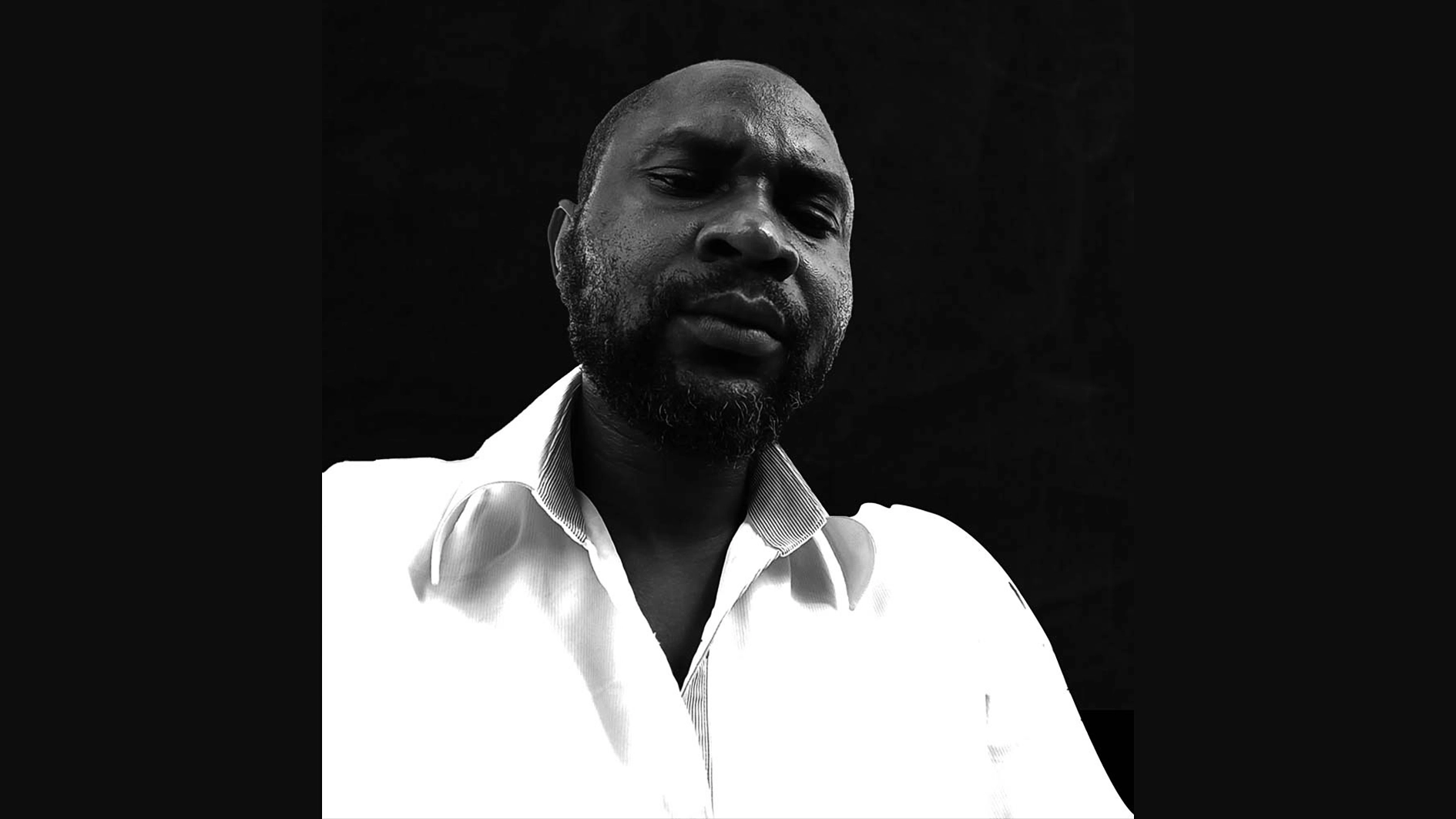
Feeling anxious before the announcement of prize winner is normal. However, pre-competition nerves can become excessive to the point of having a detrimental effect on performance. But not, for this writer, Tares Oburumu. He is positive about the award.
He had the opportunity to share his experience this afternoon when he and his co-finalists—Ogaga Ifowodo and James Eze—spoke with some literary journalists on the 2026 Nigeria Prize for Literature. The interview session was organised by NLNG.
Oburumu, who lives in Yenagoa, the south side of the Niger Delta region of Nigeria, is one of the 2026 Nigeria Prize for Literature finalist. He has won the Green Author Prize for poetry. He was paddling a canoe when he came upon a signboard that said: Syma.
Oburumu’s manuscript from that encounter, origins of the syma species, won the 2022 Sillerman First Book Prize for African Poets. He received $1,000 and the publication of his manuscript by the University of Nebraska Press, as part of its African Poetry Book Fund Series.
Praising the poems, one of the judges, Phillippa Yaa de Villiers, said that they “conjure an intimacy which draws the reader below the surface of the known world ‘where curiosity animates.’”
In his new collection of poems, titled, Flora’s Love Colony, which was shortlisted for the 2026 Nigeria Prize for Literature, you’d wonder how Oburumu captured Nigeria’s history in a poetic manner. How did he manage to turn lovers’ gist into fine poetry?
“I am one of those who believe that writing involves not just imagination, but also your lived experience,” Oburumu said aloud in the room filled by media men.
He added, “when you write about someone else’s lived experience, you don’t just imagine it—you have to make it your own. There must be a place for empathy when you write. When writing a story that is not yours, you acknowledge that it is not yours, but you try to inhabit the experience that the person or event embodied.”
T
he book is naming and the events that followed. A projection, which many still as a misjudgement on the part of the colonisers, who defined the people merely by geography. Beneath that simple act of naming, there was a false hope and a deliberate blueprint to perpetuate control.
The shy writer whose mind focused on the prize said, “It was a very tedious, tortuous journey moving from imagination to paper—from history to a slim collection of poems. Yet I was able to say a great deal about the history of Nigeria. It started with research and a few pieces of information, which I put onto paper.”
He started by concrete imagination. He thought of what Flora was like, what Lugard was like, and how they came about naming Nigeria. What they were thinking in that moment of passion. Thereafter, he began asking himself questions. “They were concrete questions about how it was done—living inside their minds to understand, even in a small measure, how they thought when they named the country. Through that perspective, and with the limited information I gathered, I wrote most of the poems in the collection. It was a tortuous journey, but I had to try,” Oburumu quipped.
For him, poetry, was the best option at that time to put the history of Nigeria into a book. “And because I’d seen that in the literary world, particularly the Nigerian side of the perspective, this history hasn’t been recorded in art form, I decided to write Flora’s Love Colony.”
Oburumu had to carry out research to make his work believable, but he faced a challenge: access to books— “I don’t even have a library, which is something I hanker for—when I decided to write it, the initial point of entry was research,” he admitted.
Oburumu then came across a very slim publication online— he Googled it—a slim paper that Flora edited. And he found out that Flora was childless.
“During the period when the name was given, as I said earlier, there was no consultation. So, I kept asking: where were the historians of the country back then when the name was given? I needed books and thorough research, and this research led me into many things that were not previously known to me or others.”
Since he lacked access to extensive books, when he got hold of that little bit of information, he had to work with it. “It was challenging, but I had no alternative. So I made do with that text.”
That single source broadened his horizons regarding what he wanted to write, eventhough it didn’t offer a wide range of expansive knowledge.
“The information I gathered broadened my perspective, and I began to imagine,” he breathed with confidence.“So, I would say my book came from a little research combined with a wide imagination.”
One of the thematic focus in the volume is the dysphoria of postcolonialism, how Nigeria has failed woefully as a nation despite her promises and potentials.
It started from 1914, when the country was amalgamated. “But before then, we had the slave trade, which is also in Nigerian history. It started with the slave trade, starting from pre-colonial times. It is a little bit like the origin, an original history of Nigeria. But it’s not the only story of Nigeria’s history. I think long before we became Nigerians, we were a people. There must be a link, a lacuna—a linkage between when the colonial masters invaded us and the time when we were innocent, ruled by our kings. The society was well-structured, so to speak. So there must be a missing link between then and when the colonial masters invaded us.”
He revealed, “the message is simple: we continue to be deeply influenced by the British Empire long after its departure. This influence manifests in how we dress, how we speak our native languages, our habits, and our preference for foreign goods.”
Oburumu said, “I am trying to send a message to Nigerians that we are long overdue for mental emancipation. We are long overdue to reconnect with our origins and reclaim our individual and collective identities. Ultimately, it is about the past, present, and future—and what we must do to liberate ourselves from residual British influence.”
Growing up in a polygamous family under difficult financial circumstances, buying books was not a priority. When he was around 14 and in primary school, he started looking for libraries in his area, but there were none.
“I was only exposed to books at the age of 14—a time when many children have already read extensively. I was not fortunate enough to have early access to literature, and holding a physical paperback book came late for me,” he con fessed.
“Eventually, I came across a small cupboard containing a few books. That was where I discovered Treasure Island, Chinua Achebe’s Chike and the River, and Charles Dickens’ Oliver Twist. Those books captivated me and drew me into the world of reading,” he said.
Looking back now at his community,he sees that many of the children still lack access to books. They live through the same conditions he experienced at their age. So, he wins this prize, his “goal is to build a community library where children can read freely.”
His works have appeared in Connotation Press, Bluepepper, Woven Tales Press, Afrocritik, and Eunoia Review, among many other journals.

