 Follow Us on Google News
 Follow Us on Google Discover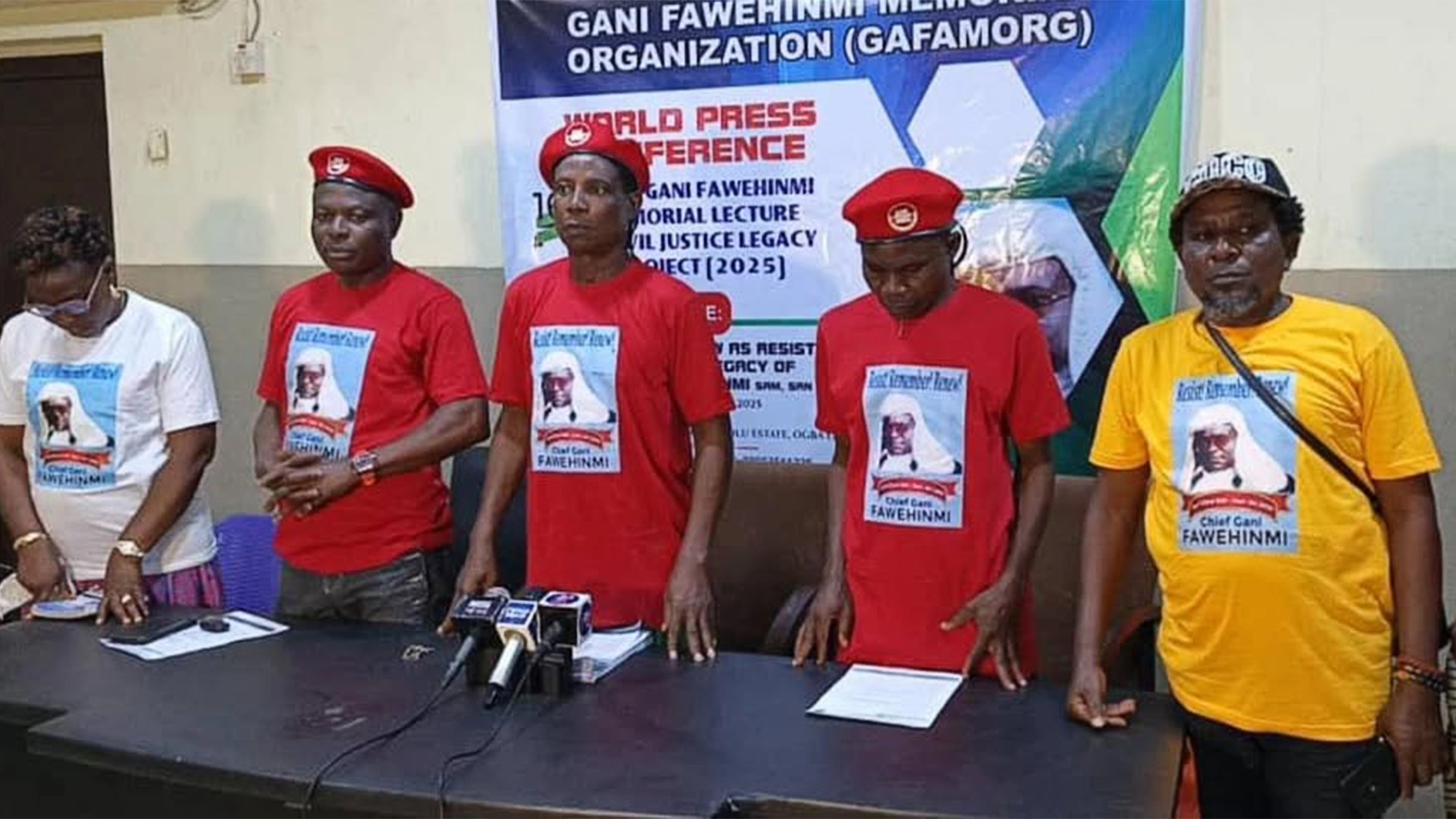
The Gani Fawehinmi Memorial Organisation (GAFAMORG) has urged the Federal Government and organised labour to move beyond recurring wage negotiations and develop a permanent framework that protects workers’ purchasing power from inflation.
The organisation, in a statement yesterday in Lagos, said the recent three-day warning strike by the Joint National Public Service Negotiating Council (JNPSNC) underscored the need for a broader conversation about wages, the rising cost of living and the welfare of Nigerian workers.
GAFAMORG welcomed the JNPSNC’s call for urgent engagement with the Federal Government, as well as its warning that failure to address workers’ concerns could lead to a total strike.
It said the issues raised by the council, including fuel prices, wages and allowances, as well as the process for negotiating a new minimum wage, were genuine concerns affecting millions of Nigerians.
The organisation, however, said Nigeria must address the underlying factors that repeatedly erode the value of workers’ incomes.
It described the cycle as one in which wage increases are followed by rising prices, declining purchasing power and renewed demands for higher wages.
GAFAMORG said: “Why must every generation of Nigerian workers start from zero, fighting the same battle against inflation and wage erosion?”
According to the organisation, a wage increase cannot guarantee lasting economic dignity if the cost of food, rent, transportation, fuel, electricity, healthcare and education continues to rise faster than incomes.
It proposed what it described as a “new economic compact” built around four pillars: a living wage, a social wage, wage and pension adjustments linked to the cost of living, and policies designed to protect purchasing power.
It said a living wage should reflect the actual cost of meeting basic needs, while a social wage should involve affordable and accessible public services, including healthcare, education, transportation, water, electricity and housing.
On indexation, GAFAMORG said wages and pensions should be reviewed and adjusted when there were significant increases in the cost of living, to prevent inflation from eroding their value.
The organisation said the effectiveness of any minimum wage should not be measured only by the amount paid but by what the income could actually purchase.
It said its “People’s Living Dignity Test 2026” was collecting anonymous household data across the country to provide evidence of what Nigerians require to live with dignity.
GAFAMORG also called for greater attention to pensioners and informal workers, including traders, farmers, artisans, drivers and casual workers, who it said faced the same rising costs without the protection available to salaried employees.
It urged the government to reduce household pressure through quality and affordable public services, arguing that families should not have to spend most of their income simply to access basic necessities.
The organisation also called for a national stakeholders’ meeting involving organised labour, informal workers, civil society organisations, professional bodies, farmers, traders, artisans, pensioners, women and youth groups, economists and public-interest organisations.
The meeting, it said, should seek to develop a long-term framework capable of moving the country from repeated wage disputes to sustainable economic security and prosperity.
GAFAMORG urged the Federal Government to urgently engage the JNPSNC and organised labour on fuel prices, wage awards, salaries, allowances and the 2027 minimum wage process.
It also called on government and labour to begin discussions on a permanent system for protecting wages and pensions against inflation, while ensuring that informal workers and vulnerable groups were included in economic policy decisions.
The organisation said the end of the warning strike should not mark the end of the campaign for economic dignity.
It said: “We must not simply prepare for the next wage battle. We must build a system that makes the same battle less necessary.”
GAFAMORG said Nigeria needed to move “from wage struggle to national prosperity, from temporary adjustments to lasting protection, and from separate struggles to a new economic compact.”

