 Get Guardian on Google
…First 100 CNG buses to arrive in December as Chinese manufacturer moves to revive Leyland facility in Ibadan
…As Chinese manufacturer moves to revive Leyland facility in Ibadan
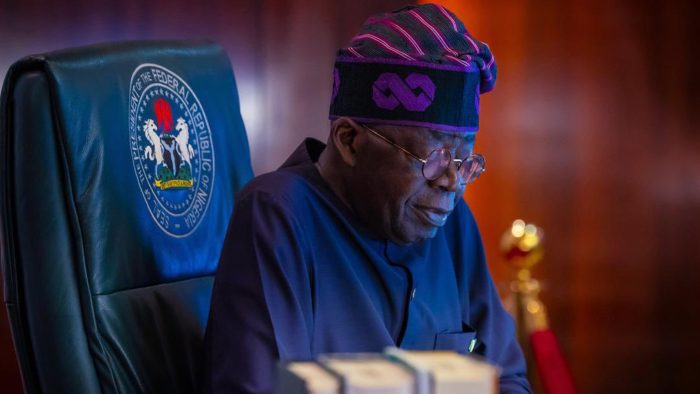
President Bola Tinubu has secured a major investment commitment from Chinese automotive giant Yutong for the supply of 300 compressed natural gas (CNG)-powered buses and the establishment of a local assembly plant, as his administration intensifies efforts to reduce transportation costs by 40 per cent on participating routes.
The agreement, which is expected to strengthen the Federal Government’s National Affordable CNG Transit Programme (NACTP), will see the first batch of 100 buses arrive in Lagos by the end of December 2026, while subsequent units will be assembled locally.
The proposed assembly facility, to be operated through YP Automobiles Bus Assembly at the former Leyland Automotive plant in Ibadan, Oyo State, is also expected to revive local automotive manufacturing, create skilled employment and reduce Nigeria’s dependence on imported commercial vehicles.
The agreement with the Presidential Initiative on Compressed Natural Gas and Electric Vehicles (Pi-CNG & EV) is scheduled to be signed in Lagos today (Thursday, November 19) following President Tinubu’s invitation to Yutong to invest in Nigeria and support the expansion of affordable mass transportation.
The investment is central to the administration’s plan to translate the lower operating costs of CNG-powered vehicles into cheaper public transport fares, with the approximately 40 per cent reduction target forming part of the Renewed Hope Agenda 2.0 for 2027–2031.
President Tinubu said the overriding objective was to ease the transportation burden on millions of Nigerians who depend on commercial buses daily to commute to work, take their children to school, access markets and move goods across communities.
He stressed that the savings accruing from the use of cheaper CNG fuel must be reflected in passenger fares, rather than remaining solely with transport operators.
The administration is expected to work with state governments and transport operators to expand the programme across participating routes, ensuring that the projected fare reductions translate into tangible savings for commuters and households.
Beyond the immediate benefits to passengers, the Yutong investment is expected to strengthen Nigeria’s industrial base through local bus assembly, technology transfer and the development of technical skills.
Yutong, which sold 49,518 buses globally in 2025, is a major international manufacturer of conventional, electric and CNG-powered buses, with experience in mass transit projects and local assembly partnerships across several countries.
The development comes as the Federal Government expands the country’s CNG infrastructure to support the transition from petrol-powered vehicles to cheaper alternative energy sources.
Through Pi-CNG & EV, the Midstream and Downstream Gas Infrastructure Fund (MDGIF) and private sector investments, the government has been expanding refuelling facilities, including the deployment of Mobile Refuelling Units (MRUs).
President Tinubu has also directed the deployment of an additional 2,000 CNG refuelling infrastructure units nationwide to support the growing adoption of gas-powered vehicles.
The administration believes that expanding the refuelling network, alongside increasing the availability of CNG buses, will provide the foundation for a sustainable and affordable mass transit system.
Tinubu said the success of the initiative would ultimately be measured by how much Nigerians save on daily transportation, reaffirming his commitment to reducing living costs through investments in infrastructure, domestic manufacturing and affordable public transport.
For Nigeria’s automotive industry, the proposed revival of the former Leyland facility in Ibadan could mark an important step towards rebuilding local commercial vehicle production capacity, while the 300-bus commitment offers an initial boost to the government’s mass transit ambitions.
However, the programme’s success will depend on timely delivery of the buses, effective local assembly, adequate refuelling infrastructure and the implementation of the promised fare reductions.